
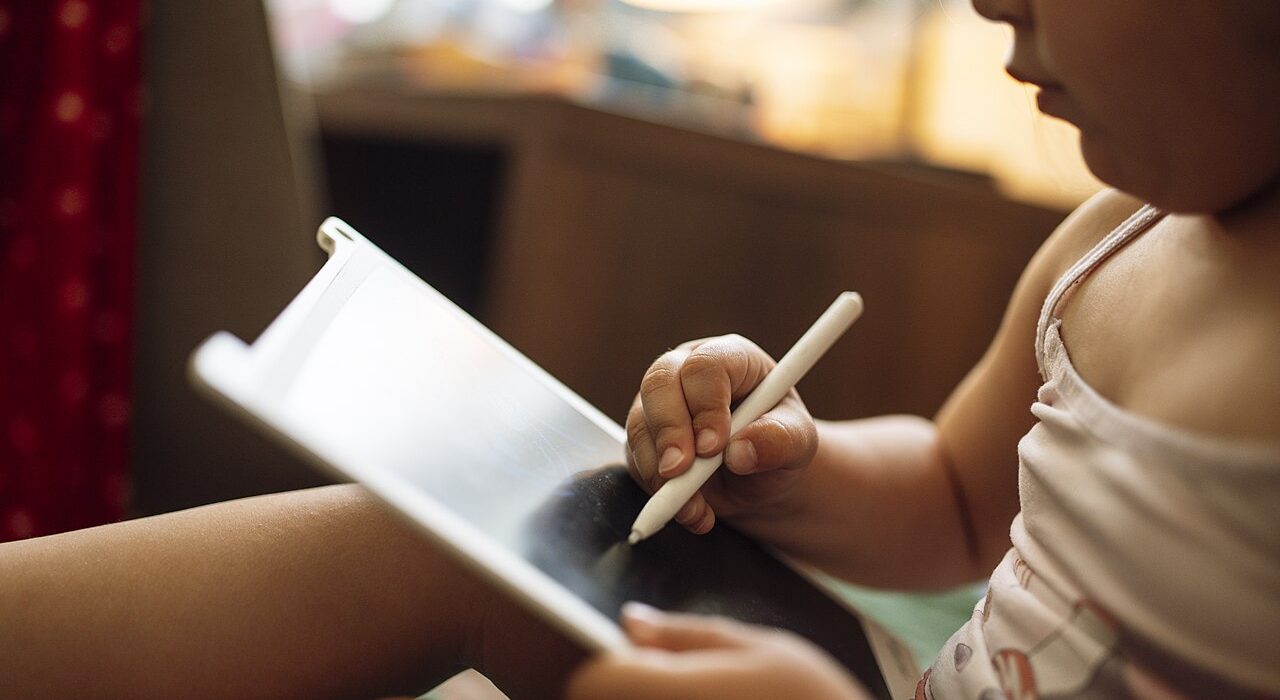


Every era blames the next one’s kids for something, and the current target is Generation Alpha, the children younger than 14. Robert Pondiscio, a former fifth-grade teacher in the South Bronx, offers a two-part explanation for why these kids seem to be struggling: too many screens and too many parents trying to shield them from difficulty. His argument is an opinion rather than a finding, but it lines up with a few sobering numbers.
What Pondiscio Said About Screens

Pondiscio made his case on NewsNation’s “On Balance With Leland Vittert,” in a segment published March 25, 2024. He cited constant access to phones and iPads along with the education setbacks of the COVID-19 pandemic. “They are growing up in front of screens,” he said, adding that he has sympathy for a generation facing “a lot of tough times.”
According to the Thomas B. Fordham Institute, Pondiscio is a senior visiting fellow there and a senior fellow at the American Enterprise Institute. He became a fifth-grade teacher at a struggling South Bronx public school in 2002 after about 20 years in journalism, and wrote How the Other Half Learns, a 2019 book based on a year observing Success Academy charter schools in New York City. His focus is literacy, curriculum and classroom practice.
That background explains why the opinion carries weight with some parents and teachers. Parents trading notes about the pros and cons of newer approaches might compare it with old-school parenting rules from the 70s and 80s or with a guide to gentle parenting, which sit at opposite ends of the debate.
The Shielding Argument
The second half of Pondiscio’s argument is about parenting. He argued that modern parenting aimed at shielding children may undermine resilience, which many parents see as a point of pride but which he thinks can backfire. He wondered aloud whether adults are creating a sense of “learned helplessness,” a phrase he used while asking whether the shielding instinct backfires.
He also suggested adults may be passing their own anxieties to children, and questioned whether a climate of fear supports healthy development. NewsNation presents all of this as his view, not as established fact.
The third piece is social. Pondiscio pointed to declines in two-parent households and in congregation membership, which he said remove support systems children need in hard times. Children with what he called “mediating institutions,” such as family, friends and church, are more resilient, he argued. The idea echoes freedoms that kids of the 70s and 80s enjoyed and the sort of little rituals that disappeared without much notice, some of which are among the boomer habits making a comeback. Parents who remember a different childhood may see their own experience in things Americans grew up with that kids today may never experience. Readers who like to trace how childhood has changed can also try an engineering professor’s account of iPad kids struggling in college, or revisit the hardest truths to accept in life, according to baby boomers.
What the Screen Numbers Show
The Common Sense Census, released Feb. 26, 2025 by Common Sense Media, tracks media use among children from birth to age 8. It found an average of about 2.5 hours of screen time a day, which the report describes as steady. Forty percent of children have their own tablet by age 2, and nearly 1 in 4 has a personal cellphone by age 8. Gaming time is up 65% over four years, while traditional TV is declining as short-form video rises.
These figures describe how much kids use screens, not what screens do to them, and the report does not claim to settle the question. Still, they show why Pondiscio’s phrase about growing up in front of screens resonates.
What Teachers Report
A January 2025 YourTango article by Zayda Slabbekoorn lists 11 teacher complaints about this generation of kids, including weak reading comprehension, shorter attention spans, low effort, weak problem-solving and chronic absenteeism. Each complaint is paired with research the article cites, though the list is a roundup rather than a single study, and it names a few causes such as phone distraction, home instability and standardized testing.
Attendance is one area with solid national data. Stanford economist Thomas Dee wrote in Phi Delta Kappan in November 2024 that the national chronic absenteeism rate, meaning students who miss 10% or more of school days, was 14.8% in 2018-19 and rose to 28.6% in 2021-22. In 2022-23, about one in four public school students was chronically absent, a 70% increase over the pre-pandemic level and only a slight improvement.
The data point to a rough stretch for students, but none of them prove that screens or shielding parents are the cause. Pondiscio himself frames part of the diagnosis as something he wonders about.
The takeaway, if there is one, is that a former teacher with a long record in education sees two culprits, screens and overprotection, and that the numbers on screen time and absenteeism are at least consistent with the worry. Whether they add up to a cause remains an open question for researchers, and for the parents trying to decide when to hand over the tablet.
Get stories like this by email. Sign up for Crafting Your Home.
This article was produced with AI assistance and edited for accuracy against the sources linked above.
Image: Shixart1985 – CC BY 2.0/Wikimedia Commons


