
A chilling warning from Warsaw
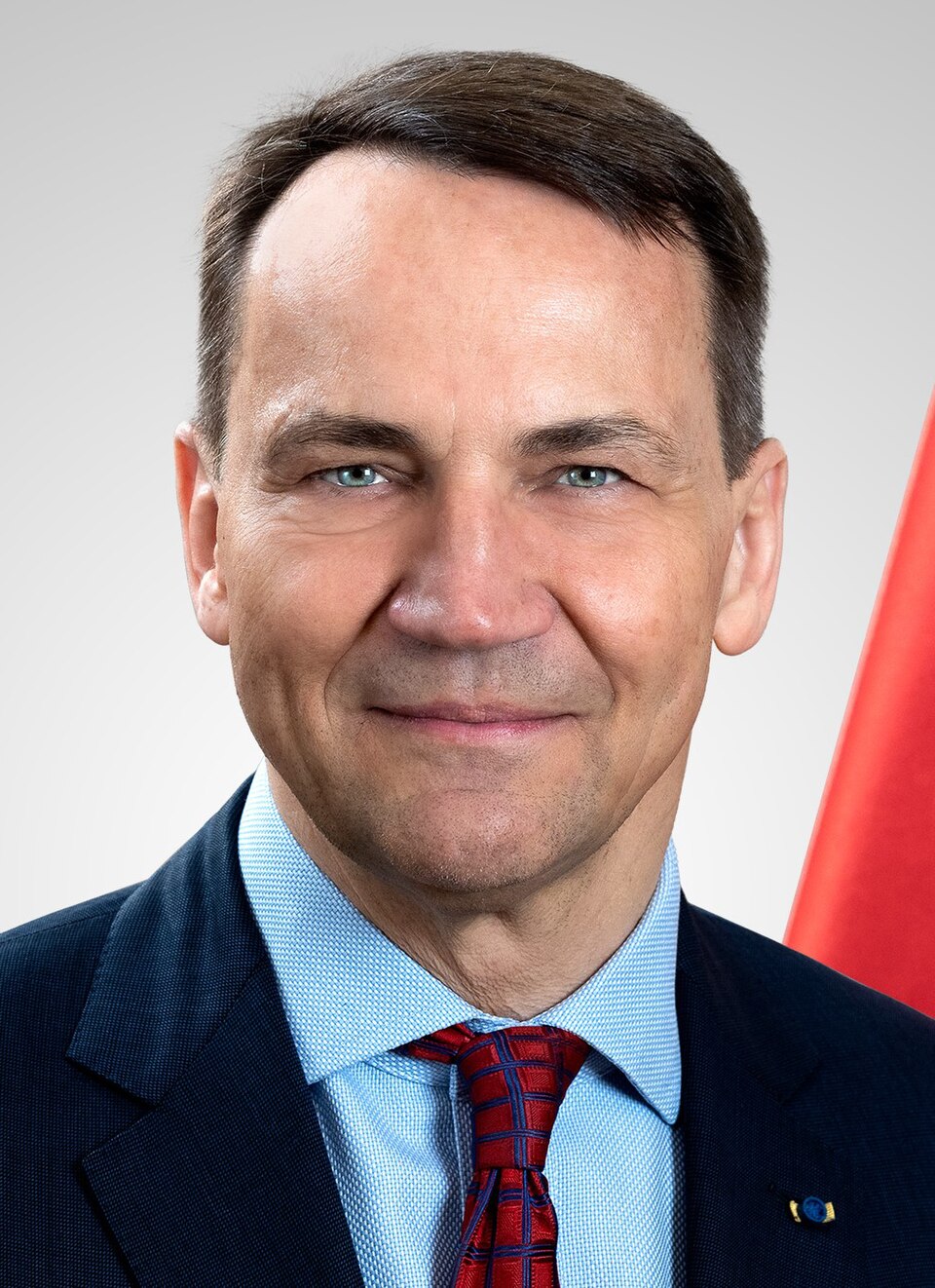
Poland has issued one of its sharpest warnings yet: Foreign Minister Radosław Sikorski suggested that Vladimir Putin may be preparing the ground for a false-flag attack to justify a new escalation in the Russia-Ukraine war.
The concern is not simply that Russia may strike again. The deeper fear is that Moscow could stage an incident on Russian territory, blame it on Ukraine or Western-backed actors, and use that claim as a public excuse for escalation.
Sikorski’s warning came after Putin suggested that European countries involved in drone attacks on Russian targets should understand that retaliation would follow.
To Poland, that language sounded less like a normal military warning and more like a possible escalation script.
That is why Sikorski reached for one of the darkest examples in European history: the 1939 Gleiwitz incident, when Nazi Germany staged a fake Polish attack on a German radio station to help justify the invasion of Poland.
Why Poland is taking the warning seriously
Poland is not watching this war from a distance. It sits on NATO’s eastern flank, shares deep historical trauma with Russia and Germany, and has become one of Ukraine’s most important logistical and political supporters since the full-scale invasion began in 2022.
For Warsaw, the danger is not only conventional war. It is also what officials often call hybrid warfare: sabotage, cyberattacks, disinformation, intimidation, border pressure, and mysterious incidents designed to confuse the public before governments can even agree on what happened.
That is why the false-flag warning carries so much weight. A staged attack need not fool everyone forever.
It only needs to create enough uncertainty in the first hours to shape headlines, divide allies, and give Moscow a ready-made explanation for escalation.
In a conflict already defined by drones, deep strikes, propaganda, and denials, the information battle can move almost as fast as the battlefield itself.
The historical shadow of Gleiwitz

The comparison to Gleiwitz is powerful because it is not abstract. On August 31, 1939, Nazi operatives staged an attack on a radio station near the German-Polish border. The goal was to make it appear that Poland had attacked Germany first.
The next day, Nazi Germany invaded Poland.
That history still matters because it shows how a manufactured incident can dress aggression in the language of self-defense.
A false flag turns the attacker into the supposed victim and gives leaders a story to tell their own public.
Poland’s warning does not mean a new world war is inevitable. It does not prove that Russia has already planned a specific operation.
But it shows how nervous European governments have become about Moscow’s ability to mix military threats with political theater.
Drone attacks are raising the stakes.
The immediate backdrop is the rising reach of Ukrainian drone attacks. Kyiv has increasingly targeted Russian energy infrastructure, refineries, depots, logistics routes, and facilities in occupied Crimea and deeper inside Russia.
Ukraine argues that these strikes are meant to weaken Russia’s war machine and bring the cost of the invasion closer to Russian territory.
Moscow frames them as attacks meant to destabilize Russian society and justify stronger retaliation.
That is where the danger grows.
As drones become cheaper, longer-range, and harder to trace in real time, the space for accusation widens.
A strike can happen before the public knows who launched it, and state media can push a narrative before investigators arrive.
In that kind of environment, a false-flag claim becomes harder to immediately disprove, especially when fear is already high.
What Russia may gain from a provocation
A staged incident, if it happened, could serve several purposes for Moscow.
First, it could help justify a new wave of strikes against Ukraine by presenting Russia as the country responding rather than escalating.
Second, it could be used to pressure European governments that support Kyiv. If Russia claims that drones came from or were assisted by a NATO country, the accusation alone could create panic in European capitals.
Third, it could deepen political divisions inside the West. Some voters may demand stronger action against Russia.
Others may demand that their governments stop supporting Ukraine to avoid being pulled into war. That confusion is often the point of hybrid warfare.
Fourth, it could test NATO’s unity without triggering a clear, traditional battlefield confrontation. Russia does not need to send tanks across a NATO border to create a crisis.
A mysterious explosion, a drone incident, or a disputed strike could be enough to force urgent meetings, emergency statements, and competing narratives.
Why this matters for NATO

Poland’s warning is especially sensitive because any real attack involving NATO territory could raise serious questions about collective defense.
NATO’s Article 5 states that an attack on one member is an attack on all, but political leaders would still have to assess what happened, who was responsible, and how to respond.
That is why ambiguity is dangerous.
A clear missile strike is one kind of crisis. A suspected provocation, blamed on one side but denied by another, is a different kind. It can leave governments trapped between two risks: responding too slowly and appearing weak, or responding too quickly and escalating based on incomplete information.
This is the gray zone where modern conflict often lives.
Poland knows that space well. So do the Baltic states.
These countries have spent years warning that Russia’s pressure on Europe does not always arrive as a formal declaration of war. Sometimes it arrives through border stunts, arson plots, cyber incidents, migrant pressure, GPS interference, disinformation campaigns, and suspicious damage to infrastructure.
The real warning behind Sikorski’s words
The most important part of Sikorski’s message may not be the prediction itself. It may be the public act of warning in advance.
By saying out loud that Poland expects a possible provocation, Warsaw is trying to remove the element of surprise.
It is telling allies, journalists, and citizens to be cautious if a sudden incident is presented as proof that Europe or Ukraine attacked Russia first.
That matters because false flags depend on speed. They work best when people react emotionally before the facts are clear.
Poland’s message is essentially this: do not accept the first version of the story too quickly.
A dangerous moment, but not a settled outcome
There is no public proof that Russia has already staged such an attack. There is also no certainty that Putin will choose that path.
But the warning reflects a larger reality: Europe is increasingly preparing for a conflict that may expand through confusion before it expands through open warfare.
The battlefield is no longer limited to trenches in eastern Ukraine. It now includes refineries, railways, drone routes, social media feeds, intelligence leaks, border politics, and public opinion across Europe.
That is why this warning is getting attention.
Poland is not simply reacting to one Putin statement. It is reacting to a pattern: threats, denials, sabotage concerns, historical memory, and a war that keeps finding new ways to move beyond Ukraine’s borders.
If a sudden incident occurs on Russian soil in the coming days or weeks, European governments will likely ask one question before any other: Who benefits from this story?
In today’s war, that question may matter as much as who fired first.