



The post People Who Can’t Stand a Quiet House and Leave the TV On for Background Noise Often Share These 8 Psychological Tendencies first appeared on Crafting Your Home
Some people walk into their homes, drop their keys on the counter, and immediately grab the TV remote. They aren’t necessarily interested in watching anything. They just want something playing in the background. Maybe it’s a familiar sitcom, an afternoon talk show, or a news channel nobody is paying much attention to.
The television stays on while they cook, clean, fold laundry, or scroll through their phones. For others, this habit makes absolutely no sense. Why waste electricity running a television you’re not watching? But psychology suggests this everyday behavior may have more to it than simple entertainment.
In a 2025 study published in Psychology of Popular Media, researchers examined people’s motivations for using television as ambient background entertainment. Other psychological studies suggest that familiar television programs, sensory stimulation, emotional comfort, and learned habits may help explain the preference.
However, researchers haven’t established that background television users share one particular personality profile. Instead, eight psychological tendencies and preferences offer some interesting explanations.
They Prefer a Little Extra Stimulation Around Them
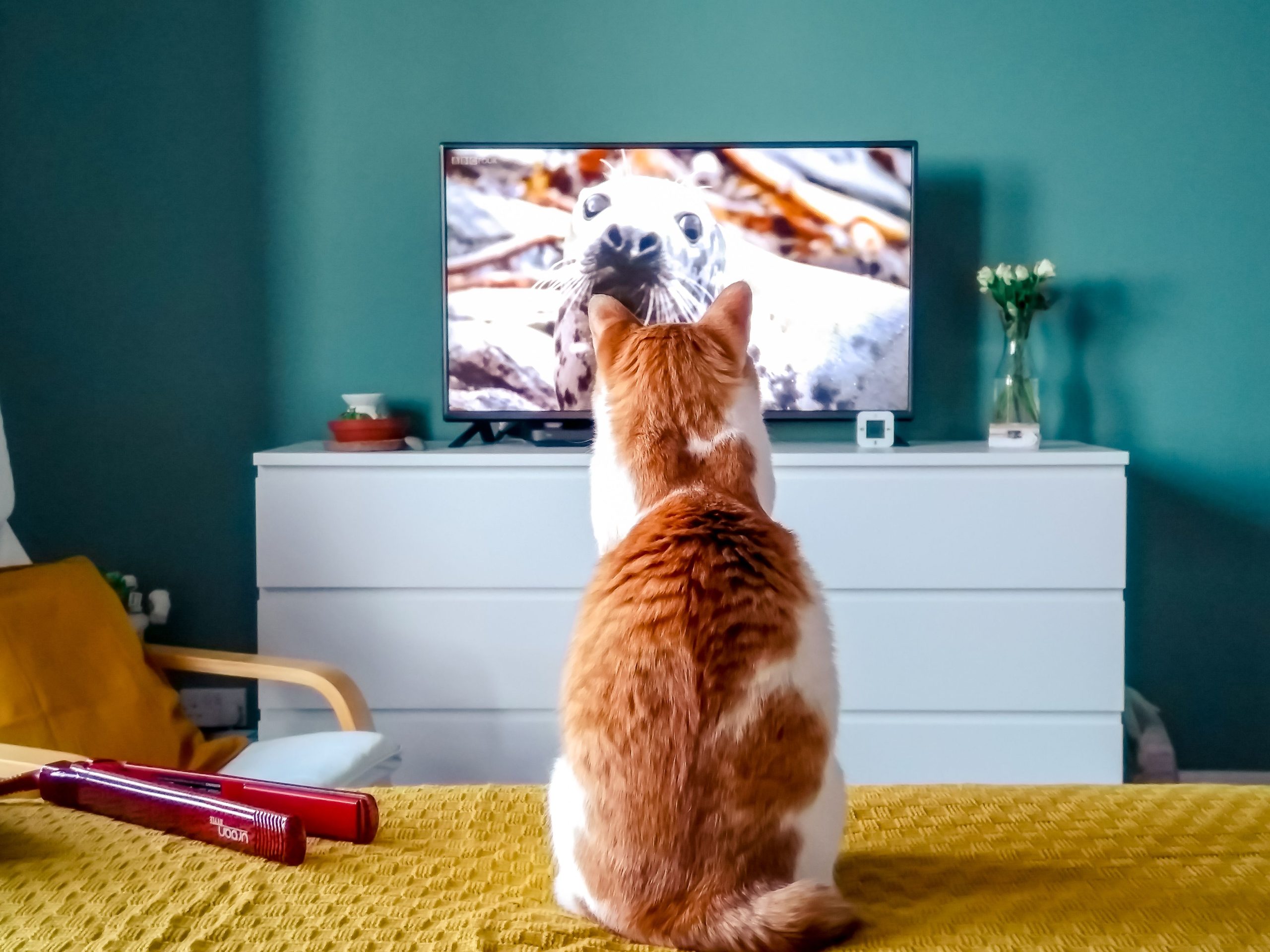
For some people, a completely quiet room feels peaceful. For others, it feels strangely empty. Individuals who enjoy additional sensory stimulation may prefer an environment with familiar sounds, conversations, and occasional activity. Background television provides exactly that.
It creates a changing soundtrack without requiring someone to sit down and follow every scene. Psychologists have investigated whether personality influences how people respond to environmental noise. A 2002 study by Adrian Furnham and Lisa Strbac examined 76 participants performing cognitive tasks under different sound conditions.
The researchers found that background sound generally reduced performance, although some results varied with personality. The findings don’t prove that television lovers are extroverts. They suggest that reactions to sound can differ.
Someone who enjoys television while cooking might still prefer complete silence while reading. The key factor may be control over their surroundings, not a need for constant excitement.
They Sometimes Get Bored With Repetitive Activities
Imagine folding three baskets of laundry in a silent room. Now imagine doing the same chore while your favorite comedy plays in the background. For some people, the second option simply feels more enjoyable. Psychologists describe boredom proneness as a tendency to experience boredom across different situations.
Research published in Frontiers in Psychology in 2022 examined the relationship between boredom and media multitasking. In one experiment, researchers found an association between higher boredom proneness and greater media multitasking.
However, a second experiment did not reproduce the same relationship, and inducing boredom did not reliably increase multitasking. That distinction matters.
People who keep the television running aren’t necessarily easily bored. They may simply enjoy making repetitive activities feel less monotonous. Whether they’re cleaning the kitchen or organizing paperwork, background entertainment can make an ordinary routine feel more engaging.
They Enjoy the Feeling of Having Familiar Company
