
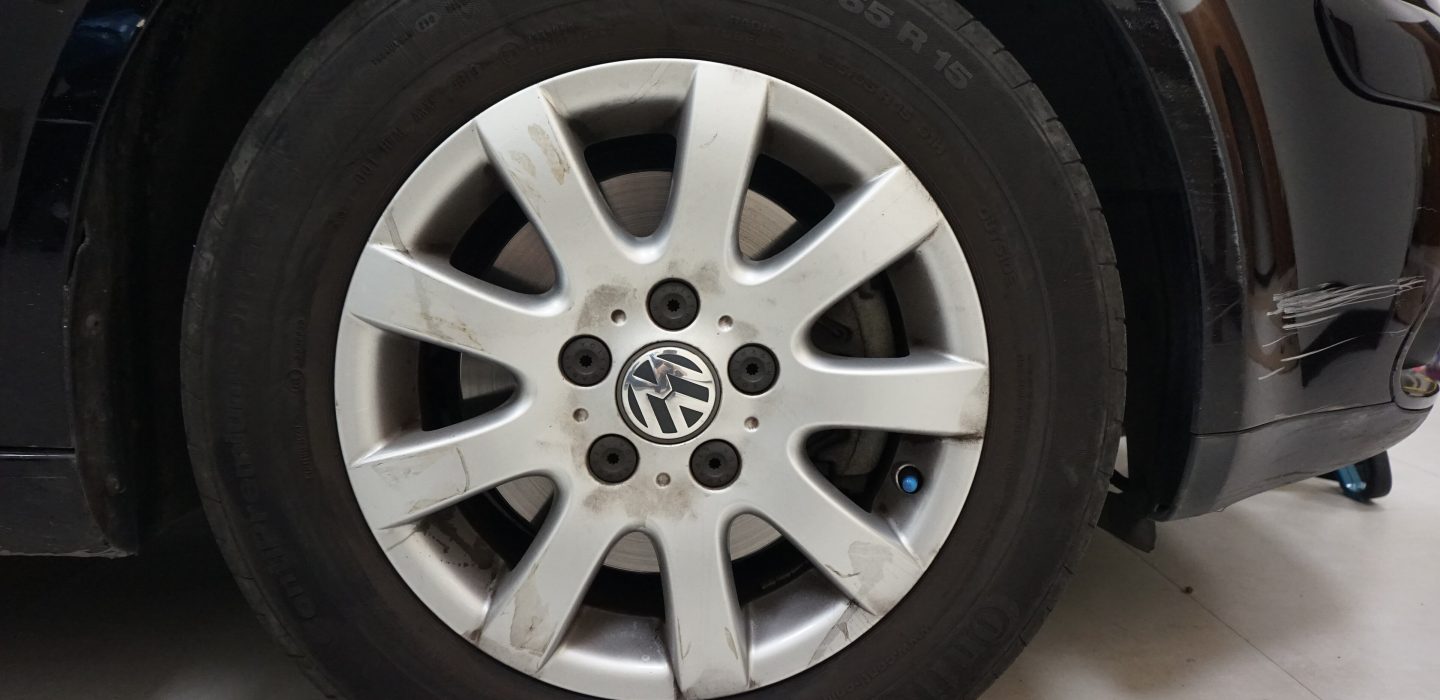


Thanksgiving week puts more cars on the highway than almost any other stretch of the year, and the four rubber patches connecting them to the road rarely get a second look. A penny and a few minutes in the driveway can change that.
According to the National Highway Traffic Safety Administration, tires should be replaced when the tread wears down to 2/32 of an inch, and a penny turned upside down shows whether that point has been reached.
How the Penny Test Works

The federal agency’s tire safety page says the test is simple: insert a penny into the tread groove with Lincoln’s head upside down. If the top of his head is visible, the tread is too worn and the tire needs replacing.
The page adds that tires should also be replaced when the tread wears level with the built-in treadwear indicator bars, and when they show cuts, cracks, bulges or irregular wear. The Drive, an automotive site, describes the same bars as small strips between the tread grooves, noting that most new tires have them. Drivers planning a long holiday trip, such as the ones in 8 things never to do if a car gets stranded in a winter storm, benefit from catching worn rubber before the road gets slick, and the Thanksgiving week 2026 forecast for the Southeast shows how much rain or flurries may be on the route.
Holiday travel is its own tradition, one of the odd American traditions that sends millions of cars onto the highway at once, and checking tires is the unglamorous prep that comes before the packing. Anyone who tends to put such chores off might start with how to stop procrastinating, and travelers flying instead of driving can look at carry-on suitcases worth packing. Trips that go wrong become legend, as the 13 places so terrible that travelers vowed never to return suggests. A road trip also needs a plan for the unexpected, which is why the El Nino winter outlook for a warmer, wetter South and the split Southeast winter forecast are worth a look.
Why Some Experts Prefer a Quarter
The penny test is the federal baseline, but it is not the only school of thought. Tire Review reports that Tire Rack recommends replacing tires at 4/32 of an inch, and suggests a quarter instead: if Washington’s hair touches the tread when the coin is inverted, less than 4/32 remains.
The numbers Tire Rack gave are dramatic. In a wet-braking test at 70 mph, new tires with 10/32 of tread stopped in 195 feet, tires at 4/32 needed 290 feet, and tires at 2/32 needed 379 feet. Those figures come from Tire Rack’s own testing, and Bridgestone’s Kurt Berger, quoted in the same report, called the federal 2/32 minimum prudent and a clear removal indicator.
Brake & Front End covered the same debate, noting that tires passing the quarter test measured 4/32 of an inch. AAA has also promoted the quarter test, and a report from KATU said AAA warns that worn or bald tires can need an extra 85 feet to stop.
Pressure Matters as Much as Tread
Tread depth is half the story. NHTSA says tire pressure should be checked at least monthly, on all tires including the spare, and only when the tires are cold, meaning the car has not been driven for at least three hours.
The correct number is on the Tire and Loading Information Label, found on the driver’s door edge or the B-pillar, or in the owner’s manual. It is the vehicle’s number, not the figure printed on the tire’s sidewall, which is the tire’s maximum. NHTSA also says to keep a gauge in the car, since pressure can drop suddenly after hitting a pothole or curb.
The dashboard warning light is no substitute. NHTSA says the tire pressure monitoring system warns only when a tire is significantly underinflated and is not intended to replace regular maintenance. A light that comes on during a cold morning and then goes off as the tires warm up suggests pressure is marginally low, so a gauge check is in order.
Age, Spare and Other Checks
NHTSA also points to tire age. The last four digits of the DOT code on the sidewall show the week and year of manufacture, so 0308 means the third week of 2008. The agency says some vehicle and tire makers recommend replacing tires that are six to 10 years old regardless of tread.
A full-size spare deserves the same attention, since spares age too. NHTSA advises against using a spare as a permanent replacement for worn tires except in an emergency. If a tire does fail on the highway, the agency advises holding the steering wheel firmly with both hands, avoiding hard braking and easing off the accelerator gradually before pulling off the road.
Putting it all together, a pre-trip routine is quick: check the tread with a penny or a quarter, check each tire’s pressure when cold against the door-label number, look for cracks and bulges, and glance at the spare.
Get stories like this by email. Sign up for Crafting Your Home.
This article was produced with AI assistance and edited for accuracy against the sources linked above.
Image: Tbatb – CC BY-SA 4.0/Wikimedia Commons


