

This article was originally published on Crafting Your Home. A human contributor also wrote and edited the post.
The post Pamela Anderson Says “I’m Not a Victim, I’m a Victor” in Raw Hepatitis C Speech at amfAR Venice first appeared on Crafting Your Home
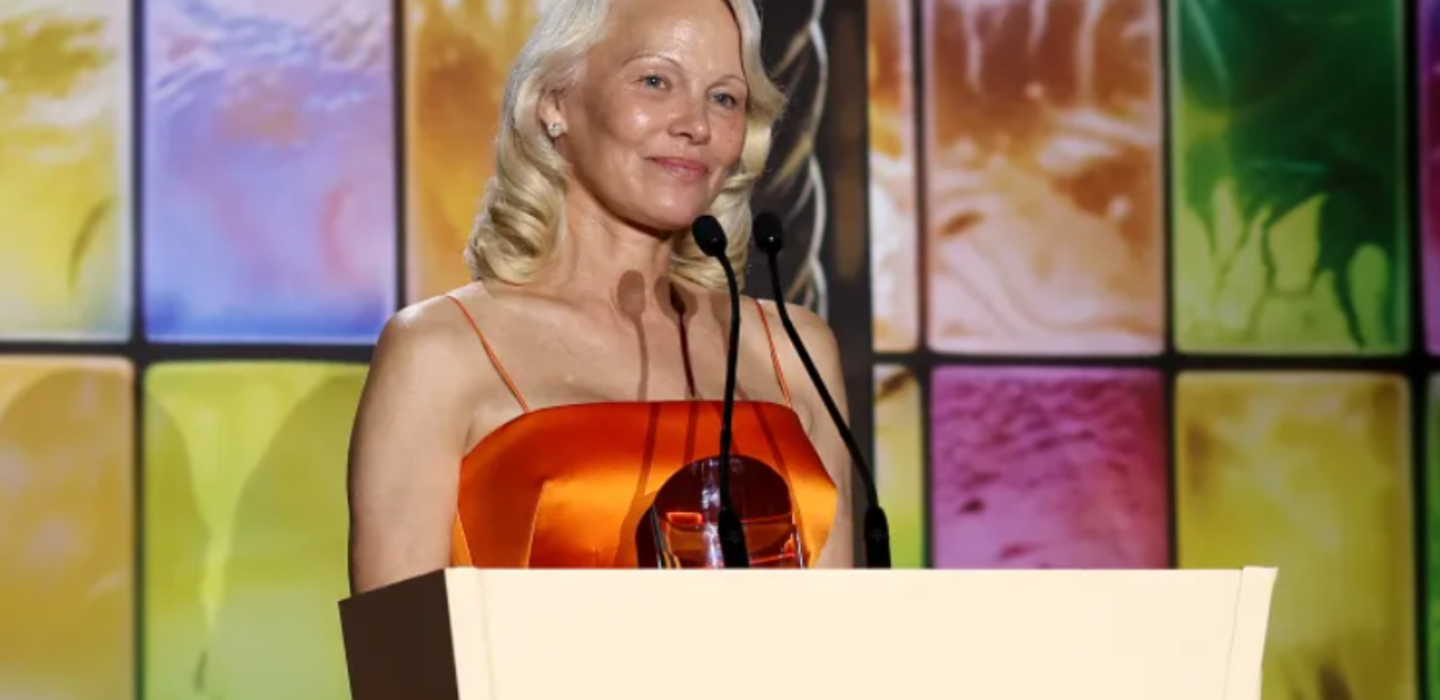
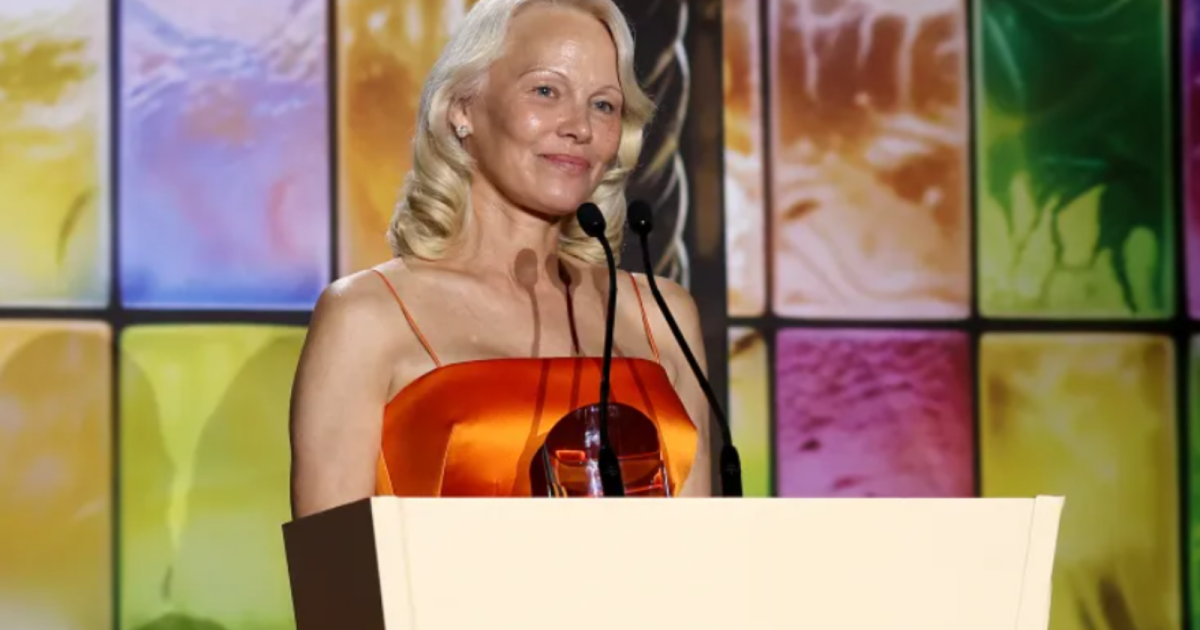
Pamela Anderson stood on the stage at the amfAR Gala Venezia 2026 and did something she has rarely done in public. She spoke at length, in her own words, about the disease that once had a doctor telling her she had roughly a decade left to live.
The actress took the podium on Saturday, September 6, at Hilton Molino Stucky in Venice, Italy, during the Venice Film Festival, where amfAR presented her with its Award of Courage.
What followed was one of the most candid accounts Anderson has ever given of her hepatitis C diagnosis, the shame that trailed it for years, and the long road that eventually led her back to health and to a late career renaissance that has surprised even longtime observers of her work.
Anderson, 59, told the crowd that she learned of her diagnosis back when the virus carried none of the treatment options available today. “It was a death sentence. That’s what my doctor told me, that I probably had around 10 years to live,” she recalled, according to Variety.
There was no ambiguity in how she described the moment. A diagnosis that would today be manageable was, at the time, presented to her as close to a terminal sentence, and she said that reality shaped years of decisions that followed.
The Diagnosis That Reshaped Everything

Anderson said the news did more than frighten her. It altered how she moved through the world for years afterward. “I’m sure that colored and corrupted my decisions,” she said, adding that what haunted her most was not the fear of her own mortality but something else entirely.
“It was not fear of death, but fear of what might happen to my young children. It turned my life inside out,” she told the amfAR audience, a line that drew from the deeply personal well she has increasingly been willing to share in interviews and on stage over the past several years.
She went further, describing an emotional weight that outlasted the physical illness itself. “But my experience of shame and guilt was also an unconscious journey. It stays with me, it haunts me,” Anderson continued.
She then drew a direct line between that shame and an earlier trauma in her life, telling the audience that the diagnosis compounded feelings she had carried since childhood.
“And just like the sexual abuse that I endured as a child, it felt like it was carved into my forehead, damaged goods. And I presented myself as such,” she said.
Anderson has made this connection in prior interviews about her past, but rarely with this level of detail in front of a live industry audience.
Anderson first went public with her hepatitis C diagnosis in 2002. She has said in the years since that she contracted the virus after sharing a tattoo needle with her then-husband, Motley Crue drummer Tommy Lee, a claim USA Today has previously reported and one that Lee has denied.
Neither Anderson nor Lee addressed the matter directly during the Venice speech, what is documented is the timeline of her illness and treatment, which she laid out in detail on stage for the amfAR crowd.
A Cure That Came At a Steep Personal Cost
The turning point, Anderson explained, arrived roughly a decade after her diagnosis, when new antiviral treatments finally became available.
“Ten blurry years later, there was a cure. I was lucky,” she said. “I was offered it in its early stages, and it took everything I had in my bank to pay for it.”
She did not stop there. Anderson used the moment to point to a broader problem that extended well beyond her own bank account, telling the audience that access to the medication was far from universal at the time.
“It wasn’t covered by insurance yet, and I felt tremendous guilt that others weren’t granted the same access,” she said, framing her own recovery as inseparable from the inequity she watched play out around her.
Anderson first announced she had been cured in November 2015, sharing the news on Instagram alongside a message that read, in part, “I am CURED. I just found out. I pray anyone living with Hep C can qualify or afford treatment.”
At the time, she noted that treatment remained difficult for many people to access, a theme she returned to more than a decade later on the Venice stage.
The gap between her initial disclosure in 2002 and her eventual cure announcement in 2015 spanned more than thirteen years, a stretch she described in her speech as one defined by uncertainty as much as by illness.
Even now, Anderson said, the emotional aftermath has not fully lifted. “I don’t think I’ve ever fully recovered from that news. I’ve assimilated, I’ve finally come to terms maybe,” she told the amfAR audience, a rare admission that recovery from trauma does not always arrive with a clean endpoint even when the physical illness itself has been resolved.
She credited her creative work with giving her an outlet for processing what she went through. “And the truth has come through my work. My truth has come through my work, finding ways to express myself through the arts. It gave me the ammunition I needed, a fertile life to use and play in,” she said.
A Career Resurgence And a Defiant Closing Line
The Award of Courage was presented to Anderson by Taika Waititi, her costar in the upcoming drama “Place to Be.” The film, directed by Kornel Mundruczo and also starring Ellen Burstyn, Edgar Ramirez, Lena Waithe, Murray Bartlett and Maika Monroe, premieres at the Venice Film Festival on Wednesday, September 9.
Anderson pointed to the project, along with recent roles in “The Last Showgirl,” “The Naked Gun” and “Rosebush Pruning,” as evidence of a professional stretch that has redefined how audiences and critics view her range as an actress.
She said she still has not fully processed the diagnosis that once threatened to define her, but she has clearly decided it will not be the final word on her story.
Anderson closed her remarks with the line that has since traveled across entertainment coverage of the gala. “I am strong and capable, more now than I could ever dream of,” she said.
“I’m not the damsel in distress, no matter how easy that role is to play. I’m not a victim. I’m a victor.” amfAR, which is primarily dedicated to ending the HIV and AIDS epidemic, has also funded hepatitis C research and advocacy over the years, given that the virus is a common co-infection for people living with HIV, a connection that made Anderson’s speech a fitting centerpiece for the evening’s program.
The Venice gala also honored performance artist Marina Abramovic that night, part of a program organizers framed around resilience and reinvention.
For Anderson, who has spent much of the past three decades navigating public scrutiny over both her personal life and her career, the speech offered something she has rarely allowed herself in front of cameras: an unguarded account of illness, guilt and survival delivered on her own terms.
If you like what you just read, then subscribe to our newsletter and follow us on social media.


