


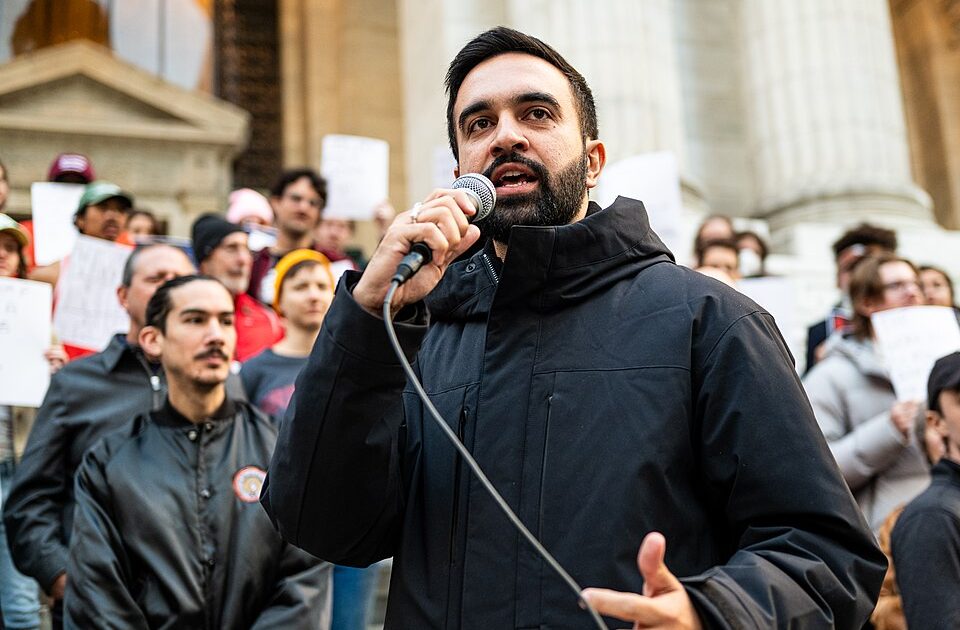
When more than 700 rabbis publicly demand that the mayor of New York City apologize, we are no longer watching a routine campaign argument. We are watching a dispute over the border between fierce political criticism and language that many Jewish leaders say can make American Jews feel less safe in public life.
That is why the backlash to Mayor Zohran Mamdani’s AIPAC “monsters” remark has moved so quickly from a New York political fight into a national conversation about antisemitism, pro-Israel advocacy, progressive power, campaign money and the emotional weight of words in a city with one of the largest Jewish communities in the world. The controversy began after Mamdani used the word “monsters” while criticizing AIPAC during a June 18, 2026, rally for progressive candidates in Brooklyn. The open letter organized by Jewish Majority said the language was dangerous, dehumanizing and “beneath the office he holds.”
Hundreds of Rabbis Demand an Apology From Mamdani Over AIPAC Remarks
The letter against Mamdani was signed by more than 700 rabbis, including leaders from prominent New York congregations and rabbis from different denominations. Their central claim was not simply that Mamdani criticized AIPAC. Their warning was that he described pro-Israel civic participation in a way that echoed old accusations about Jewish power, money, and manipulation.
The rabbis argued that calling AIPAC “monsters” did more than attack a lobbying organization. In their view, it portrayed a heavily Jewish-associated political movement as something sinister, anti-democratic, and morally corrupt. The letter said Mamdani had “put a target on the backs of American Jews and their allies,” a phrase that turned the dispute into a safety question, not just a messaging question.
That distinction matters. AIPAC is a powerful pro-Israel advocacy group, and it has long been a major target for critics of U.S. support for Israel. But many Jewish leaders argue that when criticism of AIPAC is framed around dark money, hidden control or monstrous influence, it can land differently in a country where antisemitic conspiracy theories have often centered on claims of Jewish control over politics, finance and media.
Mamdani Says He Was Criticizing Power, Not Jews

Mamdani did not frame his remarks as an attack on Jewish people. After criticism grew, he said his language drew from a broader political reference to Antonio Gramsci, and the phrase was often paraphrased as “now is the time of monsters.” He said he used the term to describe forces blocking “the birth of a new world,” and he argued that his criticism was aimed at powerful institutions defending an unjust status quo.
That explanation has not ended the backlash. Some Jewish allies of Mamdani also said the word choice was troubling. Rabbi Jill Jacobs, who leads the progressive rabbinic human rights group T’ruah, wrote that calling AIPAC and its backers “monsters” casts political opponents as less than human. Rabbi Misha Shulman, a Mamdani supporter in Brooklyn, said the remarks were a warning sign for him.
This is where the controversy becomes more complicated than a left-versus-right fight. The criticism did not come only from conservative Jewish voices or from pro-Israel hard-liners. It also came from progressive Jews who may share some of Mamdani’s views on Palestinian rights but believe his rhetoric crossed a line.
Why the AIPAC “Monsters” Controversy Exploded After New York’s Primaries
The timing made the remark even more explosive. Mamdani had just demonstrated significant political influence in New York’s Democratic primaries, where candidates he backed won major victories over establishment opponents. Reuters described the sweep as a “political earthquake” among Democrats, with Mamdani-endorsed candidates Darializa Avila Chevalier, Brad Lander and Claire Valdez defeating establishment-backed rivals.
Those results gave the AIPAC controversy broader significance. We are not just looking at one mayor’s phrase. We are looking at a citywide political shift in which progressive candidates critical of Israeli policy are gaining power, while older pro-Israel Democratic networks face new pressure from the party’s left.
The Guardian similarly reported that Mamdani’s victories showed his continuing influence in New York politics and the growing strength of progressive voters who want a sharper break from traditional Democratic support for Israel.
Why American Jews Heard the Remark Through the Lens of Rising Antisemitism
The dispute is unfolding in an atmosphere of heightened concern about antisemitism in the United States. The Anti-Defamation League said 2025 was the third-highest year for antisemitic incidents since it began tracking them in 1979.
The American Jewish Committee’s 2025 State of Antisemitism in America report found that many American Jews felt less safe because of violent antisemitic incidents, and it reported that about one in three American Jews said they had personally been targeted by antisemitism. The same report said more than half of American Jews changed their behavior in at least one way because of fear of antisemitism.
That context helps explain why the word “monsters” landed so sharply. For many Jewish Americans, the fear is not theoretical. It comes after years of synagogue security upgrades, campus tensions, public harassment, online threats, and violent attacks tied to Jewish identity or support for Israel.
How the Mamdani Backlash Exposes a Democratic Party Divide

The Democratic Party’s Israel debate has changed dramatically since the October 7, 2023, Hamas attacks and Israel’s subsequent war in Gaza. Older Democratic leaders have generally defended strong U.S. support for Israel, even when criticizing Prime Minister Benjamin Netanyahu. Younger progressives are more likely to frame Palestinian suffering, civilian casualties, and U.S. weapons transfers as central moral questions.
Mamdani sits at the center of that generational and ideological shift. His critics see him as proof that anti-Israel politics has moved from the activist fringe into City Hall. His supporters see him as proof that voters are tired of old foreign policy assumptions and are willing to challenge institutions once considered untouchable.
That divide is not going away. In fact, the New York primary results suggest it may deepen. If Mamdani-backed candidates continue to win, pro-Israel Democrats will face more pressure. If backlash from Jewish voters grows, progressives will face their own test over whether they can criticize Israel without alienating Jewish communities.
Why This Controversy Will Outlast One Apology Demand
The Mamdani AIPAC controversy is not disappearing because it is tied to larger unresolved questions. How should Democrats talk about Israel after Gaza? How should public officials criticize lobbying groups without fueling bigotry? How should Jewish communities express fear without being accused of silencing Palestinian advocacy? How should progressive leaders build multiracial coalitions without minimizing antisemitism?
Those questions are now part of New York politics, and New York politics often becomes a preview of national Democratic conflict. Mamdani’s rise has shown that a new progressive language on Israel can win elections in America’s largest city. The rabbis’ letter has shown that many Jewish leaders believe that language can also make Jews feel exposed.
The lesson is not that AIPAC is beyond criticism. The lesson is that powerful criticism demands precision. In a fearful moment, words can organize people, but they can also isolate them. If New York’s leaders want to argue about Israel, Gaza, campaign money and foreign policy, they will need language strong enough to tell the truth and careful enough not to turn neighbors into targets.
Read the original story on Crafting Your Home


