


SoulCycle was once more than a workout. It was a mood, a lifestyle, a badge, and for many devoted riders, a weekly ritual wrapped in candles, music, sweat, and carefully built community. The brand helped turn indoor cycling into a premium fitness experience, transforming a room full of stationary bikes into something that felt closer to group therapy, nightclub energy, and personal reinvention.
Now, some of those rooms are going quiet.
SoulCycle has shuttered multiple studios across the country, including locations in California, such as Walnut Creek, La Jolla, and El Segundo. The reported closures are part of a broader pullback that suggests the company is still trying to find the right shape for a fitness market that looks very different from the one it helped create.
This is not just another story about a chain closing a few locations. It is a story about what happens when a once-dominant fitness trend loses the cultural heat that made it feel unstoppable.
For years, boutique cycling sold intensity with personality. Riders did not simply book a class. They booked an instructor, a playlist, a room, a feeling, and sometimes an identity. But the same market that once rewarded expensive in-person rituals is now more fragmented, more value-conscious, and more demanding. People still want fitness. They just no longer agree on where it should happen, how much it should cost, or what kind of workout deserves loyalty.
SoulCycle Closures Hit California and Other Major Markets
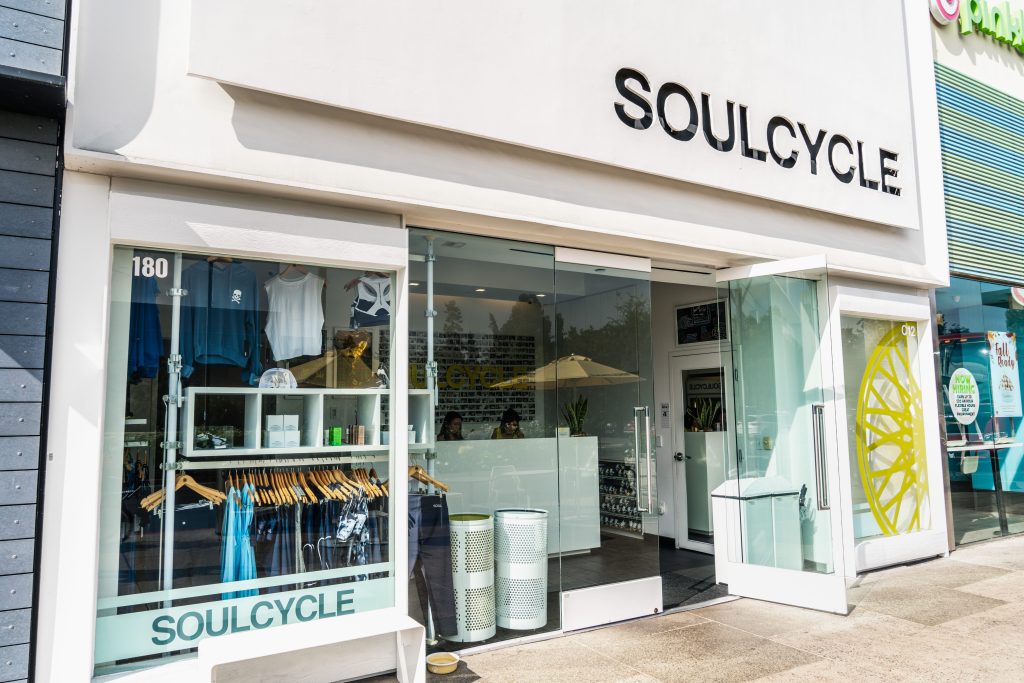
The latest closures reportedly include six studios across the United States: Walnut Creek, La Jolla, Manhattan Beach in El Segundo, Denver, Bryant Park in New York City, and South Beach in Miami Beach. Three of those are in California, which has long been one of the most important markets for boutique fitness brands.
That California angle matters. This is a state where wellness culture is not a side industry. It is part of the retail landscape, the real estate story, and the daily rhythm of affluent neighborhoods. A studio closing in Walnut Creek or La Jolla is not just a lost storefront. It is a sign that even high-income, fitness-friendly markets are not immune to the pressure reshaping the industry.
California helped boutique fitness become aspirational. Los Angeles, San Francisco, Orange County, and San Diego gave brands like SoulCycle the ideal customer base: busy professionals, entertainment figures, wellness enthusiasts, and consumers willing to pay a premium for a highly curated experience. If locations in that environment are no longer safe, the message is clear. The old boutique fitness formula is no longer enough on its own.
SoulCycle has not publicly announced the closures in a broad company statement, making the shutdowns feel more abrupt for riders who have built routines around specific studios. For customers, a studio is rarely just a place on a map. It is the instructor they trust, the front desk staff who know their name, the bike they prefer, and the predictable hour of release in an otherwise crowded schedule.
When that disappears, the brand does not just lose a lease. It loses a piece of local loyalty.
Why the SoulCycle Studio Shutdowns Feel Bigger Than a Routine Business Move
Every retail and fitness chain trims locations. Markets change. Leases expire. Traffic patterns shift. Some studios outperform, while others become too expensive to justify.
But SoulCycle is not an ordinary chain. Its closures carry more symbolic weight because the brand helped define the boutique fitness era itself.
SoulCycle made the class feel like the product. The instructor became the star. The room became the community. The waitlist became social proof. The price became part of the positioning. Riders were not simply paying to sweat. They were paying to belong to something polished, emotional, and exclusive enough to feel special.
That model was powerful, but it was also vulnerable. It depended on repeated in-person attendance, a strong local community, high discretionary spending, and a sense that the studio experience could not be replicated elsewhere.
The pandemic damaged that assumption. At-home fitness surged. Digital subscriptions became normal. Connected bikes made the instructor experience portable. Strength training gained new momentum. Pilates became the fashionable low-impact alternative. Walking, running clubs, pickleball, and recovery-focused wellness all captured attention.
The result is not that people stopped caring about fitness. As a result, fitness became less centralized.
SoulCycle once be