



This article was originally published on Crafting Your Home. A human contributor also wrote and edited the post.
A bicycle ride past one of America’s most recognizable landmarks turned into a five-hour detention, a felony indictment and the possibility of a decade behind bars for former Olympic canoeist David Hearn.
Now, federal prosecutors say the widespread damage blamed on Hearn was likely caused by something far less dramatic than deliberate vandalism: a defective renovation completed under intense deadline pressure.
The Justice Department filed a 20-page motion on Friday, July 31, asking a Washington, D.C., court to dismiss the criminal case against the 67-year-old Bethesda, Maryland, resident.
Newly obtained records, prosecutors said, showed that the Lincoln Memorial Reflecting Pool’s coating had failed because of flawed contractor work and a rushed effort to prepare the site for America’s 250th anniversary celebrations.
The motion represents a striking reversal. Less than a month earlier, the U.S. Attorney’s Office had portrayed Hearn’s alleged actions as a deliberate attack on a treasured national landmark.
A felony case built around a loose piece of coating
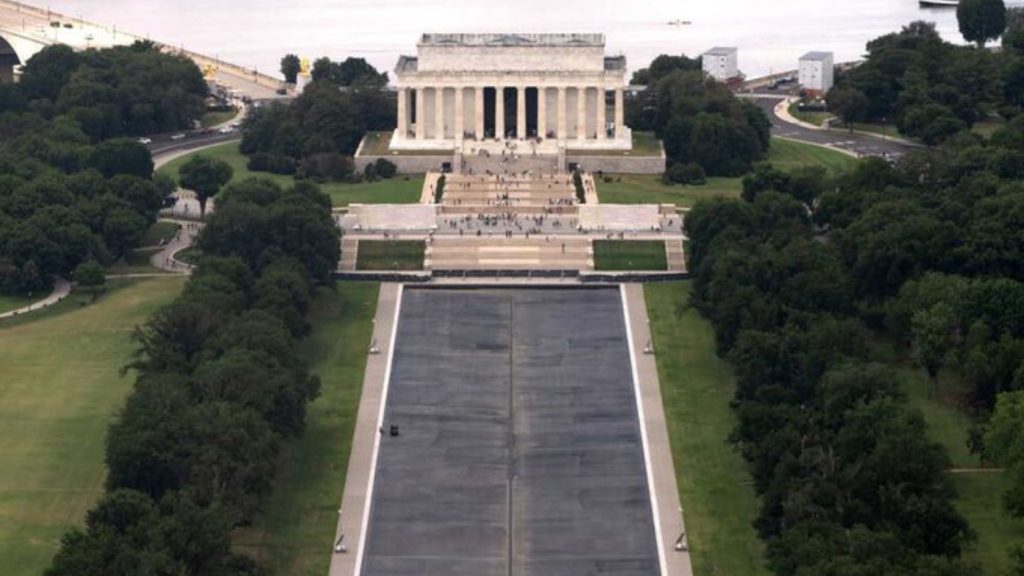
Hearn’s encounter with federal authorities began on June 19, when he stopped at the Reflecting Pool during a bicycle ride.
According to Hearn’s account, he noticed that the pool’s recently installed blue coating was peeling. He reached into the water to inspect it and briefly touched a loose section that remained attached to the pool. When a park employee told him to release it, he said he immediately complied.
National Guard troops and U.S. Park Police officers subsequently detained him for approximately five hours. Prosecutors later accused him of ripping away part of the new sealant and causing at least $1,000 in damage.
On July 2, a D.C. Superior Court grand jury indicted Hearn on one count of felony destruction of property. The charge carried a possible maximum sentence of 10 years in prison.
The Justice Department’s original announcement described the incident as an intentional act that had undermined preparations for the nation’s 250th anniversary.
Hearn pleaded not guilty on July 9. His trial had been scheduled to begin September 28.
Newly disclosed records changed the government’s case.
The prosecution began to unravel as additional information emerged about the Reflecting Pool renovation.
Government lawyers said documents received after the indictment showed that the pool’s widespread peeling and deterioration could not reasonably be traced to Hearn. Instead, the evidence pointed toward installation failures, inadequate preparation and pressure to finish the work before major Independence Day events.
The new material reportedly described coating problems that had already appeared before Hearn’s visit. Reuters reported that the contractor’s installation suffered from extensive failures and that critical Interior Department documents were not initially provided to prosecutors.
A National Park Service witness also acknowledged during earlier court proceedings that significant problems existed before Hearn touched the coating.
The pool was reportedly losing more than 1 million gallons of water each week, its expansion joints had deteriorated, and sections of the liner were already damaged. Repair work would have been necessary regardless of Hearn’s brief contact with the material.
Those facts cut directly into the prosecution’s central claim that one visitor had inflicted at least $1,000 worth of new damage.
In its dismissal motion, the government concluded that the evidence made it difficult to classify the pool’s widespread deterioration as vandalism, much less prove beyond a reasonable doubt that Hearn had caused it.
From Olympic competition to a criminal courtroom
The man at the center of the case was no stranger to pressure, though the arena was usually whitewater rather than a courtroom.
Hearn competed for the United States in canoe slalom at three Summer Olympic Games. His strongest Olympic result came in Atlanta in 1996, where he finished ninth.
His competitive career stretched from the late 1970s into the early 2000s, making him a prominent figure in American whitewater racing.
That background made the government’s depiction of him as a deliberate vandal especially jarring to his supporters.
Hearn and his attorneys repeatedly argued that he had become a convenient target in a broader controversy over the Reflecting Pool project.
They accused the government of trying to shift public attention away from construction failures by treating a brief encounter with already peeling material as a serious criminal offense.
The dismissal motion does not automatically erase the case. A judge must still approve the government’s request. However, prosecutors’ declaration that the evidence cannot support the charge makes continued prosecution highly unlikely.
Hearn’s attorneys demand more than dismissal.
Hearn’s legal team welcomed the government’s reversal but said ending the prosecution was not enough.
His attorneys argued that the case should never have reached a grand jury. They described the decision to arrest and charge him as an abuse of government authority and called on the administration to issue an apology.
Their criticism focuses on how quickly investigators moved from seeing Hearn touch the coating to accusing him of causing extensive property damage. The defense also questioned what information prosecutors presented to the grand jury and whether jurors were told about the pool’s pre-existing defects.
Those questions may outlive the criminal case.
The Justice Department initially announced the indictment with forceful language about protecting national heritage and holding vandals accountable. Weeks later, its own filing acknowledged that contractor failures and withheld information had fundamentally changed the evidence.
A damaged landmark and a damaged prosecution
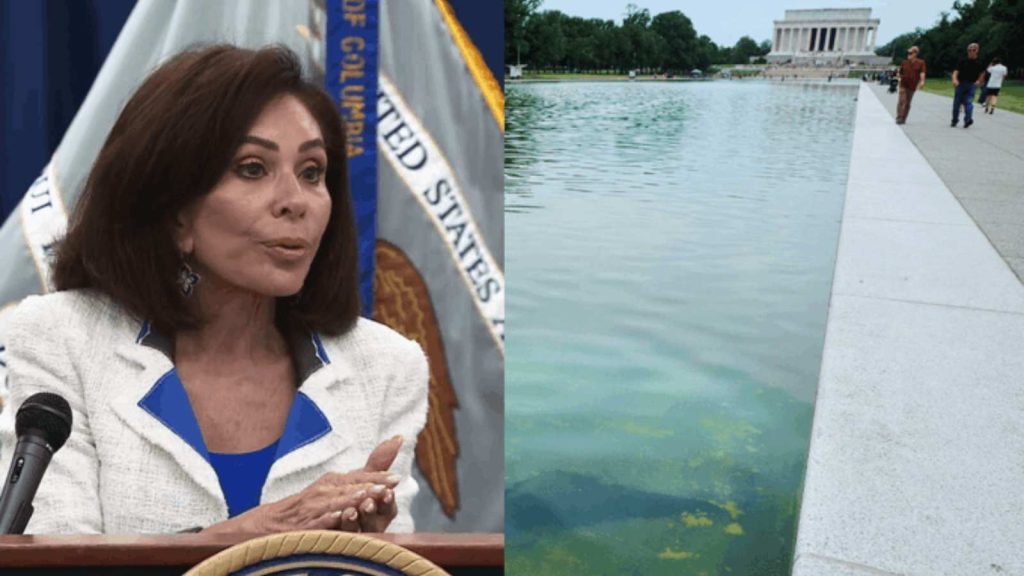
The Reflecting Pool project was intended to improve one of Washington’s most photographed public spaces before a historic national celebration. The National Park Service authorized closures so crews could clean the pool, repair its joints and install new lining material.
Instead, peeling material, leaks and repeated closures became visible symbols of a troubled renovation.
The government’s reversal now shifts attention away from an individual visitor and toward the planning, supervision and execution of the work itself. It also raises questions about why prosecutors did not receive crucial construction records before obtaining a felony indictment.
For Hearn, the dismissal motion could end a six-week ordeal that began with a moment of curiosity beside the water. He went from examining a loose piece of pool coating to confronting a charge that threatened years of imprisonment.
The Justice Department now says the broader damage cannot credibly be pinned on him.
What first appeared to authorities as an act of vandalism has instead become a cautionary story about rushed construction, incomplete information and the consequences of filing serious criminal charges before the physical evidence has been fully examined.
If you like what you just read, then subscribe to our newsletter and follow us on social media.


