

The post If Your Grandmother Kept These 9 Things, She Was Ahead of Her Time first appeared on Crafting Your Home.
Nostalgia is generous to grandmothers and stingy about why they did what they did. Most of the habits now praised as ahead of their time began as cheap answers to expensive problems, handled by women who were rarely paid for it. A mason jar on an open shelf reads as a design choice in 2026. In 1946 it was a Tuesday.
Food writer Laura Shapiro, whose 2004 book Something from the Oven traced how American dinner changed in the 1950s, documented how food companies and women’s magazines steered home cooks toward boxes and cans. The women who kept saving fat, stretching roasts and putting up preserves were swimming against a current that labeled those habits outdated. Their persistence now looks less like stubbornness and more like a different set of math.
A handful of those habits still beat the products sold to replace them. Others deserve a harder look than the soft-focus treatment they usually get. Nine are worth a second look, starting with a can most kitchens no longer keep.
The grease can by the stove was once a wartime assignment
During World War II, federal salvage campaigns asked American homemakers to save used cooking fat and hand it over at the butcher counter, where it was processed into glycerin for munitions. A can of bacon drippings on the back burner was a civic duty before it was a flavor habit.
The habit outlasted the war, especially in Southern and Midwestern kitchens where a spoonful of drippings still starts the greens or crisps the cornbread. Cooks who hoarded it were running a small supply chain.
A garden out back once fed a startling share of the country
Roughly 20 million Victory Gardens were planted during the war, and historians at the Smithsonian’s National Museum of American History put their output at about 40% of the fresh vegetables Americans ate in 1943. Grandmothers staking tomatoes beside the clothesline were working inside a national food plan.
Sugar rationing began in 1942, so a jar of homemade preserves was as much an accomplishment as a pantry staple. Today’s backyard-herb trend arrives with a hashtag and a price tag. Hers came with a hoe and a ration book.
The cast iron skillet outlived every nonstick pan she was offered
Lodge, founded in South Pittsburg, Tennessee, in 1896, still pours pans in the same town, according to the company’s own history. A skillet from that era can be working in a kitchen today because seasoning builds with use.
Coated pans wear out and end up in the trash. An iron one improves, which is why the real family fight over an inherited skillet is about who gets to take it home.
Her jars stored, canned and carried more than any plastic container
John Landis Mason patented a threaded screw-top glass jar in November 1858, and the Ball brothers of Indiana turned it into a household staple in the decades after. Grandmothers filled them with tomatoes, pickles, and peach halves in August, then with flour, rice, and loose buttons for the rest of the year.
The zero-waste crowd now sells the idea back at a premium. A pickle jar, washed and relabeled, does the same job for free.
Her recipe cards were written for people who already knew how to cook
Before 1896, American recipes routinely called for butter the size of an egg or a teacup of flour. Fannie Farmer’s Boston Cooking-School Cook Book arrived that year and pushed level, standardized measurements into mainstream kitchens.
The index-card box sits somewhere between the two eras, with a few exact amounts and plenty of instructions like bake until done. Many of those cards cannot be reproduced faithfully, which explains why family recipes taste different once the cook is gone. The box earns its shelf space anyway, since handwriting, grease spots and crossed-out amounts are a record no printed cookbook offers.
The good china was meant to be used, and mostly it never was
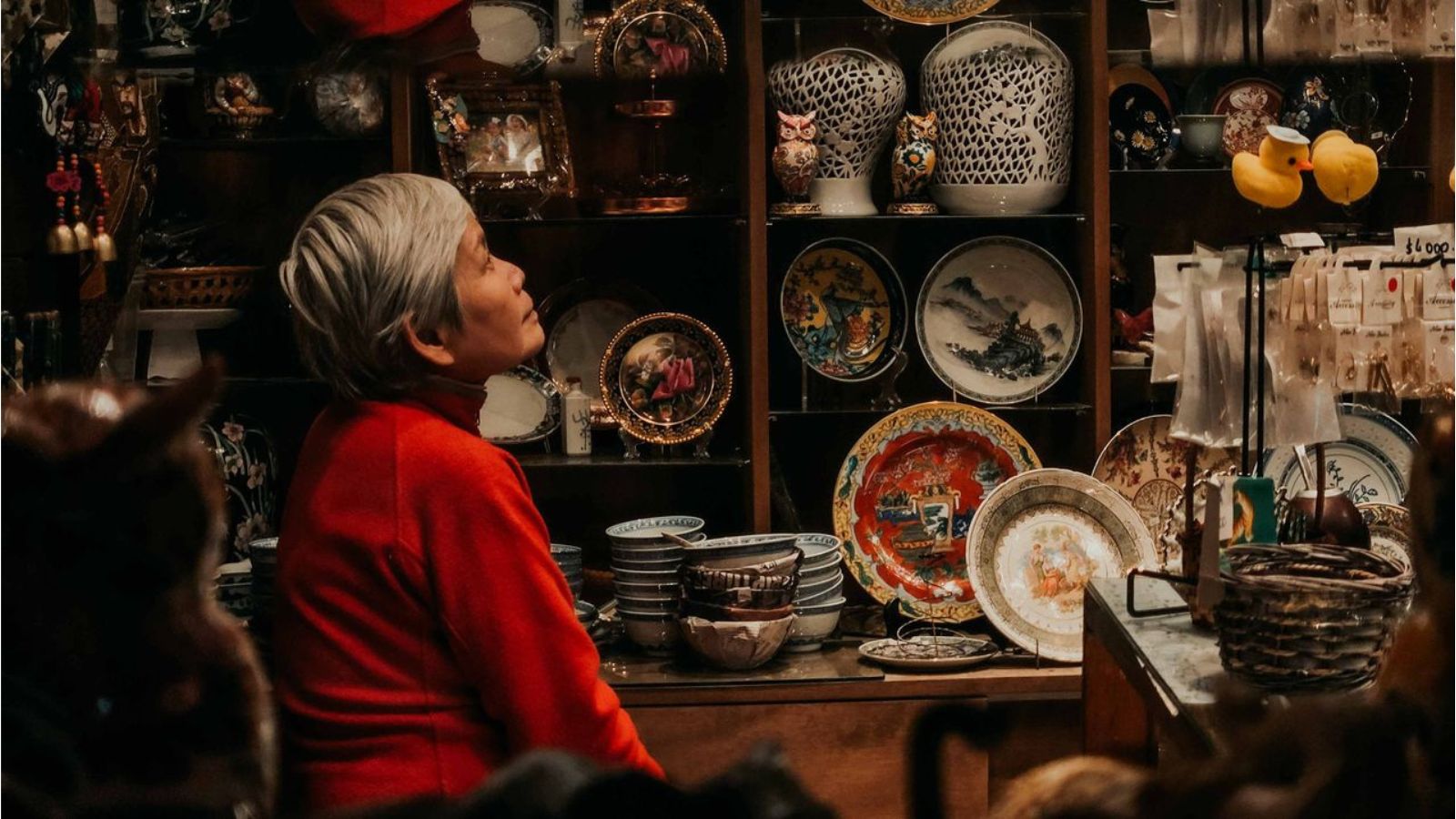
Emily Post’s Etiquette, published in 1922, became a bestseller by teaching American households how to set a table and run a dinner party. Grandmothers absorbed the rules and then locked the results behind cabinet glass for holidays.
A set that comes out twice a year gets hand-washed, dried and returned, an expensive way to own nothing. The sharper habit was the cloth napkin she laundered weekly and set out for company. Using the china on an ordinary Tuesday would have been the real power move.
Related Post: Boomers, Stop Hoarding the China. Millennials Don’t Want It as an Inheritance
Flour sacks became dish towels, aprons and dresses
Textile historians trace the printed feed sack to the 1930s, when bag makers began stamping florals and geometrics on cotton because women were choosing flour by the pattern.
Manufacturers were designing packaging for the person who would later cut it up and sew it.
Flour sack towels remain a favorite among bakers who want lint-free cloth. Upcycling gets marketed as a modern virtue, though a Depression-era kitchen treated it as ordinary housekeeping.
Related: Grandma Had It Right: Why Knitting, Vinyl, and Paper Planners Are Taking Over American Homes in 2026
Monday’s hash was Sunday’s roast, and she counted the bread heels
USDA estimates that 30% to 40% of the American food supply goes uneaten. Grandmothers ran against that number on instinct. A roast became hash, then soup, then stock, and the heels of the loaf turned into crumbs or bread pudding.
Households now pay for apps and subscription boxes to portion food they will not finish. She portioned by stretching. She learned thrift in the 1930s, and convenience foods only made the lesson look old-fashioned.
The spiral-bound church cookbook was a crowdsourced archive before the internet
Michigan State University Libraries built Feeding America, a digital collection of historic American cookbooks, and community fundraising books sit in the same lineage as the ones grandmothers bought for a few dollars at the church bazaar. Each recipe carried a contributor’s name, which gave a casserole provenance.
Recipe sites with anonymous comment sections are a worse version of the same idea. Nobody reviewing a tuna bake can trace it back to a neighbor who brought it to every funeral for thirty years.
Other Posts You May Like
- 9 Lessons From People Who’ve Been Grandparents for 30 Years
- 8 Things Grandparents Say That Quietly Undermine Parents
If you like what you just read, then subscribe to our newsletter and follow us on social media.


