


The post If Your Dog Sleeps Pressed Against You, Here’s What It’s Really Saying first appeared on Crafting Your Home.
If your dog curls up against your side, presses their back against your legs, or settles so close you can barely move, you may wonder what it means. Is your dog showing affection? Looking for protection? Or is your dog simply trying to find the most comfortable place to sleep?
The answer may be a combination of these things. Dogs can form strong social bonds with people, and scientific research supports the idea that their owners can provide a sense of security. However, sleeping in physical contact with a person does not have one universal meaning. Your dog’s personality, surroundings, past experiences, and overall behavior all help explain why they choose to sleep so close.
Understanding this habit starts with recognizing that dogs communicate in many ways, including through their everyday choices about where they rest. Here are some possible reasons your dog sleeps pressed against you and what their behavior may reveal about your relationship.
Your Dog Trusts You Enough to Let Their Guard Down
Sleep is a vulnerable state for any animal. A sleeping dog is temporarily less responsive to what is happening around them, so where they choose to rest can matter. If your dog consistently settles beside you, your presence may make that location feel comfortable and familiar.
In a 2013 study published in PLOS ONE, researchers investigated the secure-base effect in domestic dogs. They found that dogs spent longer working on a problem-solving task when their owners were present than when they were absent. An unfamiliar person did not produce the same effect in the tested conditions. This finding suggests that a familiar owner can influence how a dog responds to its environment.
Look at your dog’s body language for additional clues. A dog that settles comfortably, relaxes its muscles, and stays at ease shows a different pattern than one that repeatedly gets up, scans the room, or struggles to settle.
You’re Their Favorite Person, and They Want to Stay Close
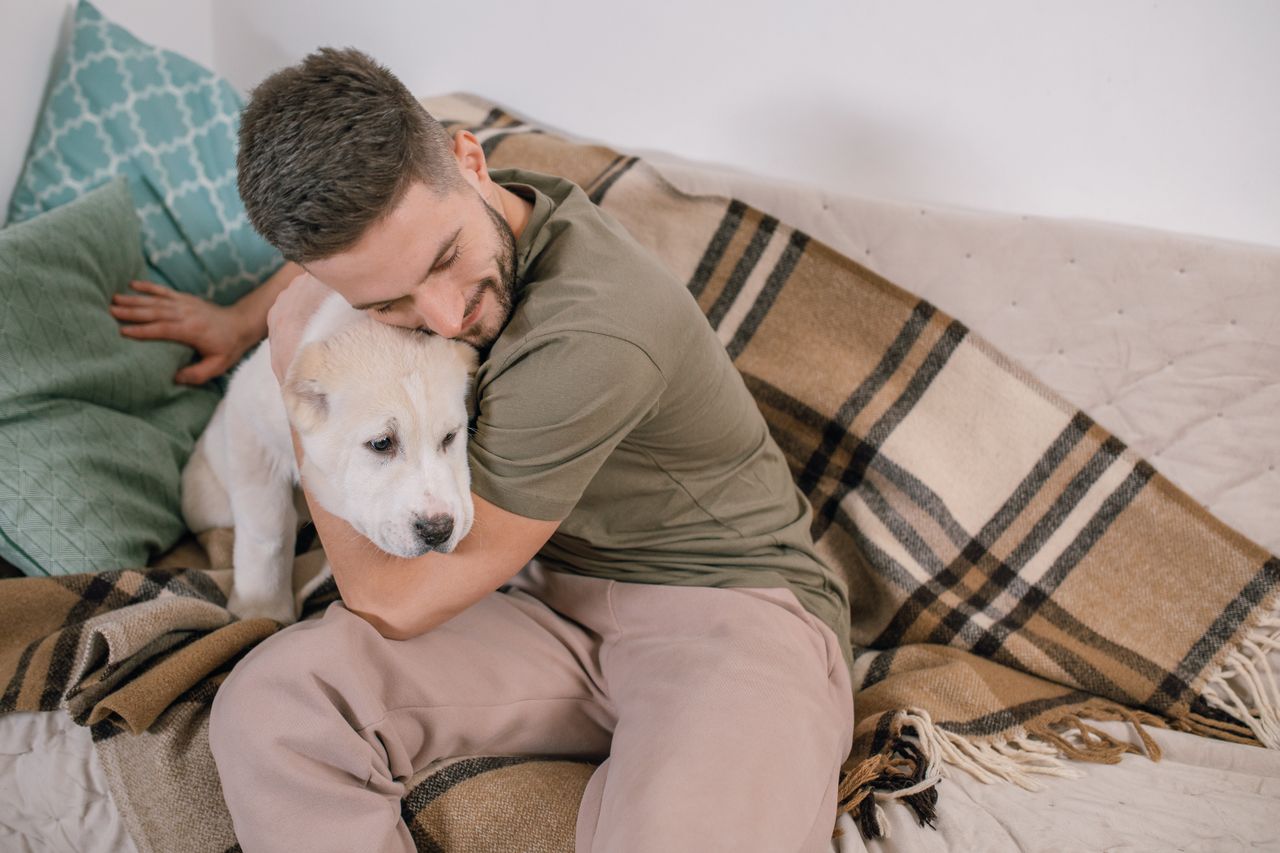
Dogs are social animals, and their relationships with familiar people can become meaningful parts of their daily lives. For some dogs, sleeping pressed against an owner may simply be one way to stay physically close to someone they enjoy being around. A 2008 study published in Applied Animal Behaviour Science examined attachment behavior in 38 adult dog-owner pairs. Under the tested conditions, the researchers found that dogs explored and played more in their owners’ presence than when alone or with an unfamiliar person. The findings provided evidence that relationships between dogs and their owners can show attachment-like characteristics.
Attachment is more than following someone around the house. It involves a relationship in which a familiar person can provide security and comfort. Sleeping close to an owner may fit into this broader relationship, although the sleeping behavior itself cannot establish the strength or quality of the bond.
Related: Dogs Can Smell When You’re Stressed, a Study Found — Here’s How Researchers Tested It
You’re Their Safe Place When the World Feels Uncertain
A dog that presses against you during a thunderstorm, in an unfamiliar room, or after a change in routine may be seeking reassurance. Your presence can make an otherwise uncertain situation feel familiar. Notice when your dog seeks contact. If they usually sleep close to you but become especially clingy during storms, when visitors arrive, during travel, or during other disruptions, their behavior may be responding to the circumstances.
Offering a calm environment, a comfortable resting place, and a predictable routine can help. Avoid assuming that your dog is deliberately being difficult or demanding. First, consider whether something in their surroundings might be affecting their comfort.
Your Dog Wants to Feel Connected to You, Even While Sleeping
For some dogs, sleeping close may be a natural extension of their everyday social behavior. They follow you from room to room, settle nearby while you work, and choose a sleeping spot within reach. Dogs vary considerably in how much physical contact they enjoy. One may prefer sleeping directly against an owner, while another is perfectly content on a bed a few feet away. Neither preference automatically indicates a stronger or weaker relationship.
Research published in Animals in 2022 examined the relationship between owner-directed attachment behavior and sleep-related brain activity in family dogs. In a study in which dogs slept in an unfamiliar environment with their owners present, researchers found associations between attachment scores and certain features of non-rapid eye movement (NREM) sleep. The results suggested that differences in attachment were associated with measurable differences in sleep-related brain activity under those study conditions.
If your dog likes sleeping close to you and you both rest comfortably, there is generally no reason to assign deeper meaning to every movement. Your dog’s preference for company may simply be part of how they experience everyday life with you.
Your Warmth and Scent Bring Them Comfort
Not every reason a dog sleeps against a person is emotional. Practical factors may contribute, too. Your body provides warmth, and your bedding may offer a soft, familiar place to rest. A dog that curls against your legs or presses into your side may be choosing a comfortable position rather than trying to communicate a particular feeling.
Familiar smells may also add to the appeal. Dogs have a highly developed sense of smell, and scent plays an important role in how they interact with their environment. Consider the physical environment before interpreting the behavior. Is your dog sleeping close because the room is cool? Is their own bed less comfortable? Have you recently changed their bedding or moved their usual sleeping spot?
A few simple adjustments may help. Provide a comfortable dog bed, keep the sleeping area at a comfortable temperature, and let your dog choose between resting close to you and settling in their own space. You do not have to decide whether the behavior is emotional or practical. Both factors may contribute to the same choice.
Your Dog May Be Looking for Reassurance, Not Just Cuddles
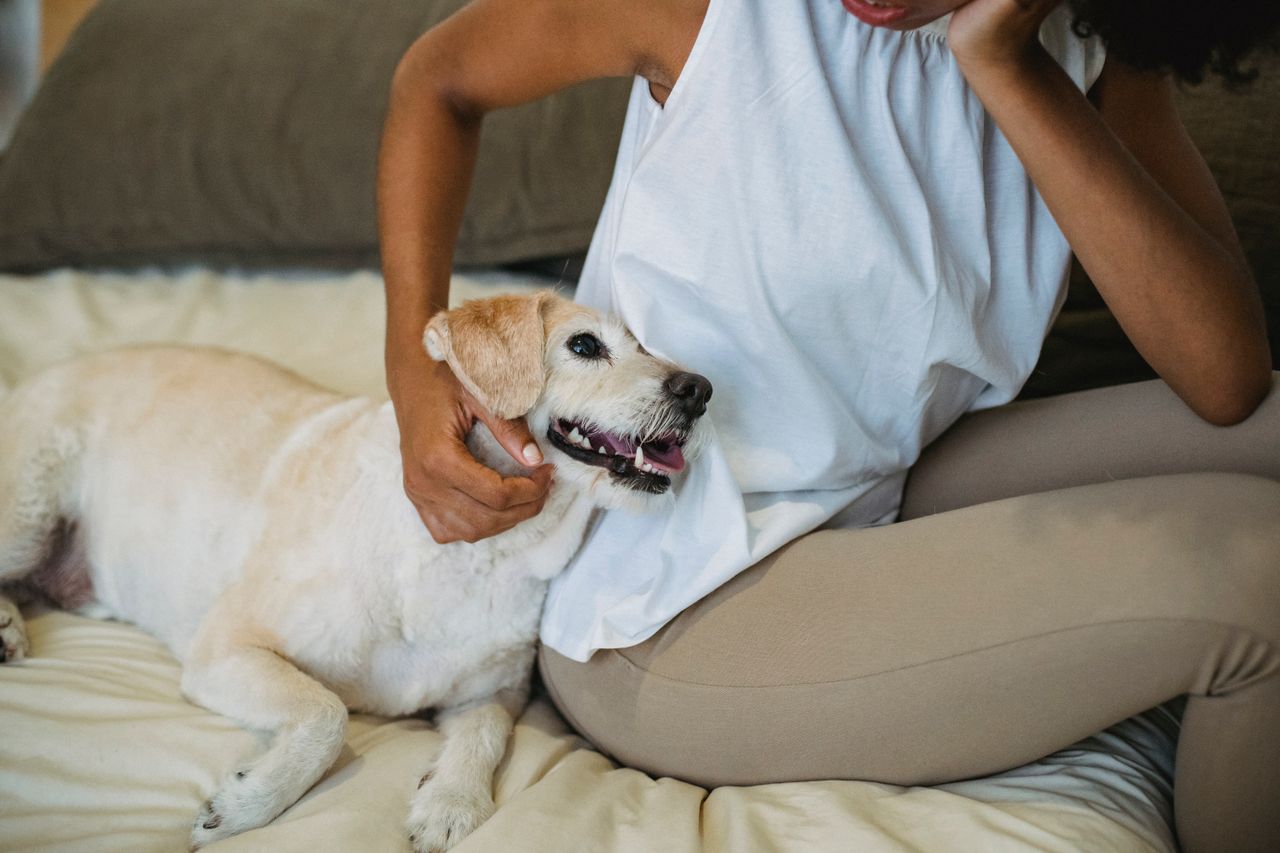
Sometimes, a dog seeks more physical contact because something has changed. A new home, a changed household routine, unfamiliar visitors, or a disruption to normal activities may affect where and how a dog rests. Dogs cannot explain discomfort in words, so behavioral changes deserve attention. However, increased closeness does not automatically mean a dog is frightened or anxious.
Look for a pattern rather than a single behavior. Does your dog settle normally once they are beside you? Can they rest comfortably in another familiar location? Or do they seem unsettled, keep moving around, pant when they aren’t hot, or struggle to relax even when you are present?
The broader pattern matters because anxiety involves more than simply wanting company. The Merck Veterinary Manual explains that separation anxiety can involve distress when a dog is left alone, including behaviors such as barking, pacing, and inappropriate elimination. These signs are not specific to separation anxiety, and their presence does not establish a diagnosis. Other behavioral or medical issues may cause similar changes.
Related: 8 Everyday Things You Do That Could Make Your Dog Feel Rejected
Your Dog’s Sleeping Habits Can Reveal Their Personality
Some dogs seem to be natural companions. They enjoy staying near their owners throughout the day and choose the closest available resting spot at night. Others prefer their own space but occasionally seek physical contact when they feel like it. These differences are normal, so don’t interpret every dog’s behavior the same way. Breed tendencies, early experiences, individual temperament, and the home environment may all influence how a dog behaves, but none of these factors definitively explains a particular sleeping position.
Your dog’s habits may also change over time. A puppy may seek contact often, while an adult dog may prefer a separate bed. An older dog may begin choosing a different sleeping arrangement because their previous position is no longer comfortable. Rather than relying on assumptions about what a particular breed or sleeping position means, observe your own dog.
Notice where they usually rest, how easily they settle, whether they appear comfortable when touched, and whether their behavior changes in unfamiliar situations. These details are more useful than assigning a fixed meaning to every cuddle.
How to Tell Whether Your Dog Is Comfortable or Anxious
Distinguishing comfortable closeness from distress matters. Your dog may enjoy sleeping against you without needing constant physical contact, or they may struggle to settle when you are out of reach. Start by looking at the whole picture. A dog who settles easily, rests comfortably, and behaves normally during the day is less concerning than one who suddenly becomes restless or distressed.
Separation-related problems usually involve a pattern of distress associated with being left alone, not merely a preference for sleeping beside a person. The Merck Veterinary Manual notes that signs of separation-related distress often emerge within the first 15 to 30 minutes after an owner leaves. Behaviors may include vocalization, pacing, and attempts to escape (see the clinical veterinary guidance).
If you suspect a problem, observing your dog when you leave can provide useful information. A camera may help you see whether they settle, sleep, or show repeated signs of distress. A veterinarian can help distinguish separation-related problems from other causes.
Key Takeaways

When your dog sleeps pressed against you, the behavior may reflect affection, familiarity, comfort, warmth, or a desire for security.
To understand your dog, look beyond the cuddle itself. Notice how they behave throughout the day, whether they settle comfortably, and whether their habits have changed. If the behavior is relaxed and familiar, it may simply be one of the ways your dog enjoys being close to you.
If your dog curls up against you night after night, you can appreciate that small moment of companionship without needing to interpret it as anything more than a comfortable place to rest beside someone familiar.
Other Posts You Might Like
- Why Your Dog Stares at You While It Poops — and What It’s Really Trying to Tell You
- These 9 Dogs Bark So Much That They Will Test Your Patience
- Dogs Don’t Actually Feel Guilty — What That ‘Guilty Look’ Really Means, According to Research
If you like what you just read, then subscribe to our newsletter and follow us on social media.


