Stories

Heartbreaking Royal Standoff: Prince Harry’s Security Fight Threatens Archie and Lilibet’s Chance to See King Charles

Prince Iheasi
By Prince Iheasi 15 min read

Prince Harry’s hoped-for return to Britain with Meghan Markle, Prince Archie, and Princess Lilibet was meant to feel like a rare opening in a royal story that has spent years hardening into distance. It was supposed to be a visit tied to the Invictus Games, shaped by private family hopes, and quietly loaded with the possibility that King Charles might finally spend meaningful time with the grandchildren he barely knows.

Instead, the trip has become something sharper and sadder. A possible family homecoming has been pulled into the old argument Harry has never stopped making: that he cannot safely bring his wife and children to the United Kingdom without the official police protection he believes their public profile and risk level demand.

That is what gives this story its emotional force. This is not only about a duke, a duchess, a king, or a calendar of royal-adjacent engagements. It is about two young children, ages seven and five, who have reportedly not been in Britain since the late Queen Elizabeth II’s Platinum Jubilee in 2022. It is about a grandfather who is also a monarch.

It is about a father who wants his children to know his homeland but says he cannot risk exposing them to the pursuit and danger that shaped his own childhood.

The planned July trip was connected to the official one-year buildup to the 2027 Invictus Games in Birmingham, a signature cause that has become one of Prince Harry’s most meaningful public missions.

Yet the private side of the trip was always going to draw the most attention. Archie and Lilibet were not expected to appear at public engagements. They were not being presented as part of a royal spectacle. The deeper hope was quieter: that they could come to Britain, remain out of the public eye, and possibly see King Charles away from cameras, crowds, and commentary.

That possibility is now uncertain. Reports say Harry is reassessing the visit after his request for police protection outside royal residences was denied. The King has reportedly offered accommodation at a royal residence, but a secure palace room does not answer all the questions Harry is asking.

The problem is not simply where the family sleeps. It is how they move, who protects them from the airport to the road, what happens between private meetings and public events, and whether their presence in Britain would trigger the kind of media chase Harry has spent his adult life trying to keep away from his children.

Why Prince Harry’s U.K. Visit Was Never Just Another Royal Trip

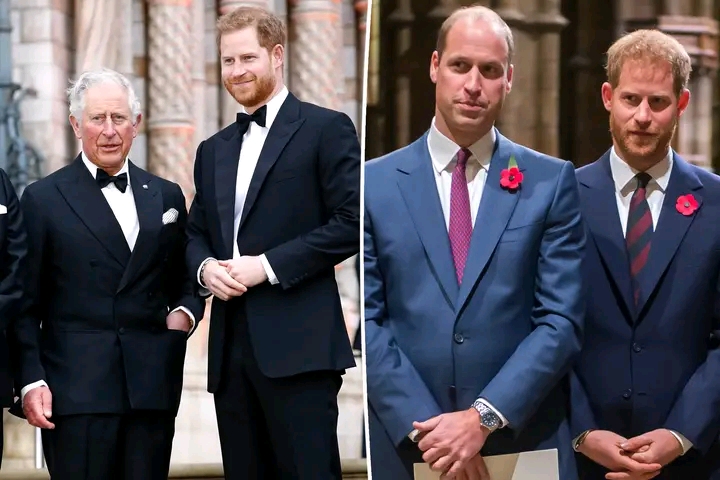
Image Credit: Facebook/Royal Videos

The timing of the planned visit matters. The 2027 Invictus Games will bring wounded, injured, and sick service personnel and veterans to Birmingham in July 2027, with competitors from 25 nations expected to take part across 12 adaptive sports. For Harry, Invictus is more than an event. It is one of the clearest expressions of who he became after military service, after royal duty, and after the long, public rupture with his family.

That makes the July 2026 countdown events important in their own right. Harry’s presence would focus attention on veterans, resilience, recovery, and Birmingham’s global moment. Meghan’s attendance would add further visibility. But the children’s possible presence in Britain, even in private, would have made the visit far more delicate.

For Archie and Lilibet, Britain is not just a country. It is part of their inheritance, even if they are growing up thousands of miles away from palace life. It is where their father was born, where their grandfather reigns, where their great-grandmother ruled for seven decades, and where the family name they carry was shaped long before they were old enough to understand it.

That is why this trip was never only about logistics. It carried the chance to give Harry’s children something ordinary that has become almost impossible: memories. Not headlines. Not televised balcony moments. Not carefully interpreted photographs. Just memories of being in the country their father still calls home.

The Real Security Question Is Bigger Than Bodyguards

To understand why this issue keeps returning, we have to separate private security from official police protection. Harry’s concern is not simply whether he can hire guards. The heart of the dispute is whether he and his family can receive U.K. police protection with access to official threat intelligence, public-order coordination, and legal authority that private security teams lack.

That distinction matters because Britain is not California. A private security team can guard a doorway, escort a client, and plan a route. It cannot operate like the state. It cannot access all the intelligence available to police. It cannot control public spaces with the same authority. It cannot respond to certain threats in the same way.

Harry’s argument has long been that his family’s risk profile is unusual. He is not a private celebrity in the normal sense, but he is no longer a working royal in the traditional sense either. He is the King’s son, a former soldier, a global public figure, and a man whose wife and children remain magnets for attention. That puts him in the awkward middle of a system built for clearer categories.

Before the Sussexes stepped back from senior royal duties in 2020, their security status was different. After that decision, the U.K. security framework changed. Harry challenged the arrangement in court, arguing that the process left him and his family exposed.

In May 2025, he lost his Court of Appeal challenge over the decision that he should no longer receive the same level of publicly funded protective security when visiting Britain.

That legal defeat did not end the emotional argument. If anything, it sharpened it. The court process addressed the law, procedure, and the role of RAVEC, the committee responsible for protective security decisions for royalty and public figures. Harry’s public concern deals with something much harder to settle: whether he can look at his children, put them on a plane, and believe they will be safe once they land.

A Royal Residence Can Offer Walls, But Not a Complete Journey

King Charles’ reported offer of accommodation at a royal residence is generous, but it does not close the security gap. A royal residence can offer privacy, control, and protection once the family is inside. It may reduce exposure and signal that the King is not shutting the door on his son, Meghan, or the children.

But the challenge begins before the gates.

The Sussex family would still have to arrive in Britain. They would still need to travel. Harry would still have Invictus-linked events, private meetings, charitable causes, and potentially family visits. Every movement outside a protected residence creates a new question. Who controls the perimeter? Who manages photographers? Who responds if plans leak? Who has intelligence before something happens?

This is why the palace accommodation detail is so revealing. It shows the difference between a family solution and a security solution. A room can be offered. A residence can be made available. A private visit can be welcomed in principle.

But Harry’s deeper demand is for a protective system around the entire visit, not just a safe place at the end of the day.

That tension gives the story its quiet tragedy. The King can offer a roof. Harry is asking for a route.

Archie and Lilibet Are Not Public Figures by Choice

One of the most important details in this story is that Archie and Lilibet were reportedly not expected to attend public engagements. That point should not be overlooked. It changes the moral temperature of the debate.

If the children were being brought to Britain for staged appearances, balcony-style symbolism, or brand-building photographs, the public conversation would be very different. But the reported plan suggests something more private. The children would have been near the visit rather than at its center. They would have been part of family life, not public duty.

Yet even that private presence would likely have triggered enormous attention. A single glimpse of Archie or Lilibet in Britain would become global news. A car arriving at a royal residence would be studied. A possible meeting with Charles would be dissected. Even their absence from public events would not protect them from public obsession.

Harry knows this better than most. His childhood unfolded in front of cameras. His mother’s life and death were bound up with the ruthless appetite of the press. Every time he speaks about paparazzi and safety, that history sits underneath the words.

This is where the story stops being abstract. Harry is not only arguing with a government committee or an institution. He is arguing with the past. He is trying to prevent his children from inheriting the parts of royal visibility that wounded him most.

King Charles Faces the Loneliest Part of the Divide

For King Charles, the emotional stakes are no less serious. He is the monarch, but he is also a grandfather. His relationship with Archie and Lilibet has been limited by geography, family conflict, public tension, and the security dispute that now threatens another possible meeting.

Princess Lilibet is widely understood to have met Charles only once, during the Sussex family’s 2022 visit for Queen Elizabeth II’s Platinum Jubilee. Archie has also spent very little time in Britain since the Sussexes moved abroad. That means the King’s relationship with Harry’s children is not being built through repeated visits, birthdays, walks, stories, or the small familiarity that makes a family feel real.

Time matters here. Children grow quickly. Grandparents age. Reconciliation is often discussed as if families can place it on hold and return to it when conditions improve. Real life is less forgiving. A missed summer becomes a missed year. A missed year becomes a childhood shaped by distance.

That is the human cost beneath the royal machinery. If this trip falls apart, it will be more than just another diary change. It will be another lost chance for Charles to know Archie and Lilibet as children, not merely as names in a family tree.

The Sussex Security Fight Has Become a Test of Modern Royal Status

The deeper question is what the modern monarchy does with people who are royal by birth but not royal by daily function. Harry and Meghan stepped back from working royal life. They built a new life outside the palace system. Yet they did not become anonymous. Their public profile did not shrink into normal privacy. In some ways, it became even more intense.

That is where the security argument becomes so difficult. The state sees categories. Working royal. Non-working royal. Official duty. Private visit. Public funding. Case-by-case assessment. Harry sees lived risk. He sees his military service, his mother’s fate, his wife’s treatment in the press, and his children’s vulnerability.

This is why both sides of the public debate remain so entrenched. Critics ask why taxpayers should fund protection for someone who left royal duty. Supporters ask why a man born into the world’s most visible family should be expected to rely on ordinary private arrangements when the risks around him are anything but ordinary.

The July visit sits directly inside that unresolved contradiction. Harry wants predictable protection before committing to travel with his family. The system appears to offer assessment and limited arrangements depending on the circumstances. Between those two positions lies the fragile possibility that Archie and Lilibet will see their grandfather.

Invictus Deserves the Spotlight, But the Family Rift Keeps Taking It

There is another layer of loss here. The Invictus Games should be the main story. Birmingham 2027 will be a major moment for veterans, service families, adaptive sport, and the United Kingdom. The Games exist to honor courage, recovery, and dignity. They are built around people who have endured pain and found a way to compete, rebuild, and inspire.

Harry’s connection to Invictus is one of the few parts of his public life that still cuts through the noise. Even many critics of the Sussexes acknowledge the importance of the Games. It is a cause with weight, history, and purpose.

Yet the security dispute risks dragging attention away from that mission. Instead of a clean story about Birmingham preparing to welcome the world, the conversation becomes Harry versus the Home Office, Harry versus the palace, Harry versus the press, Harry versus the ghosts of his past.

That is not good for Invictus. It is not good for the veterans at the heart of the event. This isn’t ideal for a city preparing to be on a global platform. But it reflects the reality of Harry’s life now: even his most meaningful public work is often overshadowed by the unresolved private war around his family’s place in Britain.

Harry’s Homeland Has Become the Hardest Place to Bring His Children

The saddest contradiction in this story is that Harry still speaks of Britain as home in an emotional sense, yet it is the place he appears most hesitant to bring his children.

That is a brutal irony. Britain gave Harry his title, his family history, his military identity, his charitable foundation, and the grief that shaped him. It is the country of his mother, his father, his brother, and the royal legacy his children are connected to, whether they live near it or not.

But for Harry, Britain is also where the risks feel most personal. It is where the press culture he distrusts is most familiar. It is where royal status creates both access and exposure. It is where every family movement can become a public referendum. It is where the question of police protection is not theoretical but immediate.

For Archie and Lilibet, that means their father’s homeland may remain something they learn about from a distance. They may know Britain through stories, photographs, ceremonies, and news coverage rather than through lived childhood experience. They may understand that their grandfather is King before they understand him as a man who could read to them, laugh with them, or be present.

That is the real ache of the story. A royal child can inherit a title without inheriting a place. A grandfather can reign over a kingdom and still struggle to see his own grandchildren inside it.

What Happens If the Visit Falls Apart

If Harry travels alone, the Invictus work can continue, but the emotional opportunity will narrow. The public will see the Duke of Sussex back in Britain, but not the family reunion that could have changed the tone of the visit.

If Meghan and the children stay away, critics may frame it as another Sussex drama, while supporters will see it as proof that Harry’s fears remain unresolved. Either way, the monarchy will face another uncomfortable image: the King’s youngest grandchildren kept at a distance from Britain because the adults around them cannot settle the terms of safety.

If a limited compromise is reached, the visit could still take place in a reduced form. The family might limit movement, stay in secure locations, and avoid anything that could cause unnecessary exposure. That would allow a private meeting with Charles, but it would also underline the strange reality of their position. To come home, they may have to move almost invisibly.

And if the full family visit goes ahead safely, it could become more significant than any formal appearance. It would show that even after court battles, interviews, palace silence, and years of bitterness, a small family bridge can still hold.

A Royal Story About Childhood, Memory, and the Cost of Distance

The most compelling way to understand this moment is not as a security story with a family detail attached. It is a family story being controlled by a security decision.

Harry wants his children to know where he came from. Charles may want to know his grandchildren before more years disappear. Meghan is caught in the practical reality of whether the journey is worth the risk. Archie and Lilibet, too young to choose any of this, sit at the center of a royal storm they did not create.

That is why the stakes feel unusually raw. The monarchy often speaks in symbols, but children live in specifics. They remember rooms, faces, voices, gardens, meals, and small kindnesses. They do not remember constitutional boundaries or committee decisions. They remember who was there.

If the July visit collapses, the loss will not be measured only in headlines. It will be measured in another stretch of childhood spent away from a grandfather, another missed chance to make Britain feel familiar, and another reminder that royal blood does not guarantee family closeness.

Prince Harry’s security fight may look like a battle over protection, status, and public money. Underneath it is something more intimate and more painful. A father is trying to decide whether the country that made him is safe enough for the children he loves most.

For the House of Windsor, that question should land heavily. If Archie and Lilibet cannot come to Britain without fear, then the monarchy is not only facing another Sussex controversy. It is watching the next generation of one branch of the family grow up with the palace as a distant landmark rather than a living home.

Author
Prince Iheasi

Prince Iheasi is a professional writer and multidisciplinary creative whose work is driven by clarity, innovation, and practical problem-solving. With a background in Agricultural and Bioresources Engineering, he brings a unique analytical perspective to his writing, combining technical knowledge with the ability to communicate complex ideas clearly and engagingly. Whether crafting informative articles, compelling web content, persuasive copy, or insightful guides, Prince focuses on delivering value-driven content that informs, educates, and inspires.

He is dedicated to producing high-quality work that resonates with diverse audiences and meets the highest standards of professionalism. Drawing from his expertise in engineering, technology, artificial intelligence, cryptocurrency, web development, and digital media, Prince creates content that is both impactful and relevant. His work reflects curiosity, continuous learning, and a commitment to excellence as he steadily builds a career founded on authenticity, creativity, and meaningful communication.

Leave a Reply

Your email address will not be published. Required fields are marked *