


Ford is confronting one of its most significant safety recalls in recent years after confirming that more than 741,000 vehicles across the United States may be affected by a transmission defect that can prevent Park from engaging properly under certain conditions.
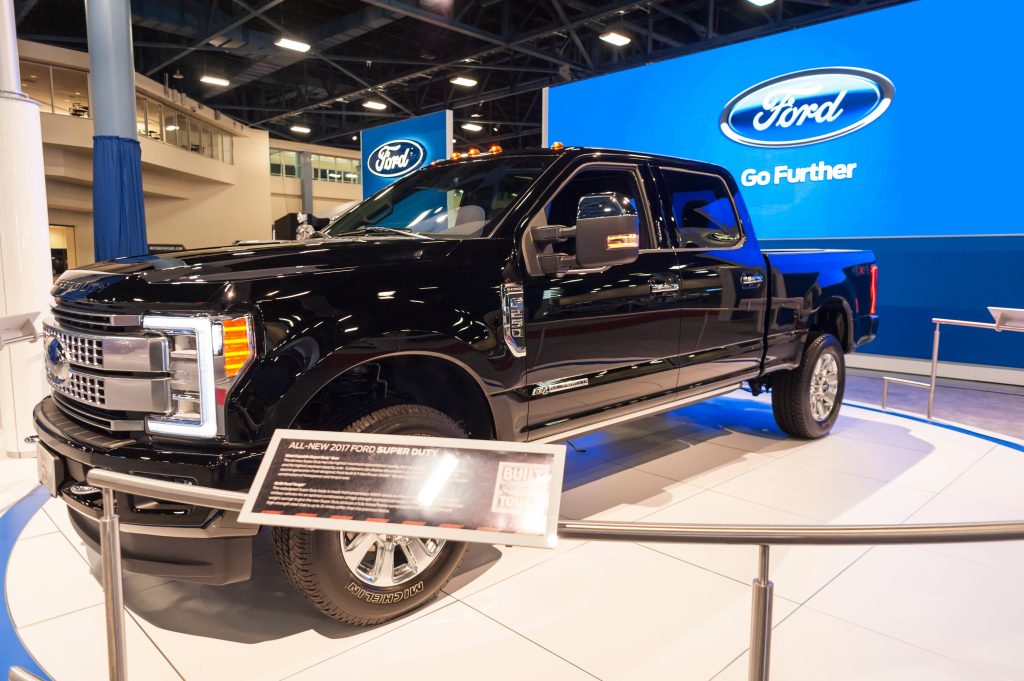
The issue cuts across some of the company’s most widely driven models, including the Ford F-150, Explorer, Expedition, and Lincoln Aviator and Navigator, intensifying scrutiny on the reliability of modern electronically controlled transmission systems.
At the center of the concern is a failure mode that does not simply affect performance. It strikes at the foundation of vehicle safety: ensuring that a parked vehicle remains stationary.
A Core Safety Function That Cannot Be Assumed
In a properly functioning vehicle, selecting Park mechanically locks the transmission, preventing movement even when the engine remains running or the vehicle is left unattended.
In the affected Ford vehicles, however, a defect in the 10-speed automatic transmission system paired with park-by-wire technology can interrupt that process under specific conditions.
The issue begins within the transmission valve body assembly. When hydraulic flow is restricted during certain shift events, the parking mechanism may engage at the wrong moment while the vehicle is still in motion. This unintended interaction places stress on internal components that were not designed to absorb engagement under dynamic driving conditions.
Over time, repeated stress can cause permanent damage to the parking system. Once that damage occurs, the vehicle may still appear to shift into Park normally, but the mechanical integrity required to hold the vehicle stationary is no longer guaranteed.
That disconnect between driver perception and mechanical reality is what elevates this recall beyond a routine software correction.
The Vehicles Affected and the Scale of Exposure
The recall covers a broad range of Ford and Lincoln vehicles produced over several model years.
Affected models include Ford Explorer vehicles from 2020 to 2021, Ford Expedition SUVs from 2018 to 2021, Ford F-150 trucks from 2020 to 2021, Lincoln Aviator models from 2020 to 2021, and Lincoln Navigator SUVs from 2018 to 2021.
These vehicles are not niche products. They represent high-volume models commonly used for family transport, commercial work, towing, and long-distance travel. That makes the scope of exposure particularly significant, even though Ford estimates only a small percentage of vehicles are likely to contain the defect.
When a safety issue affects mainstream vehicles on this scale, the concern is not limited to probability alone. It is about exposure in everyday driving environments, where the consequences of failure can escalate quickly.
Warning Signs That May Appear Before Failure
Drivers may not experience immediate or obvious symptoms. However, certain warning indicators can appear before the system deteriorates further.
One of the most common is a wrench-shaped dashboard light, which signals a powertrain or transmission fault. In some cases, the vehicle may also automatically activate the electronic parking brake if it detects that Park has not been properly engaged.
However, reliance on electronic backup systems introduces its own limitations. These systems depend on vehicle electronics being fully active and capable of detecting movement or incorrect gear engagement. Under certain shutdown or low-power conditions, that detection capability may be reduced or unavailable.
This creates a troubling gap. A driver may believe the vehicle has engaged Park correctly, while the system’s ability to verify or enforce that state may not always be active when it matters most.
How the Transmission Defect Develops Over Time
The root cause lies in the transmission valve body separator plate, a precision component that controls hydraulic pressure in the transmission system.
Under certain operating conditions, this component may restrict or redirect fluid flow, affecting the timing of park pawl engagement. Instead of engaging only when the vehicle is fully stopped, the mechanism may engage briefly while the vehicle is still moving.
This type of engagement introduces abnormal stress on internal transmission components. The damage is not always immediate. Instead, it accumulates gradually, weakening the system that holds the vehicle in place.
The most concerning aspect is that the vehicle may continue to function normally in all other respects. Shifting, acceleration, and driving behavior may appear unaffected while the park system itself is already compromised.
That separation between outward normality and internal failure is what makes detection difficult for drivers.
Why Rollaway Risk Is Treated as a High-Severity Safety Issue
A rollaway incident is not a theoretical inconvenience. It is a real-world hazard that can develop in seconds without warning.
Once a parked vehicle begins to move unintentionally, the outcome depends entirely on its surroundings. In residential areas, it may collide with other parked vehicles or enter driveways and sidewalks. In urban environments, it may enter traffic lanes or strike pedestrians. In commercial or parking-garage settings, confined spaces can amplify damage.
Even low-speed movement can cause significant property damage or injury because the driver is typically not in the vehicle to intervene.
This is why even a low defect rate can justify a large-scale recall. The severity of the outcome outweighs the statistical likelihood of occurrence.
Reported Incidents and Regulatory Attention
Automaker reports tied to the defect include allegations involving property damage and injuries. While not every report has been independently verified, the pattern of incidents was sufficient to escalate the issue into a formal safety recall.
The presence of injury-related allegations is particularly significant because it suggests that failures are not confined to mechanical inconvenience. Instead, they can directly affect public safety in uncontrolled environments such as driveways, streets, and parking areas.
Regulators treat these cases with heightened attention precisely because rollaway incidents are difficult to predict and often occur outside the driver’s immediate control.
The Repair Strategy and What It Reveals
Ford’s response includes both a software update and a physical inspection of the transmission system. The software update is intended to prevent the sequence of commands that can trigger the defect condition. At the same time, technicians will inspect vehicles for signs of damage already caused by the issue.
If internal wear or damage is identified, transmission components will be replaced at no cost to the owner.
This dual approach is important because it acknowledges a key reality: software correction alone is not enough if mechanical damage has already occurred. In other words, the recall is not only preventive but also diagnostic.
That distinction suggests the defect may have been present long enough in some vehicles to cause secondary wear before it was detected.
A Broader Engineering Concern in Modern Vehicles
Beyond the immediate recall, the issue highlights a broader shift in automotive design. Modern vehicles increasingly rely on electronic control systems for functions that were once purely mechanical.
Park-by-wire systems eliminate direct mechanical linkage in favor of electronic signals and hydraulic coordination. While this improves efficiency and allows for more flexible design, it also introduces new dependencies on software logic, sensor accuracy, and system synchronization.
When those systems fail in combination, the result is not always a clear warning or immediate shutdown. Instead, failures may emerge gradually, hidden behind normal-looking vehicle behavior.
That is where the concern becomes systemic rather than isolated.
What Owners Should Do Now
Owners of affected Ford and Lincoln vehicles should not wait for symptoms to appear before taking action. The recall is not dependent on visible failure, and in many cases, vehicles may appear completely normal even while the defect exists.
The most critical step is to verify whether a vehicle is included and promptly schedule a dealership inspection. Until repairs are completed, the consistent use of the parking brake is a necessary precaution, particularly in environments where a vehicle could roll due to slope or external forces.
While Ford’s estimate suggests only a small portion of vehicles may actually contain the defect, the seriousness of the potential outcome makes early action essential. When a system responsible for keeping a vehicle stationary becomes uncertain, the risk is no longer theoretical; it becomes operational.


