
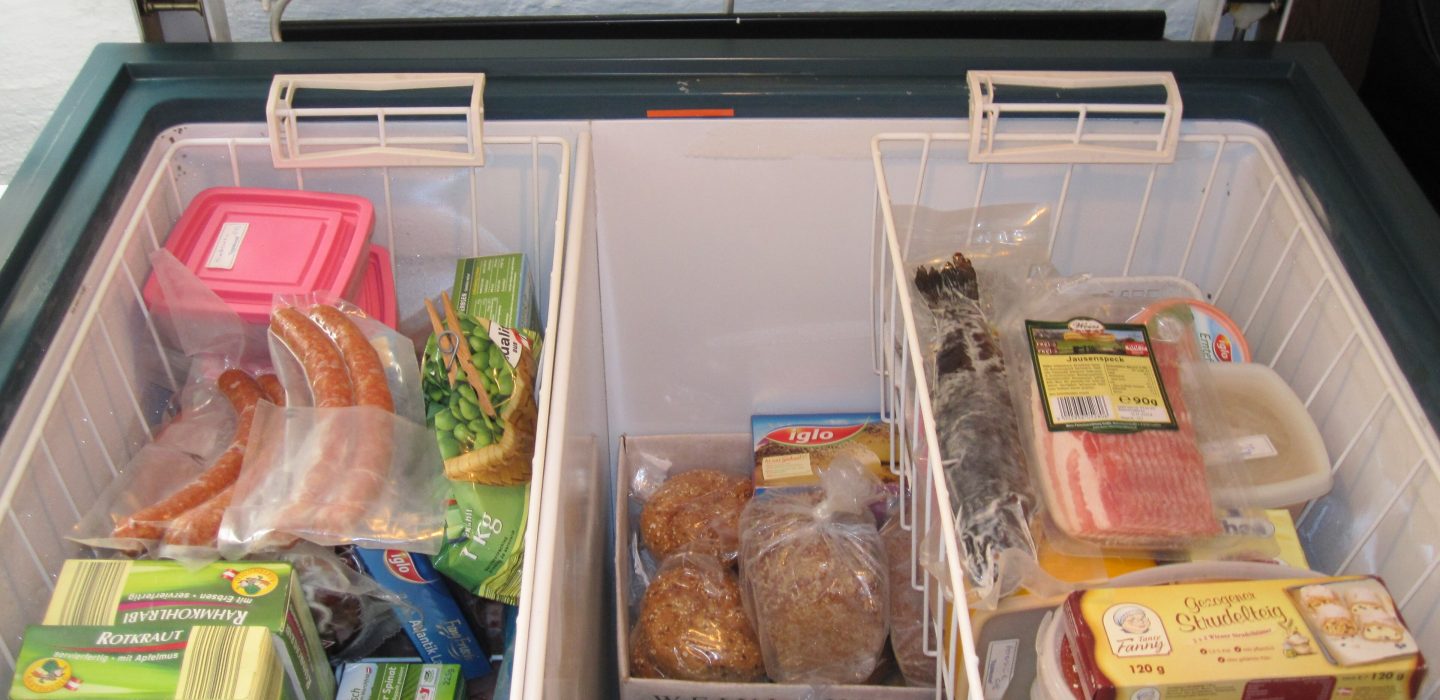


Holiday cooking season turns the freezer into the most valuable real estate in the house, and the U.S. Department of Agriculture has a short list of things that should not be taking up space in it. In its Freezing and Food Safety guide, the USDA’s Food Safety and Inspection Service flags shell eggs, food in sealed cans, mayonnaise, cream sauce and lettuce.
The first two are about safety. The last three are about texture, and anyone who has thawed a container of curdled cream sauce already knows how that story ends.
1. Shell Eggs: The USDA’s Firmest No

The USDA guide does not hedge on this one: “Shell eggs should not be frozen.” Liquid expands as it freezes, and an egg that freezes and cracks its shell should be thrown out, according to the agency. It is a timely reminder with the USDA’s Thanksgiving kitchen prep steps already underway in many homes, and with breakfast classics on the menu for houseguests.
The federal cold food storage chart at FoodSafety.gov gives the workaround. For raw eggs, it says “Do not freeze in shell. Beat yolks and whites together, then freeze.” Raw egg whites and yolks can be frozen for up to 12 months for best quality, though the chart notes that yolks on their own do not freeze well. Hard-cooked eggs get a flat “Do not freeze.”
Accidents happen, especially in a garage fridge or a car trunk in January. The USDA’s Shell Eggs From Farm to Table page says eggs that freeze by accident in the shell should be kept frozen, thawed in the refrigerator and used immediately after thawing, as long as the shell did not crack.
2. Food in Sealed Cans
A sealed can is not a freezer container. The USDA guide says cans frozen accidentally, such as those left in a car or basement in sub-zero temperatures, can be a food safety problem. If a can swelled only because it froze, the food may still be usable, but the agency’s warning for anything that looks or smells abnormal is printed in capital letters: “DO NOT TASTE IT!”
The simple fix is to move canned food into a freezer-safe container before freezing. That applies to leftover cranberry sauce, pumpkin puree and broth as much as anything else.
3, 4 and 5. Mayonnaise, Cream Sauce and Lettuce
The other three foods on the USDA list are not dangerous in the freezer, just disappointing coming out of it. “Some foods simply don’t freeze well,” the agency says, naming mayonnaise, cream sauce and lettuce as examples.
The National Center for Home Food Preservation at the University of Georgia explains what goes wrong. Mayonnaise and salad dressings separate. Milk-based sauces may curdle or separate. Raw salad greens, lettuce included, come out “limp, water-logged” and quickly lose color and flavor. The same list adds cooked pasta and rice, which turn mushy, and fried foods, which lose their crunch.
A Mississippi State University Extension freezer tips sheet lands in the same place, listing lettuce and salad greens, mayonnaise, cream sauces, cottage cheese, cream cheese, sour cream and eggs in the shell as poor candidates. “Freezing can cause changes in flavor, texture, and appearance,” the extension writes. Vegetables meant for cooking are another matter, as shown in this guide to freezing fresh green beans.
The 0°F Rule and Other Freezer Basics
For everything that does belong in the freezer, the USDA’s guidance is to store food at 0°F or lower. The agency says food kept constantly at that temperature stays safe indefinitely, and that long storage affects only quality. Freezer burn, it adds, “does not make food unsafe, merely dry in spots,” so affected parts can be cut away.
Power outages are worth planning for in winter, too. According to the USDA guide, a full freezer will usually keep food frozen about 2 days if the door stays shut, while a half-full freezer lasts about a day. Temperature matters at every stage, which is why a warehouse cooler that lost temperature led to the Kayem Foods recall of about 1.58 million pounds of hot dogs and deli meats.
Thawing has its own rules. The USDA lists three safe methods: in the refrigerator, in cold water or in the microwave, and it warns against thawing on the counter, in the garage or in a car. Food thawed in the refrigerator can be refrozen without cooking. The Mississippi State sheet adds that food thawed in cold water or the microwave should be cooked right away, and that changing the cold water every 30 minutes keeps it cold.
That makes the countdown to Thanksgiving a good moment to check the freezer. A frozen turkey thawing in the fridge needs time and space, and questions can go to Butterball’s Turkey Talk-Line, which opens Nov. 2. For tidying up shelves before the big day, these kitchen tricks for home cooks can help make room.
Get stories like this by email. Sign up for Crafting Your Home.
This article was produced with AI assistance and edited for accuracy against the sources linked above.
Image: Tiefkuehlfan – CC BY-SA 3.0/Wikimedia Commons


