Flood Warning: 7 Critical Steps to Protect Your Dog

Floods can strike unexpectedly, and in moments of natural disaster, ensuring the safety of your loved ones, including your furry friends, becomes an immediate priority.
With floods becoming more frequent and severe due to climate change, it’s essential for pet owners to be prepared.
In this guide, we explore all the steps you need to take to keep your dog safe during a flood, from understanding the risks to creating a well-prepared emergency plan.
Understanding Flood Risks for Your Dog
Flooding can occur suddenly and without warning, putting pets at risk of injury or even death. It’s crucial to understand the specific risks flooding poses to your dog and how to mitigate them. Different regions have different risks for flooding based on their weather patterns, geography, and climate.
Key Flooding Causes in the U.S.
- Hurricanes and Tropical Storms: Particularly affect coastal areas like Florida, Louisiana, and the Carolinas.
- Monsoon Rains: Flash floods caused by heavy monsoons are common in the Southwest, particularly in states like Arizona and New Mexico.
- Tidal Surges and Tsunamis: Coastal areas like the Pacific Northwest, Alaska, and Hawaii are vulnerable to these sudden flood events.
- Ice Jams: Accumulation of ice in rivers can cause localized flooding, especially in colder regions.
By understanding the risks specific to your region, you can make informed decisions to safeguard your dog.
Prepare an Emergency Plan for Your Dog
Research Your Area’s Flood Risks
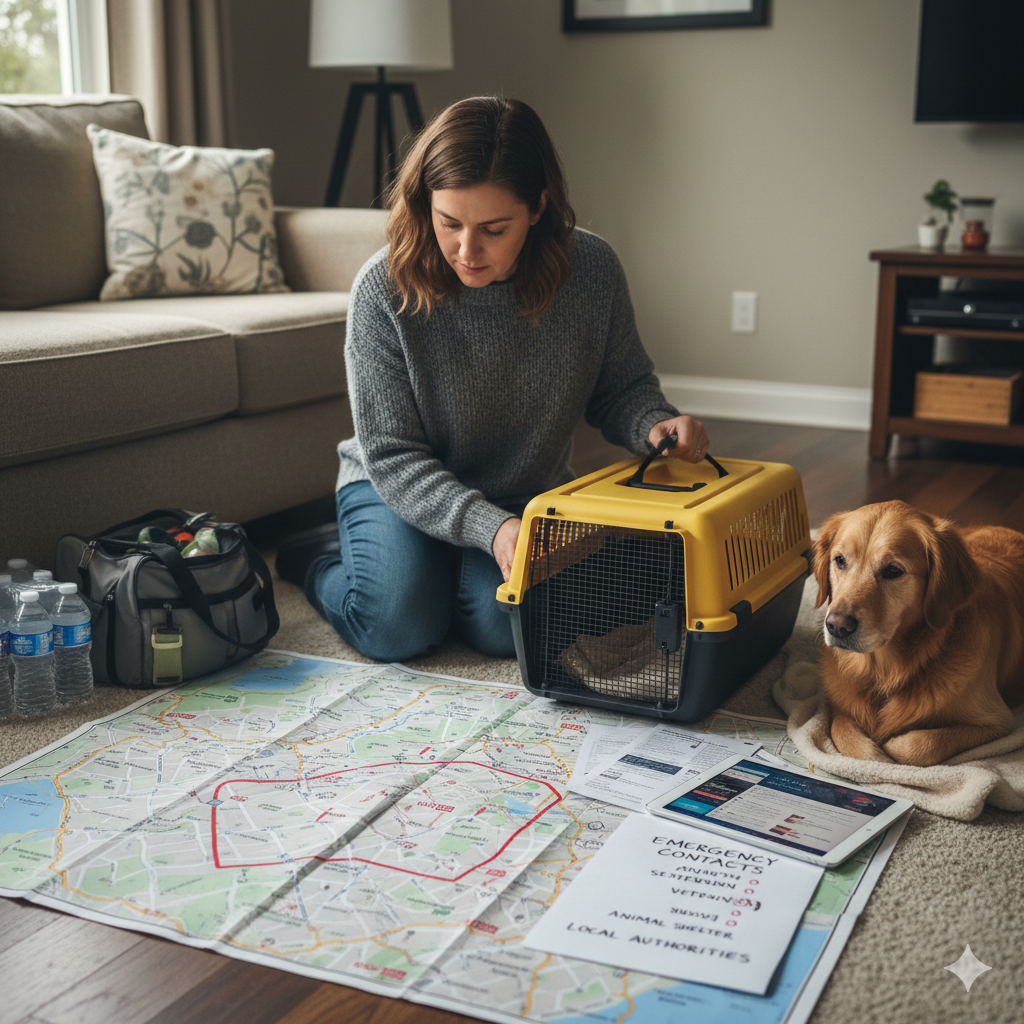
The first step to protecting your dog is understanding the specific flood risks in your area. Many regions have flood zones that are regularly updated by local emergency management divisions.
Flooding can occur due to various factors such as heavy rains, storm surges, or ice jams. Knowing your area’s flood risk allows you to create a customized emergency plan tailored to your region’s unique threats.
Consider the following:
- Local Weather Patterns: Know the seasonal risks for flooding in your area.
- Evacuation Routes: Plan routes to higher ground and identify pet-friendly shelters.
- Emergency Contacts: List local authorities, animal shelters, and veterinarians.
Create a Flood-Preparedness ‘Go Bag’ for Your Dog
Having an emergency bag packed and ready at all times is crucial. A flood emergency could require you to evacuate quickly, and having your dog’s necessities ready to go will save valuable time.
What to Include in Your Dog’s Emergency Kit:
- Dog Food: Pack enough food for at least a week, plus a portable feeding dish.
- Water and Collapsible Bowls: Ensure you have enough water for both you and your dog, and carry collapsible bowls for feeding and drinking.
- Medications: If your dog is on any medications, include these in your kit.
- Comfort Items: Bring along your dog’s favorite blanket, toy, or any item that offers comfort.
- Leash and Harness: A sturdy harness is preferable to a collar in emergencies as it gives you more control.
- First Aid Kit: Include basic first aid supplies for both humans and pets.
By having all essential items packed in one bag, you reduce the stress of scrambling to gather supplies when the flood threat becomes imminent.
Additional Preparations to Protect Your Dog
Have Comfort Items Ready

The stress of a flood can be overwhelming for both humans and dogs. To help your dog cope with the anxiety that accompanies such an event, bring items that provide comfort.
Comfort Strategies for Your Dog:
- Favorite Toys or Blankets: Dogs find comfort in familiar scents and objects.
- Calming Products: Items like calming pheromone diffusers (DAP), noise machines, or weighted blankets can help alleviate stress.
- ThunderShirts: These shirts apply gentle pressure to your dog’s body, helping to calm anxiety during loud storms.
- GPS Tracking Collar: A GPS-enabled collar can help locate your dog in case of separation.
Take Clear Photos of Your Dog
If you become separated from your dog during a flood, having clear, recent photographs of your pet will help search efforts. Take photos of your dog both wet and dry, and from multiple angles.
Helpful Tips for Photos:
- Take Photos from Various Angles: Capture your dog’s side, top, and front for a complete image.
- Include Objects for Scale: Photos with objects like furniture or food bowls will help others identify your dog by size.
- Update Regularly: Ensure your dog’s photos are updated, particularly if their appearance changes, such as after grooming.
This documentation is essential in helping rescue teams identify and reunite you with your dog in case of separation.
What to Do If You’re Separated from Your Dog During a Flood

Flood-related emergencies often result in pets being separated from their owners. It’s vital to remain calm and focus on finding your dog safely.
Tips for Reuniting with Your Dog:
- Do Not Risk Your Safety: If floodwaters rise, prioritize your own safety over attempting to rescue your dog directly. Pets have strong survival instincts and may be able to find shelter.
- Alert Local Authorities: Reach out to local shelters, animal control, and emergency services for assistance.
- Use Social Media and Lost Pet Networks: Share photos and information about your missing pet on social media platforms and lost pet websites.
Connect with Local Community Resources
Collaborating with community resources is one of the most effective ways to ensure your dog’s safety during a flood. Contact local emergency management offices to gather information about evacuation routes, pet-friendly shelters, and flood alerts.
Steps to Connect with Local Resources:
- Contact Emergency Management: Ask about evacuation plans, shelters that allow pets, and resources specific to pet owners during a flood.
- Join Pet Networks: Engage with local pet owner groups or online platforms to share information and updates during flood events.
- Volunteer for Pet Emergency Preparedness: By volunteering, you can learn valuable flood safety tips and be a part of local preparedness efforts.
Conclusion
When a flood threatens, preparation is key. By understanding the risks, creating a detailed emergency plan, packing a flood kit for your dog, and knowing how to handle potential separation, you can significantly increase your dog’s chances of remaining safe and secure.
Stay informed, stay calm, and stay prepared, ensuring the safety of your furry friend through every stage of the flood emergency.
Read the original article in Crafting Your Home.