
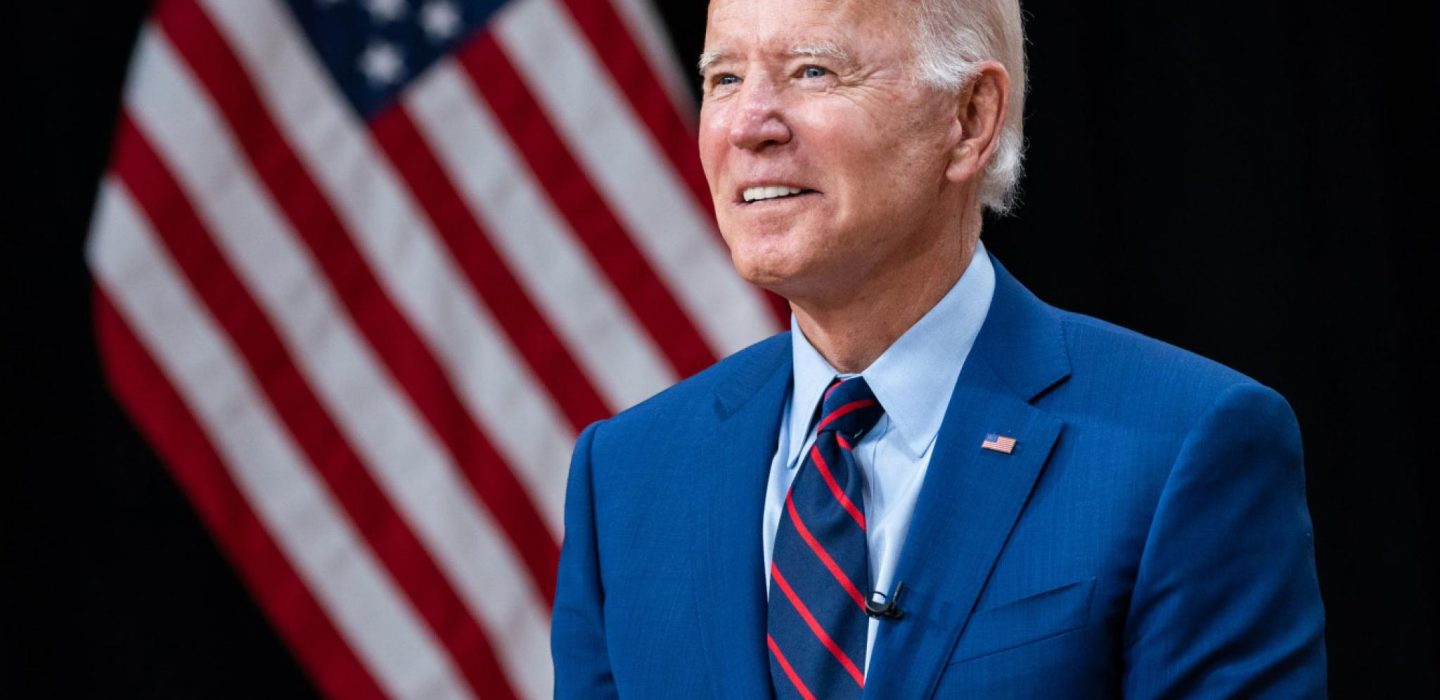

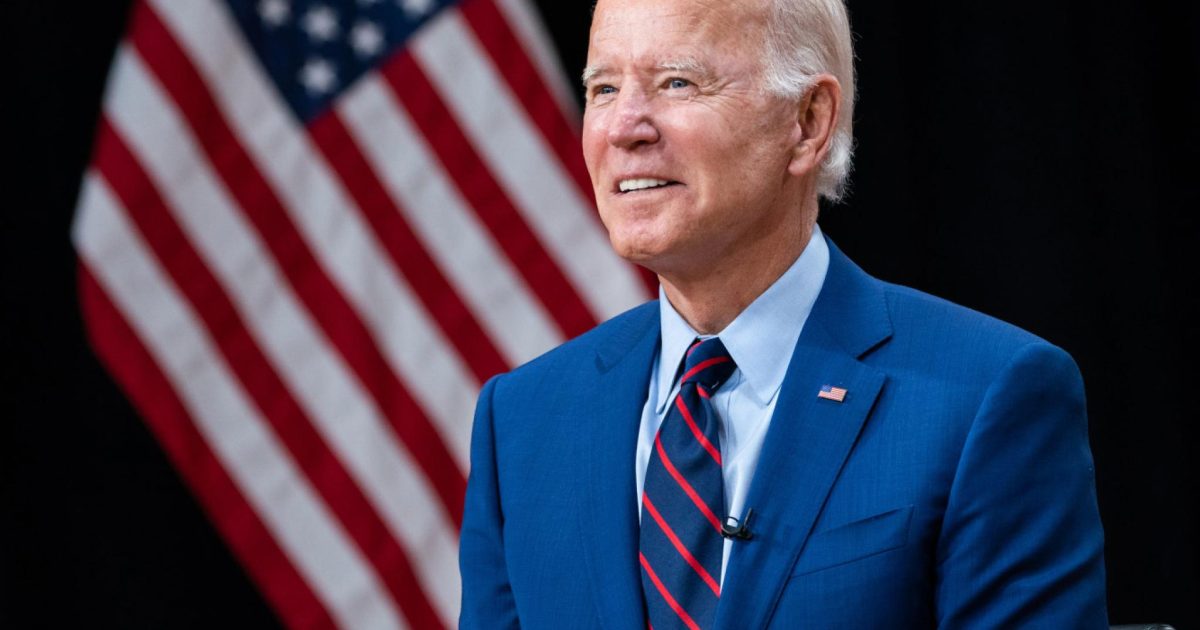
Two years after the debate that broke his reelection campaign, Joe Biden walked back into the national political fight with a line built to sting, spread, and survive the news cycle.
He did not return to apologize for 2024. He did not return to explain the night that pushed Democrats into panic and changed the direction of the presidential race. He returned to Maryland, stood before a room of Democrats preparing for the 2026 midterms, and aimed his sharpest public attack yet at the man who succeeded him in the White House.
“What a loser.”
The insult was aimed at Donald Trump, but the speech was bigger than the phrase. Biden’s remarks at the Maryland Democratic Party’s Fight Back & Win Gala in Hanover were not simply a personal jab from one former rival to another. They were a deliberate attempt to turn the painful anniversary of his 2024 debate collapse into a new Democratic rallying cry.
The setting mattered. The timing mattered. The audience mattered. Biden was speaking at Live! Casino & Hotel Maryland, not at a quiet policy forum or ceremonial gathering. He was headlining an event designed around one mission: train, organize, fight back, and win before the November 2026 midterm elections.
In that room, Biden was not trying to sound like a retired president enjoying the distance of history. He was trying to sound like a political alarm bell.
Biden Turns a Painful Anniversary Into a Night of Defiance
The most striking part of Biden’s Maryland appearance was not only what he said about Trump. It was when he said it.
The speech came exactly two years after the June 2024 debate that damaged Biden’s campaign so severely that Democrats began openly questioning whether he could remain their nominee. That night did more than create bad headlines.
It changed the course of the 2024 election, pushed Biden toward ending his reelection bid, and helped clear the path for Kamala Harris to become the Democratic standard-bearer.
Trump ultimately returned to the White House after defeating the Biden-endorsed Harris. That history hangs over every Biden speech now. It makes every attack on Trump more layered, more personal, and more politically loaded.
In Maryland, Biden seemed determined to reclaim the meaning of that anniversary. Instead of letting the date stand as a symbol of decline, he used it as a stage for confrontation. The message was clear: he may no longer be the Democratic nominee, but he is not done fighting Trump.
The “What a Loser” Line Was the Hook, Not the Whole Story

The viral line will dominate the conversation because modern politics runs on short, repeatable phrases. “What a loser” is blunt, easy to clip, and impossible to miss. It gives Democrats a shareable moment and gives Trump’s defenders something to attack.
Biden’s deeper claim was that Trump’s second term has become a spectacle of vanity, corruption, and misplaced priorities.
He framed Trump as a president more interested in decorating power than in using it responsibly. Instead of focusing only on policy differences, Biden targeted Trump’s taste for symbols, buildings, renamings, and public displays of dominance.
That gave the speech a visual quality. Biden was not talking abstractly about democracy. He was pointing to concrete images: a White House ballroom, a triumphal arch, the Kennedy Center naming fight, and the troubled Lincoln Memorial Reflecting Pool renovation.
Trump’s Washington Projects Became Biden’s Exhibit A
He attacked the demolition of the White House’s East Wing to make room for a ballroom. He referred to Trump’s attempt to place his name on the John F. Kennedy Arena for the Performing Arts, a move later reversed by court order.
He mentioned plans for a triumphal arch, an image that carries the weight of empire rather than ordinary public service. He also went after the Lincoln Memorial Reflecting Pool renovation, which became politically embarrassing after algae and structural problems undermined the project.
The reflecting pool detail gave Biden one of his most useful metaphors. A pool built to reflect national memory had instead become, in his telling, a symbol of mismanagement. A public landmark meant to honor history became a stage for accusations about no-bid contracting, political favoritism, and the difference between patriotic performance and competent government.
He was not just laughing at Trump’s taste. He was accusing him of using public power for self-glorification. He wanted Democrats to see these projects not as isolated controversies, but as evidence of a presidency obsessed with image.
Corruption Was the Darker Charge Beneath the Insult
Biden accused Trump’s administration of “brazen, blatant corruption,” using language meant to go beyond partisan disagreement. He did not frame Trump as merely wrong on policy. He framed him as a president whose use of power has become morally dangerous.
That distinction matters for the 2026 midterms. Democrats are not only trying to win an argument over taxes, immigration, trade, or spending. They are trying to convince voters that Trump’s second term needs a congressional check.
Biden’s corruption framing gives Democrats a way to connect separate controversies into one story. A ballroom is not just a ballroom. A naming fight is not just a naming fight. A contract is not just a contract. In Biden’s telling, each episode becomes part of a larger pattern: public office being bent toward personal image, personal allies, and personal grievance.
For a party searching for a clean midterm message, that pattern could be powerful. Voters may not follow every committee hearing or court filing, but they understand the idea of leaders helping themselves while ordinary people deal with everyday pressure.
January 6 Still Sits at the Center of Biden’s Warning
Biden also tied his attack to January 6, keeping one of the most defining events of the Trump era at the center of the political argument.
By criticizing reported efforts to compensate people convicted and later pardoned for their roles in the Capitol attack, Biden moved the speech from vanity projects to democratic accountability. That was a crucial shift. It reminded the audience that his argument against Trump has always been larger than personality.
The political purpose was obvious.
Democrats want the midterms to be about whether Congress will restrain Trump or enable him. By bringing up January 6, Biden was asking voters to remember what happened when Trump last refused to accept defeat and what it means if his allies now control more levers of power.
Maryland Was Not Just the Backdrop
The Fight Back & Win Gala was not only a fundraiser. It followed a statewide summit built around campaign training, organizing, communications, digital engagement, coalition-building, and candidate preparation. The event was designed to make Democrats more disciplined before the 2026 general election.
That matters because Maryland is a safely Democratic state at the presidential level, but the event was not only about Maryland. It was about using a blue-state machine to fuel a national fight.
The state party brought together elected officials, labor leaders, organizers, advocates, campaign professionals, volunteers, and voters with one purpose: to prepare for a midterm election that could decide whether Trump’s second term faces real resistance in Congress.
Maryland Democrats also had a reason to showcase Biden. State party leaders credited his administration with major benefits in the state, including gains in Affordable Care Act enrollment, private-sector investment, job growth, and student debt cancellation. That local record gave Biden a practical defense against the idea that he is only useful as an anti-Trump voice.
Biden, Wes Moore, and the Democratic Party’s Generational Test
Biden represents the Democratic Party’s old guard: institutional, experienced, familiar, and tied to the battles of the Trump era. Moore represents something different: younger, ambitious, media-ready, and often mentioned as part of the party’s next generation of national figures.
Putting them on the same stage told its own story. Democrats need Biden’s credibility with older voters, donors, labor groups, and party loyalists. But they also need leaders who can speak to a future beyond the Biden-Trump cycle.
That balance is delicate. If Democrats lean too heavily on Biden, they risk looking trapped in yesterday’s fight. If they move away from him too quickly, they risk losing a figure who still knows how to speak to the party’s emotional core.
Biden Still Raises Money, and That Matters
Political speeches are not only judged by applause lines. They are judged by what they do for the machine. Biden’s appearance reportedly helped raise a major sum for Maryland Democrats, making the night more than a symbolic return.
That matters because a former president’s value is measured in more than nostalgia. Can he bring donors into the room? Can he energize activists? Can he focus attention on down-ballot races? Can he help state parties turn national outrage into local infrastructure?
That does not mean Biden is the future of Democratic politics. It means he remains a useful force inside it. For a party trying to win the House, defend Senate seats, and prepare for fierce state-level races, usefulness matters.
The speech also reminded Democrats that Trump cannot be defeated by commentary alone. Biden’s “get up” message was aimed at a party that sometimes treats outrage as action. His warning was that anger must become door-knocking, phone calls, voter registration, fundraising, candidate recruitment, and turnout.
The Midterms Are the Real Battlefield
Every one of the 435 voting seats in the House will be on the ballot. Thirty-five Senate seats will also be contested, including two special elections.
The result will determine the shape of the 120th Congress and decide whether Trump governs with a stronger Republican shield or faces a more aggressive Democratic opposition.
That is why Biden’s Maryland speech should not be treated as a random outburst. It was part of the opening stretch of a national campaign. Democrats want to make the election a referendum on Trump’s second term.
The fight will not be won by one speech. But Biden’s speech showed how Democrats may try to frame the choice.
They will argue that Trump is distracted by vanity, surrounded by corruption, hostile to democratic restraint, reckless abroad, and protected by congressional Republicans. They will ask voters whether that kind of presidency deserves less or more oversight.
The Human Undercurrent of Biden’s Return
Biden is now an elder statesman dealing with the weight of age, history, family visibility, and serious health challenges. That reality should not be turned into a spectacle, but it does shape how his reemergence is understood.
He could have stayed mostly quiet. He could have let younger Democrats carry the argument. Instead, he chose a high-profile stage and returned with one of his most direct attacks on Trump.
That choice gives the speech a more dramatic edge. Biden is no longer fighting for his own presidency. He is fighting over how his presidency will be remembered, how Trump’s comeback will be judged, and whether Democrats can still turn their warnings into electoral power.
A Former President Steps Back Into the Storm
Biden’s Maryland speech was not elegant politics. It was sharper, rougher, and more emotional than that. It carried the frustration of a former president watching his rival govern again. It carried the unresolved pain of 2024. It carried the urgency of a party that knows the 2026 midterms may determine whether Trump’s second term accelerates or gets checked.
The phrase “What a loser” will travel because it is simple. But the speech behind it was more consequential than the insult.
Biden used Trump’s Washington projects to paint a picture of vanity. He used allegations of corruption to darken the attack. He used January 6 to bring democratic accountability back into the frame. He used Maryland to remind Democrats that organizers, not spectators, build politics. And he used the anniversary of his worst political night to deliver a message of defiance.
It was not only Biden calling Trump a name. It was Biden telling Democrats that the fight they thought they understood has entered another phase.
The 2026 midterms are no longer somewhere in the distance. They are here in everything but the calendar. And Biden, bruised by history but still willing to swing, just stepped back into the storm.


