
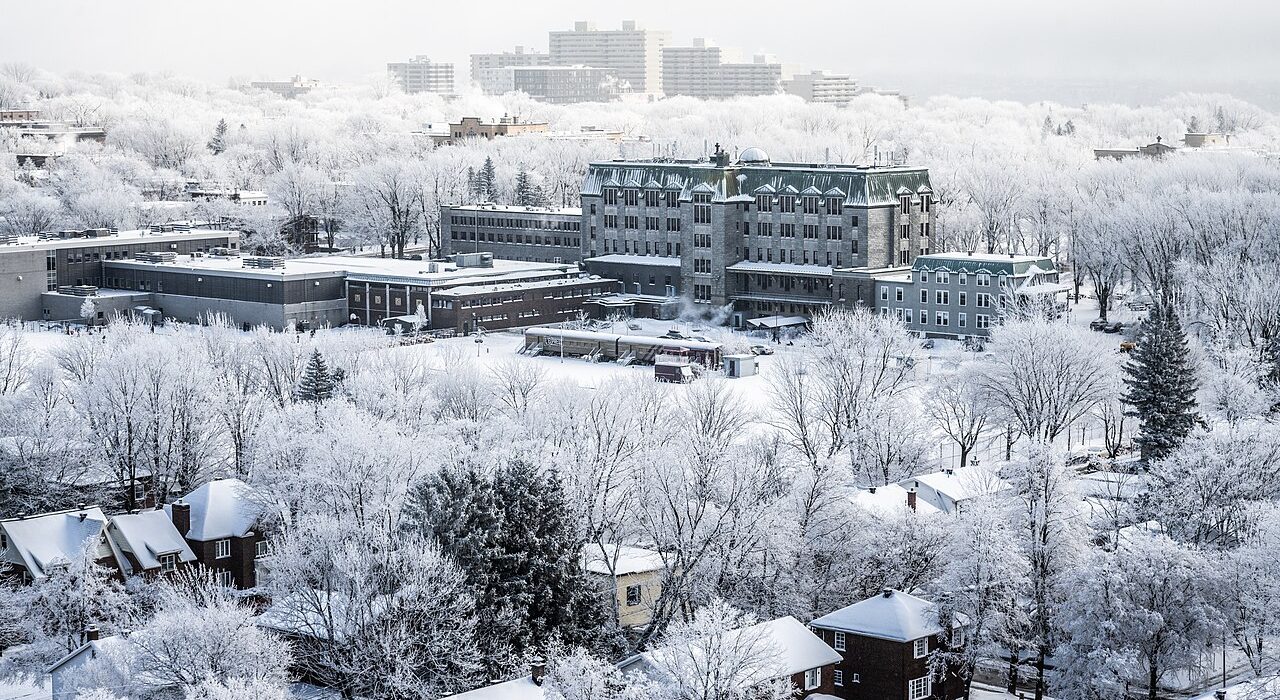


A very strong El Nino is the headline driver of the government’s winter outlook, and its fingerprints show up across the map. Warmer-than-average weather is favored from the Midwest through much of the East, while the wettest odds line up along the southern tier of the country.
What the Winter Outlook Says

NOAA’s U.S. Winter Outlook, released October 15, 2026, covers December through February. It favors warmer-than-average temperatures in northern California, the Pacific Northwest, the Midwest, the Mississippi Valley and much of the East. Parts of the Southeast, including Florida, lean toward near-normal temperatures.
The National Weather Service office in La Crosse, Wisconsin, summarizes the same Climate Prediction Center outlook on its winter 2026-27 outlook page. It says a strong-to-very-strong El Nino is likely through January-March 2027, with a chance above 83%, and that sea surface temperatures in parts of the eastern equatorial Pacific topped +4.0 degrees Celsius last month.
The same outlook was covered in detail when it first came out, including in a look at the NOAA winter outlook and El Nino. Readers curious about how unusual the event is can also see the odds NOAA gives a historic El Nino. Warmer winters also change how homes run, and a guide to energy-efficient home improvements covers the basics.
Where It Looks Warmer
The warm signal is broad. According to the NWS page, most strong and very strong El Nino winters since 1949-50 landed in the warmest third of winters. At La Crosse, 5 of 9 such winters did. A westerly Quasi-Biennial Oscillation this winter is also expected to strengthen polar stratospheric winds, which makes sudden stratospheric warming, and the Arctic outbreaks it can bring, less likely.
Farther east, WJLA in Washington, D.C. describes a Mid-Atlantic winter that is near to slightly milder than normal, with a seasonal average around 40 degrees against a normal near 39.7. Cold snaps stay possible, and the station stresses that a wetter winter is not automatically a snowier one.
The Great Lakes and the northern tier of the Northeast show a similar lean. As reported by Snowbrains, upstate New York, Vermont, New Hampshire, Maine, northern Pennsylvania, Michigan, Wisconsin and Minnesota carry 50-60% odds of above-normal temperatures.
Where It Looks Wetter
The southern tier is where El Nino usually makes itself felt most clearly, because the jet stream tends to drag Pacific moisture across the Southwest and into the Gulf Coast states. For wet-weather prep, the useful items on home upgrade wish lists include several that earn their keep in a soggy season.
NOAA says wetter-than-average conditions are most likely across the southern tier, from the Southwest to the Southeast, and along the East Coast. National Weather Service Director Ken Graham said a very strong El Nino will likely bring a southward and eastward shift to the jet stream over the contiguous U.S., tilting the odds toward stormier weather across the South.
Drought relief is part of that story. The outlook expects drought to improve or end by the end of January in the Southwest, the southern Great Plains, the Southeast and parts of the East Coast. Heavy rain on dry soil can still cause flash floods and mudslides, a risk covered in a piece on winter rain on dry ground.
Heating bills are the practical side of a milder outlook, and the federal estimate is covered in a rundown of winter heating cost forecasts. A few cozy winter crafts and some smart home upgrades help whichever way the season breaks.
The drier side of the map includes Hawaii, much of Alaska, the northern Mountain West and parts of the Great Lakes. Drought is favored to develop or worsen in the northern Rockies, northeastern Oregon and eastern Washington. The Intermountain West, the northern Plains and the Ohio Valley have equal chances of each outcome.
The Southeast deserves its own note. NOAA places near-normal temperatures across parts of the region, including Florida, and Snowbrains reports wet odds above 70% in parts of southern Georgia and northern Florida through January-March. That mix points to a mild but rainy winter rather than a cold one for Gulf and Atlantic coast communities.
What the Outlook Cannot Say
NOAA does not project seasonal snowfall totals, because snow is generally not predictable more than a week ahead. The La Crosse office adds that seasonal snowfall was near to below normal in most strong and very strong El Nino seasons there, though some of those seasons were historically snowy, so a big storm is never ruled out.
The outlook is also a set of probabilities, not certainties. The NWS page notes that El Nino’s effects vary widely from place to place and that other patterns, such as the Arctic Oscillation and the North Atlantic Oscillation, also matter.
The Old Farmer’s Almanac, in its 2026-2027 winter forecast, agrees that a strong El Nino has returned and that such winters often bring milder temperatures across much of the country and wetter conditions in parts of the West and South. It also calls El Nino only one factor in its forecast, and its regional calls differ in places from NOAA’s.
The next updates are close. The NWS page lists the next ENSO discussion for November 12, 2026, and NOAA’s next outlook update is scheduled for November 19. Anyone planning around the forecast may want to recheck then, since seasonal outlooks are refreshed as the winter pattern takes shape.
Get stories like this by email. Sign up for Crafting Your Home.
This article was produced with AI assistance and edited for accuracy against the sources linked above.
Image: Wilfredor – CC0/Wikimedia Commons


