


The post 10 Disney Villains Who Actually Had a Point first appeared on Crafting Your Home.
Disney villains are supposed to be the bad guys. They’re the characters we boo, the ones causing trouble, and usually the reason our favorite heroes spend half the movie running for their lives.
But what happens when you look at their arguments instead of their terrible decisions?
Surprisingly, some Disney villains and antagonists had legitimate concerns. Whether they questioned an irresponsible ruler, feared dangerous technology, or wanted to protect something important, their reasoning wasn’t always completely ridiculous.
Of course, having a point doesn’t excuse their actions. Still, these 10 Disney and Pixar characters might deserve a little more understanding than we originally gave them.
Chef Skinner From Ratatouille (2007)
Let’s admit something uncomfortable. If you discovered a rat preparing your dinner in a restaurant kitchen, you probably wouldn’t applaud his cooking skills.
Chef Skinner might be greedy and obsessed with controlling Gusteau’s restaurant, but his objection to a rat secretly preparing food isn’t unreasonable.
Throughout the movie, Remy proves he’s an incredibly talented cook. Unfortunately, being talented doesn’t automatically make his kitchen arrangement acceptable.
The restaurant eventually closes after the authorities discover rats in the kitchen.
Skinner’s motives were hardly noble, especially considering his attempts to profit from Gusteau’s reputation. But his concerns about what was happening behind the kitchen doors weren’t completely misplaced.
Shere Khan From The Jungle Book (1967)
Shere Khan is terrifying, but consider his biggest fear: humans.
In the 1967 animated film, the tiger fears human weapons and fire. He believes Mowgli will eventually grow into a man who could hunt animals. That fear isn’t entirely irrational. Humans possess weapons capable of threatening even powerful jungle predators.
And what ultimately sends Shere Khan running? A burning branch attached to his tail. The irony is difficult to miss.
Of course, treating an innocent child as a future enemy is unfair. Mowgli hadn’t committed the offenses Shere Khan feared.
Still, the tiger understood something important about the dangers humans could present to animals.
Yzma From The Emperor’s New Groove (2000)
Imagine working for a ruler who decides an entire village should disappear because he wants a birthday water park. That’s Emperor Kuzco at the beginning of The Emperor’s New Groove.
He’s selfish, dismissive, and far more interested in his personal comfort than the people he’s supposed to govern. So when Yzma decides he’s unfit to rule, it’s difficult to argue that Kuzco is doing a fantastic job.
Unfortunately, Yzma’s solution is to try to kill him and steal the throne. Her actions are driven by revenge and ambition, not a genuine desire to improve the kingdom.
Nevertheless, her assessment of Kuzco’s leadership was surprisingly reasonable.
Captain Gantu From Lilo & Stitch (2002)
We love Stitch because we’ve watched him discover friendship and family. Captain Gantu initially knows him as Experiment 626, a dangerously powerful creation. At the beginning of the film, Stitch is described as exceptionally strong, intelligent, and programmed for destruction.
He also escapes custody and steals a police cruiser. From Gantu’s perspective, this isn’t an adorable little creature who needs a hug. It’s an escaped experiment that could cause serious trouble.
His mission to capture Stitch therefore makes some sense. Where Gantu goes wrong is his treatment of Stitch and his willingness to destroy him.
The audience eventually sees Stitch change, but Gantu’s original concern wasn’t invented out of thin air.
Related: 11 Classic Movie Heroes Who Were Actually the Villains
AUTO From WALL-E (2008)
AUTO might be one of Disney-Pixar’s most frustrating antagonists because he’s following instructions that once had a reasonable purpose. In WALL-E, humanity has abandoned Earth after environmental conditions make the planet unsuitable for human life. AUTO receives orders preventing the spaceship from returning.
Initially, keeping passengers away from a planet considered uninhabitable sounds like a sensible precaution.
But there’s a problem.
When evidence of new plant life appears, AUTO refuses to reconsider his instructions. His mistake isn’t the original concern about returning to Earth. It’s his inability to recognize that circumstances might have changed.
Sometimes, following an outdated rule can become more dangerous than questioning it.
Te Kā From Moana (2016)
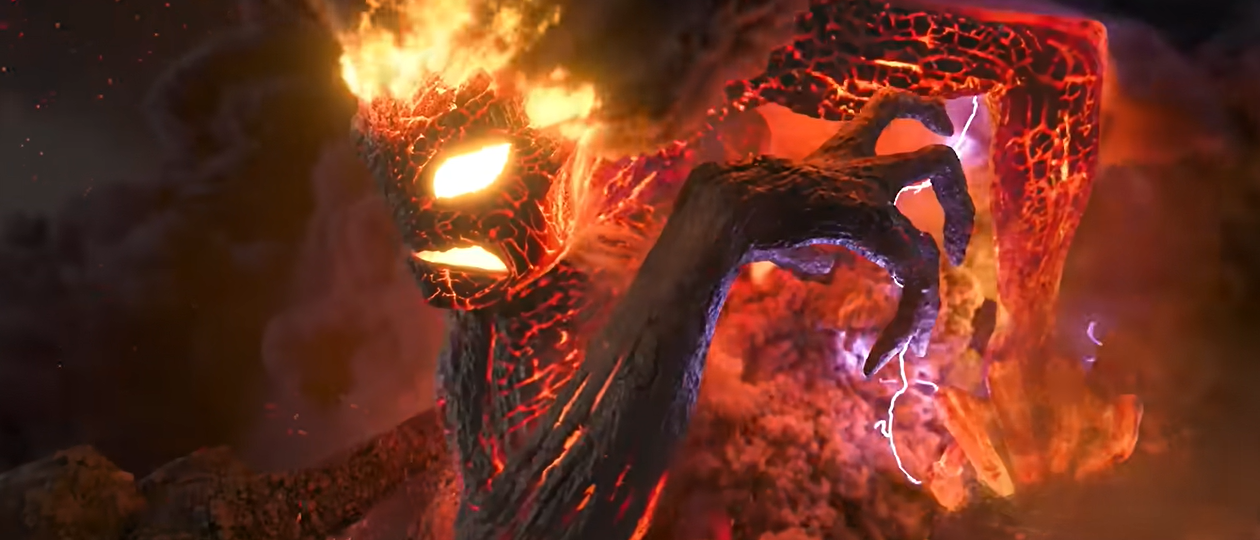
Te Kā initially appears to be an unstoppable monster spreading destruction. But the movie eventually reveals something that completely changes how we understand her. Te Kā is actually Te Fiti, transformed after Maui stole her heart.
Suddenly, the terrifying antagonist becomes a character whose fury has a recognizable cause. Moana realizes that defeating her through force isn’t the answer. Instead, she restores what was taken.
This doesn’t mean Te Kā’s destruction was justified, but it changes the entire conflict.
Her story reminds us that sometimes the character everyone fears is also the one who has suffered a terrible wrong.
Maleficent From Maleficent (2014)
The 2014 live-action Maleficent gives audiences a very different perspective from the original Sleeping Beauty. Instead of introducing Maleficent as simply an evil fairy, the film presents her as a protector of her forest kingdom.
Her childhood friend Stefan betrays her, taking her wings to advance his ambitions. That’s an enormous betrayal, especially from someone she once trusted. Her anger toward Stefan is understandable, as is her desire to protect her home.
Unfortunately, she takes that anger out on his innocent daughter, Aurora.
Maleficent’s grievance is legitimate, but her decision to punish someone who had nothing to do with the betrayal crosses a line.
Syndrome From The Incredibles (2004)
Syndrome is bitter, arrogant, and willing to hurt innocent people to achieve his ambitions. But buried beneath his terrible decisions is an interesting idea.
Why should extraordinary abilities belong only to people born with superpowers?
Syndrome develops advanced technology that allows someone without natural superpowers to challenge superheroes. His inventions demonstrate that intelligence and creativity can produce remarkable abilities. He even plans to sell his technology so others can become powerful, although only after enjoying his own moment of glory.
Unfortunately, his scheme involves eliminating real heroes and staging a disaster to make himself look heroic.
His technology raises an interesting question about access to power. His methods, however, make him anything but a champion of equality.
Related: 11 Beloved Sitcom Characters Who Were Actually Terrible People
Amos Slade From The Fox and the Hound (1981)
Amos Slade isn’t exactly the lovable neighbor you’d want living next door. Still, his conflict with Tod becomes slightly more understandable when you consider his perspective.
Slade sees the fox as a potential threat to his chickens. Later, he blames Tod for the incident that injures his hunting dog, Chief.
For someone who protects his animals, those concerns explain why tensions build. However, having concerns doesn’t justify pursuing revenge.
Slade lets his anger escalate until he chases Tod into a game preserve.
His story illustrates how an understandable grievance can become something far worse when someone refuses to let it go.
Anton Ego From Ratatouille (2007)
Anton Ego isn’t a traditional Disney villain, but his intimidating presence makes life difficult for the movie’s aspiring chefs.
As a powerful restaurant critic, Ego believes exceptional cooking deserves serious recognition. At first, his attitude seems unnecessarily harsh. But after experiencing Remy’s cooking, he reaches a surprisingly thoughtful conclusion about talent.
Not everyone will become a great artist, but extraordinary talent can emerge from unexpected places.
It’s an important distinction.
Ego realizes that greatness shouldn’t be judged entirely by someone’s background, reputation, or appearance. Considering the movie features a cooking rat, his change of perspective couldn’t be more appropriate.
Sometimes, even the harshest critic can learn something new.
The Bottom Line
Disney villains aren’t always wrong about the problems they identify. Sometimes, they’re simply spectacularly wrong about how to solve them.
From Shere Khan’s fear of humans to Yzma’s criticism of Kuzco, these characters remind us that having a legitimate concern doesn’t automatically make someone the hero.
And perhaps that’s what makes them so interesting. The best villains aren’t always people without a point. Sometimes, they’re people who take a reasonable argument much too far.
Other Posts You Might Like
- 10 Children’s Movies That Are Far Darker Than You Remember
- 11 Movies That Were Banned in Other Countries — and Why
- 10 Movies That Feel Morally Wrong to Watch
If you like what you just read, then subscribe to our newsletter and follow us on social media.


