


This article was originally published on Crafting Your Home. A human contributor also wrote and edited the post.
Americans are repeatedly told to trust the election system. Now, they are learning that state and federal agencies may not even agree on who belongs in the voter rolls. The Department of Homeland Security has flagged up to 256,463 registrations in California, New Jersey, Nevada, and Pennsylvania as potentially connected to noncitizens. The preliminary findings arrive only months before the 2026 midterm elections, raising another damaging question about the accuracy of the country’s voter databases.
The allegation is troubling from every direction. If the DHS estimates are accurate, election officials allowed an enormous number of potentially ineligible registrations to remain in their systems. If the estimates are inflated by faulty database matching, thousands of lawful American voters could face suspicion because government agencies cannot keep accurate records. Either outcome is a serious failure. Americans should not have to choose between unprotected voter rolls and an error filled verification system that could target eligible citizens.
A Quarter-Million Records Now Hang Over Four States
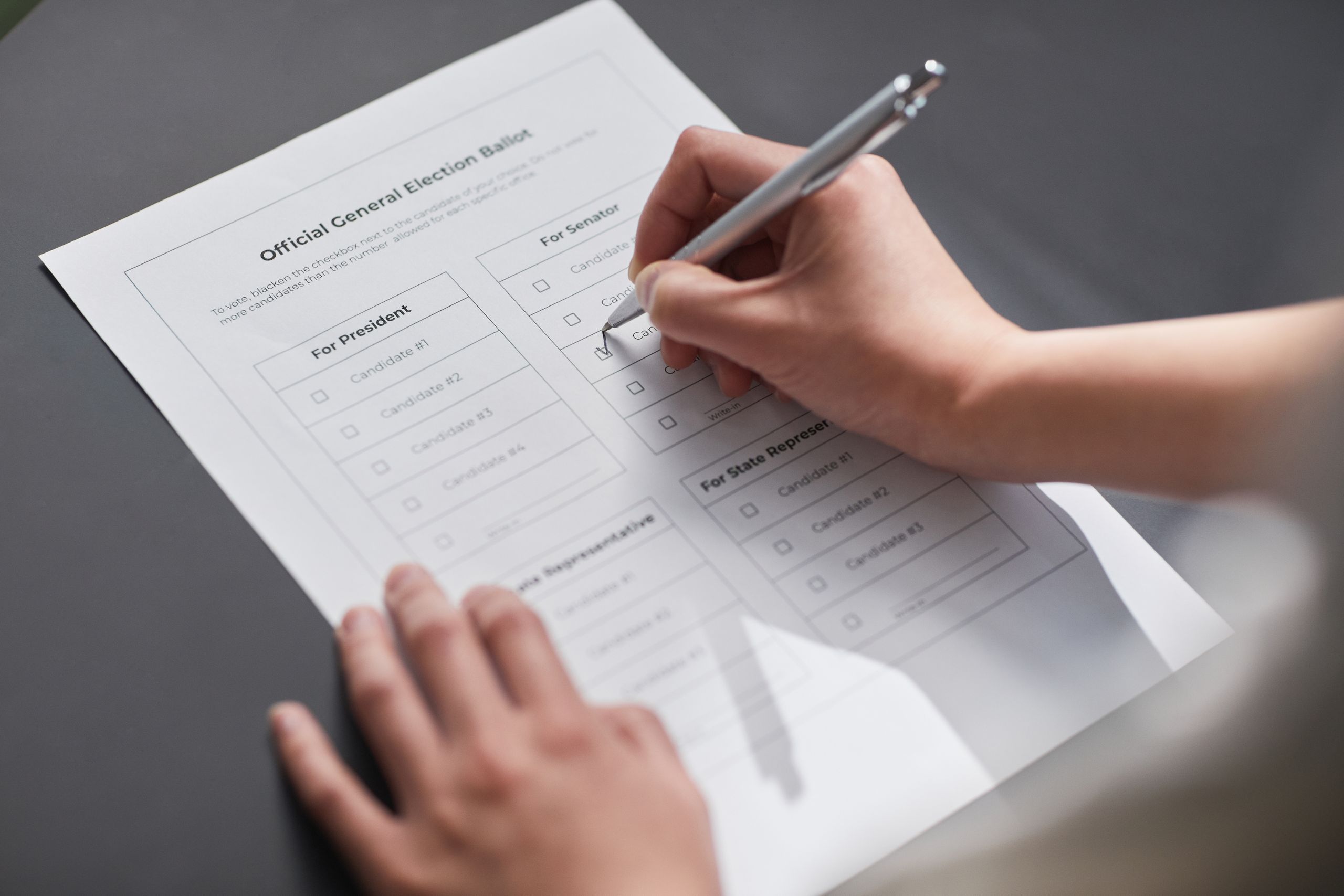
DHS Secretary Markwayne Mullin sent letters to election officials after the department compared public voter registration files with federal immigration records. The letters described the findings as preliminary and requested state assistance before action is taken against individual voters. “The most efficient way to ensure the accuracy of our findings is to work collaboratively on identity verification,” Mullin wrote in letters sent to officials.
The department produced two sets of numbers. Its maximum estimate reached 256,463 possible noncitizen registrations, but only 118,003 records reportedly matched the names, birth dates, addresses, and Social Security information found in federal immigration databases. That difference is not a minor technical detail. More than 138,000 records separate the department’s broader estimate from the group matching all the listed identifiers.
Yet even the smaller figure is alarming. If 118,003 registrations truly match people identified as noncitizens, Americans deserve to know how those registrations were approved, how long they remained active, and whether any ballots were cast. DHS has not released evidence showing that all the matched individuals remain noncitizens.
It has also not established how many, if any, participated in an election. That leaves the public staring at an enormous allegation without the final evidence needed to understand its true scale.
Ordinary Americans Are Left Paying for Government Confusion
Most Americans follow the rules. They register using their legal names, provide identifying information, update their addresses, and wait in line to vote. They expect election officials to perform the basic administrative work required to protect their ballots. The new DHS findings suggest that the machinery behind that process may be far less reliable than citizens have been promised.
State voter databases and federal immigration systems appear unable to produce a clear answer without another expensive, time consuming investigation. Taxpayers will ultimately cover that investigation. State employees must review files, contact voters, correct records, process challenges, and defend any disputed removals in court. Federal agencies will also spend public money responding to information requests and verifying immigration histories.
The situation is especially frustrating because citizenship is already a basic requirement for voting in federal and statewide elections. The problem is not a missing rule. The problem is whether government officials are enforcing existing rules accurately and consistently.
Americans should not have to fund layers of government databases that cannot communicate until a national controversy erupts. They also should not discover months before an election that agencies may have spent years working with conflicting information.
The larger number does not prove 256,463 violations.
The most disturbing number in the story is also the least settled. DHS estimates that as many as 256,463 registrations could involve noncitizens, but the released information does not prove that every flagged record represents an ineligible voter. A database match is an investigative lead, not a final judgment. Names can be duplicated, addresses can become outdated, and immigration records may not immediately reflect naturalization.
Social Security numbers can also create misleading assumptions. Noncitizens legally authorized to work in the United States can receive them, as explained in the government’s Social Security eligibility guidance. A lawful permanent resident might receive a Social Security number and later become a naturalized American citizen. If a government database reflects an outdated immigration status, an eligible voter could be incorrectly flagged as a noncitizen.
That possibility does not make the DHS review unimportant. It makes careful verification more important because sloppy government data can harm election security in two opposite ways. An ineligible registration that remains active weakens confidence in voter roll maintenance. A lawful citizen is wrongfully removed due to outdated federal data, resulting in a direct loss of voting rights. Neither mistake is acceptable. Americans deserve a system capable of preventing both.
California’s Numbers Raise the Biggest Questions
California accounts for most of the DHS estimate. The department identified 81,336 records matching its listed identifiers and projected that as many as 190,832 registrations could be connected to noncitizens. That is a massive range. It leaves more than 109,000 California records between the stronger matches and the broader estimate.
California Gov. Gavin Newsom rejected the allegation and said the federal government had not adequately explained the source of its figures.
His response adds another layer to an already hostile dispute between state leaders and the Trump administration over access to sensitive voter information. California law requires a person to be a U.S. citizen, a state resident, and at least 18 on Election Day to register. Those conditions are clearly stated in the official eligibility requirements.
Applicants must affirm their citizenship.
The state also uses Department of Motor Vehicles information to validate identifying details during online registration. If DHS ultimately confirms th