
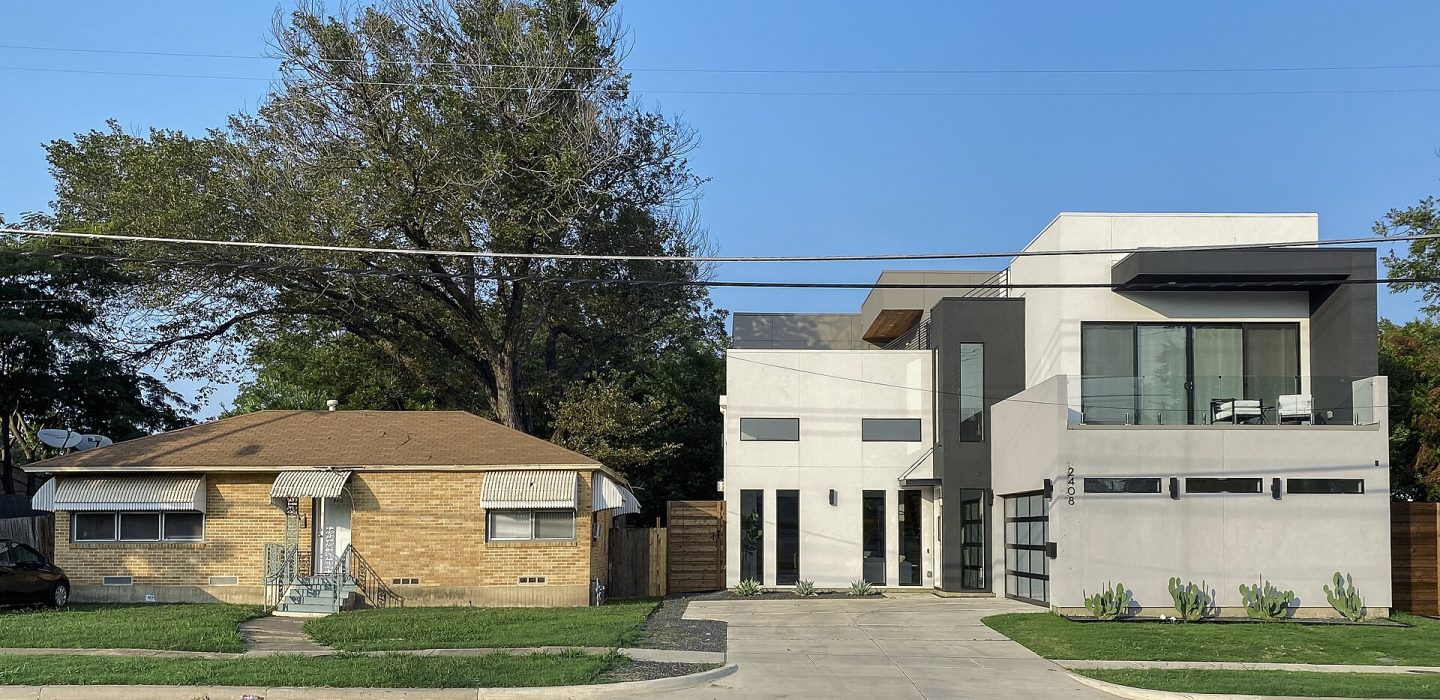

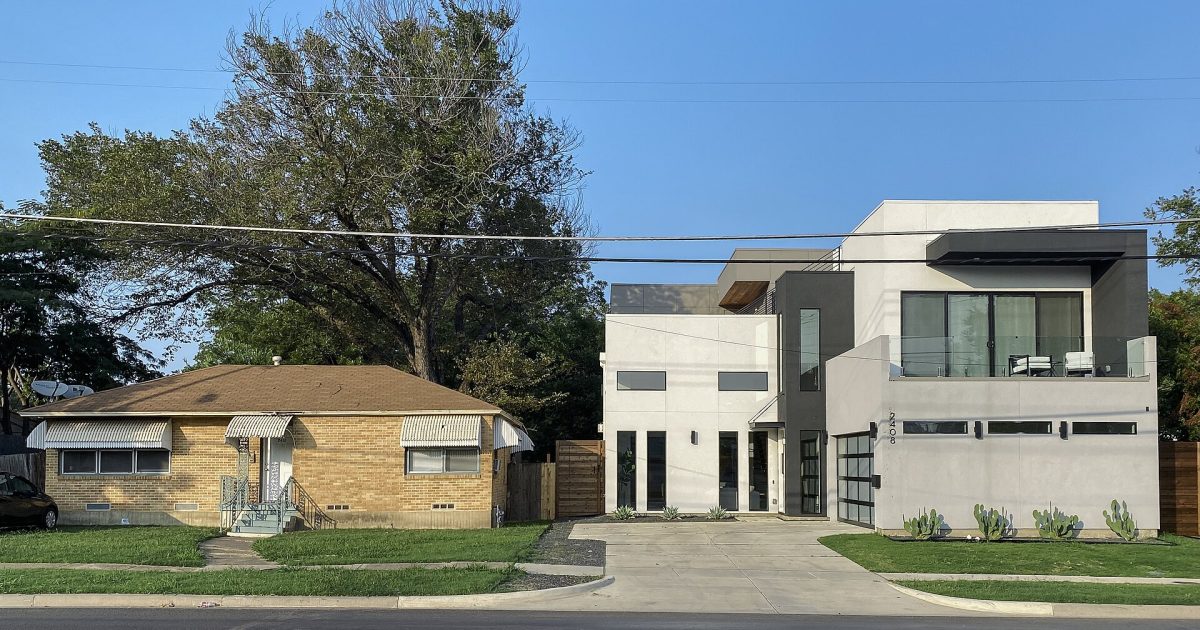
Jennifer and Toni Johnson budgeted $240 a month for homeowners association dues when they bought their Old East Dallas townhome last year. Then a notice arrived saying the bill was going up to $1,316.20 a month.
That is a nearly 450% jump, or almost $13,000 more a year, WFAA reported. The couple are among eight townhome owners at Bryan Street Station facing the higher assessments, and several of their neighbors have sued the HOA in Dallas County district court, arguing the increase broke the association’s own rules.
Eight Townhomes Inside a 48-Condo Association

According to WFAA reporter Tanya Eiserer’s Nov. 23 story, the dispute centers on three buildings. Two older, four-story condominium buildings hold a combined 48 units. A separate building with eight townhomes in Old East Dallas was completed in 2024, and those townhomes were folded into the existing Bryan Street Station Homeowners Association. The lawsuit says the board is made up entirely of owners from the two older condo buildings.
The Johnsons told WFAA that when they reviewed the association’s finances, they found their dues were rising while the condo owners’ dues were falling. Jennifer Johnson said she first assumed the notice was a typo. Buyers who have read up on the rookie mistakes to avoid when buying a house know HOA dues belong in the budget, but few expect them to multiply. Rules about what owners can do with their property, like the backyard items many HOAs ban, get most of the attention, yet the assessment is often what hits hardest.
The couple said they are being charged for expenses tied to the older buildings, including amenities they cannot use. Toni Johnson explained that the condo buildings have shared hallways that need cleaning and lighting, elevators, and underground garages with electronic doors and gates, while the townhome owners maintain the interiors of their own homes. The couple told WFAA they have no problem paying a fair share, just not for elevators and other features they cannot even access. Property taxes already weigh on many owners, a theme in rankings of the heaviest tax burdens Americans carry, and an extra $1,076.20 a month leaves little room for the usual quick ways to save money.
What the Lawsuit Says
The Oct. 19 lawsuit names the Bryan Street Station Homeowners Association and two property management companies as defendants. It points to a provision in the association’s governing documents covering material amendments, including assessment increases of more than 25%. The townhome owners argue that such an increase needed approval from owners holding at least 67% of the association’s votes and at least 51% of eligible mortgage lenders, and that the board never got that approval or gave the required notice of a meeting. Fights over new construction are not limited to HOAs, as a Colorado owner who invoked a state law over a brand-new house recently showed.
Dallas attorney Jonathan Aldaco represents seven of the eight townhome owners, though not the Johnsons. He told WFAA that owner approval was required and never happened, and that his clients only received a piece of paper on their doors announcing a 450% increase. He said they have asked what the higher assessments are meant to cover but have not gotten answers. A surprise bill like that is exactly why planners stress keeping an emergency fund, though few funds are built for a fivefold jump.
The owners are asking a judge to declare the increase invalid and to block the HOA from pursuing collection, including liens and foreclosure, over the disputed amounts. Aldaco said his clients keep paying the original $240 monthly assessment while they fight the rest. Disputes like this one, and the Maine couple who sued their town over tin rooster statues, show how quickly a neighborhood rule can end up in court. Even ordinary disagreements, such as the tree mistakes that get homeowners sued by neighbors, can turn expensive.
The HOA’s Side and Tuesday’s Vote
WFAA said it reached out to the HOA’s attorney for comment and was awaiting a response. In a Nov. 20 letter to homeowners obtained by the station, the board said it called a new vote after receiving a valid petition from more than 20% of owners. Condo and townhome owners were scheduled to vote at 6 p.m. Tuesday, Nov. 24, on an amendment that would let the eight townhomes separate from Bryan Street Station and form their own association. An earlier separation vote failed to get enough support.
Even a yes vote would not settle things. The board’s letter lists 10 conditions for separation, including requiring the townhome owners to pay all outstanding 2026 dues within seven days of approval and keep paying the full assessments until the split. Other conditions include installing a separate water meter, setting up their own HOA, contributing to shared services and maintenance, and covering the existing HOA’s legal and filing costs. The board said the terms are open to negotiation and that more could be added. If the two sides cannot reach a separation agreement, the amendment would be void.
Aldaco warned that condo owners face financial instability too if the dispute drags on, since townhome owners could face foreclosure over what he calls an invalid debt.
A Townhome That Is Hard to Sell
The Johnsons have since moved back to the Houston area, but they told WFAA the dues have made the Dallas townhome hard to sell. Their agent fielded calls from people asking whether the HOA figure in the listing was a mistake, and several would-be buyers said they wanted to make offers but would not pay the monthly dues. The couple carried the cost until this month, when they found a renter.
Toni Johnson told WFAA that an HOA is supposed to protect home values and that this one has done the opposite. Aldaco’s broader point is that Texas has no law capping how much dues can rise. State rules for property owners’ associations, such as Chapter 209 of the Texas Property Code, deal largely with notice, records and collections rather than caps on dues, so an association’s governing documents usually decide how increases happen.
That makes those documents worth reading closely. About 35.2% of U.S. housing sits in a community association, according to the Foundation for Community Association Research, which estimates 373,000 associations nationwide with 78.1 million residents. An