

The post 10 Candy Bars From the ’70s That Disappeared but Never Left Americans’ Memories first appeared on Crafting Your Home
Imagine walking into a neighborhood candy store in the 1970s. Brightly colored wrappers lined the shelves, chocolate bars competed for attention, and some treats offered combinations you couldn’t find anywhere else. There was an eight-inch caramel braid, a chocolate bar filled with seven different flavors, and even a peanut butter treat that proudly advertised having no jelly.
Many of those familiar names eventually disappeared. Some were discontinued, others were replaced, and a few returned briefly before fading again. Although their original versions no longer appear on American candy shelves, surviving advertisements, vintage wrappers, and collectors’ memories keep their stories alive.
Here are 10 candy bars from the 1970s worth a second look.
Marathon Bar
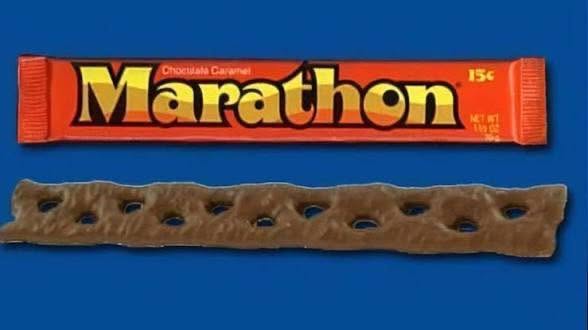
When Mars introduced the Marathon Bar in 1973, it offered something that looked nothing like an ordinary chocolate bar. Instead of a compact rectangular treat, Marathon featured a long braid of chewy caramel covered in chocolate. Its most memorable feature was its length. Measuring eight inches, the bar came in a bright red wrapper with markings that emphasized its unusual size.
Despite its impressive appearance, Marathon didn’t necessarily contain more candy than traditional bars. The distinctive shape was part of its appeal. Unfortunately, American stores stopped carrying Marathon in 1981. Historical accounts indicate that sales didn’t meet expectations.
Although Britain’s Curly Wurly offers a similar caramel-and-chocolate experience, no documented version of the original American Marathon has been revived.
Seven Up Bar
Long before candy companies filled store shelves with elaborate flavor combinations, Seven Up offered several treats inside one wrapper. Trudeau Candy originally produced this unusual bar, and Pearson’s Candy Company later manufactured it, with seven separate chocolate-covered sections.
Depending on the version, fillings included cherry, coconut, caramel, fudge, jelly, maple, and Brazil nut. Imagine buying one chocolate bar and discovering a different flavor in nearly every bite. Pearson’s acquired the brand when it purchased Trudeau Candy in 1951, and Seven Up remained available into the 1970s.
The company eventually discontinued it during that decade, with secondary accounts commonly pointing to 1979. Its original multi-flavor design remains one of the more unusual ideas in American candy history.
Caravelle
Some discontinued candies are remembered because they tasted familiar while offering a little something extra. Peter Paul’s Caravelle combined caramel, chocolate, and crispy pieces into one sweet, crunchy bar. Introduced during the 1960s, Caravelle remained on the market through the 1970s.
Its advertising highlighted the mix of chocolate crispies and caramel, making the bar’s contrasting textures its main attraction. A television commercial preserved in Duke University’s advertising archive confirms that Caravelle was promoted during the decade.
Its eventual disappearance is harder to date precisely, with historical accounts giving conflicting timelines. Modern candy lovers might notice similarities to other crisped-rice-and-caramel chocolate bars, but Caravelle had its own identity and advertising history.
Rally Bar
Hershey introduced Rally in October 1967, but the candy kept appearing throughout the 1970s. The bar featured peanuts, caramel, and fudge covered in chocolate. Its advertising emphasized just how much was packed into a single wrapper, presenting Rally as a particularly crowded candy bar.
For shoppers who enjoyed several textures at once, the combination offered plenty of variety. Hershey promoted Rally during the early 1970s, but the original version was discontinued in January 1979. Interestingly, the story didn’t end there.
Rally returned in later limited revivals, including appearances in 2008 and a Walgreens-exclusive version in 2013. Those temporary returns show how an old candy name can remain interesting long after its original production run ends.
Choco’Lite
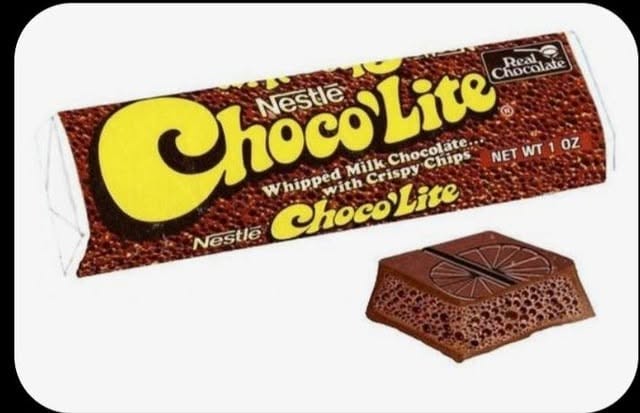
Nestlé’s Choco’Lite wasn’t designed to look or feel like an ordinary solid chocolate bar. Introduced around 1971 and 1972, it featured aerated milk chocolate combined with what advertisements described as crispy chips. That unusual construction gave the candy a lighter texture while adding a distinctive crunch.
Choco’Lite appeared in several package sizes, and surviving advertisements document its presence throughout the 1970s. One especially memorable detail was its connection to a 1979 Star Wars promotion, which brought the candy into the era’s popular entertainment culture.
The bar disappeared in the early 1980s, though its exact retirement date remains uncertain. Today’s aerated chocolates might remind some shoppers of Choco’Lite, but they aren’t necessarily the same product or recipe.
Peanut Butter With No Jelly
The 1970s produced a candy bar named after something it didn’t contain. Peter Paul introduced Peanut Butter With No Jelly in 1972, turning America’s familiar peanut-butter-and-jelly combination into a playful marketing idea. The candy featured a peanut butter center with crispy pieces and a milk chocolate coating.
Its unusual name set it apart from other peanut butter treats. Advertising leaned into the joke, with commercials emphasizing the absence of jelly rather than treating it as a missing ingredient. By 1977, the company had renamed the product Peter Paul Peanut Butter Bar.
Packaging from the renamed version continued appearing into the late 1970s. The original name disappeared, but its clever advertising remains a memorable example of vintage candy marketing.
Hershey’s 50-50 Almond Bar
Not every memorable 1970s candy bar was invented during that decade. Hershey’s 50-50 Almond Bar dated back to 1921, making it one of the older treats still available during the early 1970s. The product was developed to offer a chocolate-and-almond combination with more almonds than Hershey’s existing milk chocolate almond bar.
Its identity centered on a generous nut presence rather than a complicated mix of fillings. Unlike some everyday checkout-counter candies, the 50-50 line also had a history involving specialty distribution and gift-oriented packaging.
Hershey continued producing and distributing it until 1977, when Golden Almond replaced the original product. That change ended the familiar 50-50 identity, though Hershey continued offering other almond chocolates.
Forever Yours
Before dark chocolate became a familiar option in modern candy aisles, Mars offered Forever Yours. The name dates to 1936, and the candy remained available through the 1970s. Its combination was straightforward but distinctive: vanilla nougat and caramel covered in bittersweet dark chocolate.
That darker coating set Forever Yours apart from many milk chocolate bars of the time. Mars discontinued the original product in 1979, ending a decades-long production run. However, the candy wasn’t completely forgotten.
In 2017, Ethel M Chocolates revived Forever Yours with retro-inspired packaging, giving interested customers another opportunity to experience the old name. The revival doesn’t erase the original discontinuation, but it demonstrates how strongly vintage candy identities can endure.
Hershey’s Semi-Sweet Bar
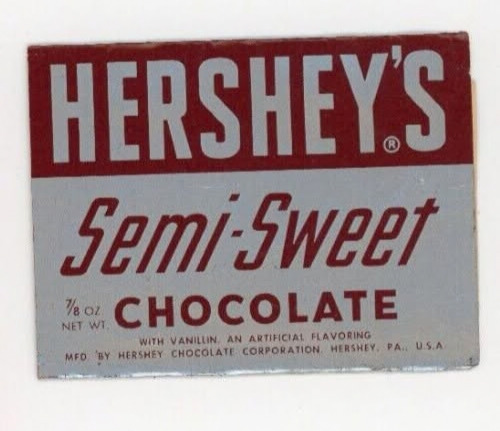
Hershey’s Semi-Sweet Bar was a simpler treat than many other entries on this list. Rather than combining caramel, nougat, nuts, or crispy pieces, it focused on the distinctive flavor of semi-sweet chocolate. Hershey introduced the product in February 1949, and it remained part of the company’s lineup into the early 1970s.
Its disappearance wasn’t simply an unsuccessful product vanishing without a successor. On October 18, 1971, Hershey replaced the Semi-Sweet Bar with its Special Dark sweet chocolate product.
That change gave consumers a different dark chocolate offering under a new identity. Although Hershey’s dark chocolate products remain familiar today, the original Semi-Sweet Bar represents an earlier chapter in the company’s history.
Milk Shake Bar
For some candy enthusiasts, the name Milk Shake brings back memories of an old-fashioned malt shop. Produced by Hollywood Candy Company, the Milk Shake Bar featured a malted-milk-style center covered in chocolate. Its appeal came from combining the recognizable flavor of malted candy with the convenience of a chocolate bar.
Historical food accounts place the product in the 1970s, although its exact introduction and discontinuation dates are less firmly established than those of several other candies on this list. Some accounts suggest it disappeared during the 1980s, while others place its final retirement later.
What remains consistent is the distinctive malted center associated with the original candy. Today, Milk Shake survives mainly through vintage packaging,