
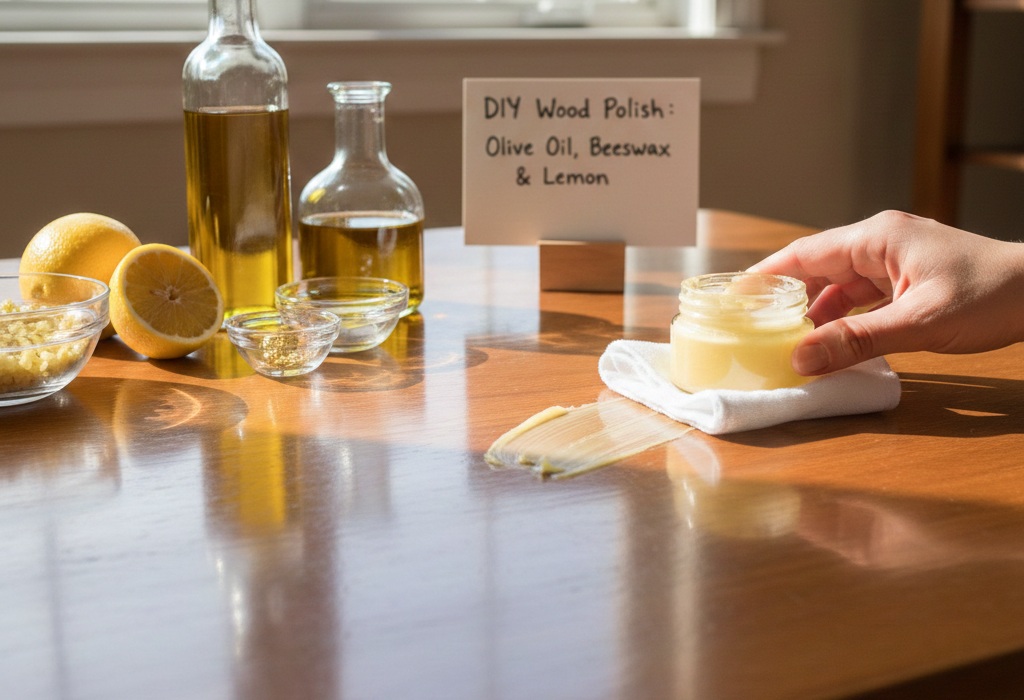

Wooden furniture is not only a valuable addition to any home but also an investment that can last for generations when properly cared for. Over time, wood can lose its shine, become dry, or develop scratches.
The solution? Homemade furniture polish. By using natural, non-toxic ingredients, you can easily restore the beauty of your furniture while avoiding harmful chemicals found in many commercial polishes.
In this in-depth guide, we’ll walk you through everything you need to know about making your own furniture polish, why it’s a better option, and how to properly apply it to ensure your wood remains beautiful and well-maintained.
Why You Should Choose Homemade Furniture Polish

Commercial furniture polishes often contain synthetic chemicals, artificial fragrances, and other additives that can damage wood over time. Homemade furniture polish, however, offers a more natural and eco-friendly solution. Here are several compelling reasons why you should choose homemade furniture polish over store-bought alternatives:
Chemical-Free and Safe for Your Home
Most store-bought polishes contain chemicals such as petroleum distillates, silicones, or waxes that may harm your health and the environment. By making your own polish, you avoid these toxic ingredients and create a safe, chemical-free product for your home.
Environmentally Friendly
Homemade furniture polish is eco-friendly. It’s made with natural oils and ingredients that won’t contribute to harmful pollution. Using natural products to care for your furniture also reduces the carbon footprint of purchasing commercial products.
Cost-Effective
Commercial furniture polishes can be expensive, and buying them regularly can add up. Homemade polish, on the other hand, requires inexpensive, common ingredients that you probably already have at home, making it a more affordable option.
Customizable Scent and Consistency
When you make your own polish, you can customize it to suit your preferences. Choose your favorite essential oils for fragrance, and adjust the ratio of ingredients to achieve the perfect consistency for your needs. Whether you prefer a thicker or thinner polish, it’s all in your control.
Nourishing for the Wood
Homemade furniture polish, particularly those that use oils like jojoba or pomace oil, provides nourishment to the wood. It helps to maintain the wood’s natural moisture, preventing cracking and drying out while enhancing its natural grain.
The Best Ingredients for Homemade Furniture Polish

Making homemade furniture polish is easy with the right ingredients. Most of the supplies are natural, non-toxic, and can be easily sourced from local stores or online retailers. Below are the key ingredients to create your own furniture polish:
Jojoba Oil
Jojoba oil is an excellent base oil for homemade furniture polish because it closely resembles the natural oils found in wood. It is colorless, odorless, and non-greasy, making it ideal for polishing furniture. Jojoba oil nourishes and moisturizes the wood, helping it maintain its luster over time.
Pomace Oil
Pomace oil, another great base oil for furniture polish, is derived from olives and is known for its long shelf life and mild nature. It is often used in skin care products due to its nourishing properties, and it works just as well in furniture care. Like jojoba oil, pomace oil helps to replenish moisture in the wood and brings out its natural shine.
White Vinegar
White vinegar is an essential ingredient in many homemade cleaning products due to its natural antibacterial and deodorizing properties. When added to furniture polish, it helps cut through grease and grime, leaving your furniture clean without damaging the wood.
Fresh Lemon Juice
Lemon juice is a natural acid that works wonders in cleaning and polishing wood surfaces. It also provides a pleasant citrus scent, making it a great addition to your homemade furniture polish. Lemon juice can help remove stains and residues, leaving