

The post AI Data Center Surge in Silicon Valley Faces Community Pushback first appeared on Crafting Your Home.
Silicon Valley is entering a new phase of the artificial intelligence boom. The region is home not only to companies developing AI models and applications; it is also becoming a major hub for the physical infrastructure needed to run them.
That infrastructure is creating a new local debate. In San José, California, residents and environmental advocates are raising concerns about the electricity, water, air-quality, and neighborhood impacts associated with proposed data centers. City officials, meanwhile, see data centers as a potential source of tax revenue and part of San José’s effort to attract AI-related investment. Reuters reported on September 17 that the disagreement has become increasingly visible as new projects move through the local planning process.
The issue is larger than any single project. California’s electricity planners now identify data centers as an important source of future electricity-demand growth, while Santa Clara County is already home to about 91 data centers. The question facing Silicon Valley is increasingly how quickly this infrastructure can expand, and under what conditions.
Why AI Is Driving Demand for More Data Centers
AI systems require large amounts of computing power. Training and operating advanced models involve specialized processors, storage systems, and networking equipment housed in data centers. The resulting demand is reflected in California’s electricity planning. The California Energy Commission says the state has more than 200 active data centers. In early 2026, data centers represented about 1,000 megawatts of peak electricity demand, or roughly 2% of California Independent System Operator peak demand. The commission projects that figure could reach 4,500 MW, or 9% of peak demand, by 2040.
The commission also notes that AI and advanced computing have contributed to a rise in utility requests for data-center connections. At the same time, it stresses that forecasts contain uncertainty because not every proposed project will necessarily be completed, and project timelines and eventual electricity requirements can change. That distinction matters when discussing a supposed “data center surge.” A request for electricity service or a planning application is not the same as an operating facility.
San José Has Become a Focus of the Debate
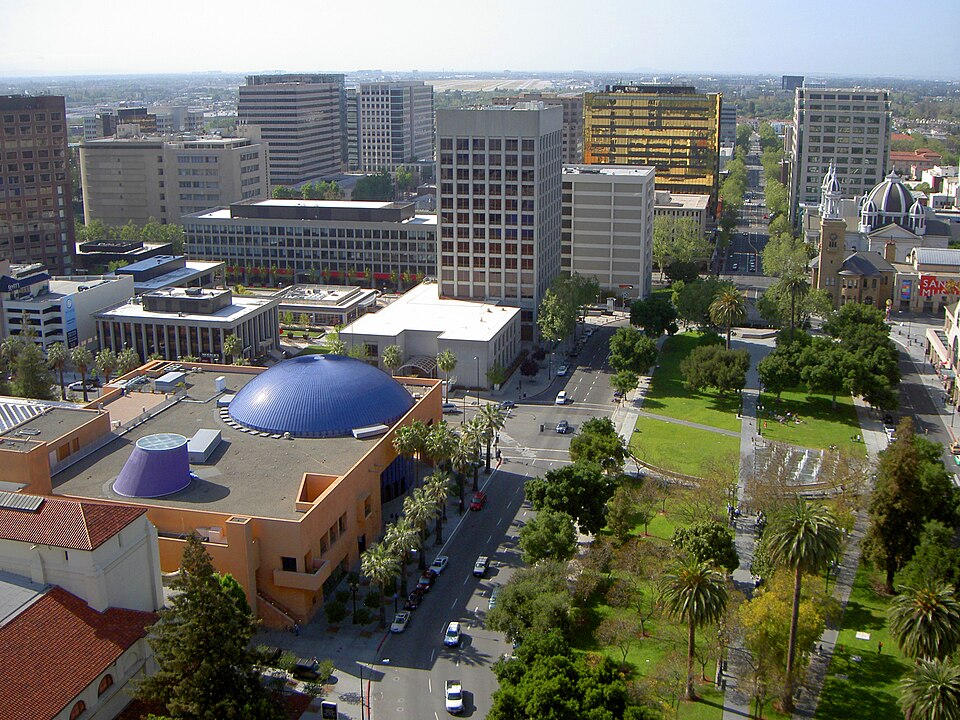
San José matters because it is Silicon Valley’s largest city and is currently reviewing several data-center proposals. The city’s planning department lists multiple applications under review. Among them is a proposed approximately 514,000-square-foot data center on Charcot Avenue and a proposed 444,436-square-foot facility on Great Oaks Parkway. The city also lists a downtown proposal to modernize and expand an existing data center. These projects remain subject to the applicable planning and public-review processes.
San José requires public hearings for data centers. Depending on the size of a facility’s backup-power generators, the California Energy Commission may also have jurisdiction over the environmental review. The city is also developing uniform standards for data centers and other large energy-use projects. The proposed framework covers energy consumption and sourcing, water use, air quality, backup generators, greenhouse-gas emissions, noise, water-quality protections and community notification.
That process reflects a broader shift in the discussion. Rather than treating each facility as an isolated development proposal, local officials are considering whether common standards should apply to future projects.
Why Residents Are Concerned About Electricity
Electricity is central to the debate. Large data centers can concentrate substantial electricity demand at a single site. California’s energy regulators have therefore begun incorporating projected data-center growth into statewide electricity-demand forecasts. The California Energy Commission says it started incorporating utility data-center applications into its forecast in 2024. The concern is not simply whether California has enough electricity in total. Where a facility connects to the grid, how much power it requires, and what infrastructure must be built to serve it can all affect planning.
California legislation introduced in 2026 illustrates the policy concern. Assembly Bill 2383 would establish a separate electricity-service classification for large energy-use facilities with peak loads of at least 20 MW. The bill would also provide for contracts covering electricity services and require large facilities to cover certain interconnection-related infrastructure costs, subject to regulatory requirements.
These proposals are part of an ongoing policy discussion about how to allocate the costs associated with very large electricity users.
Water Use Is More Complicated Than a Single Number
Water has become another major concern, but measuring data centers’ impact is not straightforward. Data centers generate substantial heat, and cooling systems are required to keep computing equipment within operating limits. According to Santa Clara Valley Water, some cooling systems use water through evaporation or liquid cooling, while air cooling can avoid direct water use but may require more energy. The agency says many proposed data centers in Santa Clara County plan to use water-efficient cooling technologies or recycled water where available.
Santa Clara County currently has about 91 data centers, mostly in Santa Clara and San José, with additional facilities being considered in Santa Clara, San José, and Gilroy. However, Valley Water says it does not have exact water-use figures for individual data centers because local water retailers supply water and do not track data centers as a separate customer category. That limitation is important. It means broad claims about the water consumed by all Silicon Valley data centers should not be presented as precise local measurements unless supported by facility-specific records.
A May 2026 analysis from Next 10, produced with researchers from Santa Clara University, examined data centers across California through the combined lenses of water availability and environmental justice. The report concluded that data-center development is increasingly intersecting with areas facing water constraints and socioeconomic vulnerability.
For Silicon Valley, the practical issue is therefore not simply how much water a data center uses. It is also what cooling technology a project proposes, whether recycled water is available, and how future demand fits into regional water planning.
What Developers and City Officials See in Data Centers
The economic argument is an important part of the story. City officials have supported data-center development as part of San José’s strategy to attract AI infrastructure and generate additional tax revenue. Reuters reported that city officials estimate individual facilities could produce significant annual tax revenue, while Mayor Matt Mahan has supported development subject to responsible safeguards.
San José’s own policy discussions also show an effort to connect data-center development with broader community benefits. A city committee recommendation from August 2026 directed staff to consider options involving public-space improvements, clean-energy programs, labor standards, local hiring and workforce development, affordable housing and additional tax revenue.
This does not eliminate the environmental questions. Instead, it illustrates the trade-offs local government is considering: data centers can bring economic activity and public revenue, while also creating infrastructure and environmental demands that communities want addressed.
What the Data Center Debate Means for Silicon Valley’s AI Economy
The controversy does not have a simple technology-versus-environment explanation.
AI development requires physical infrastructure, and data centers are essential to that infrastructure. California’s own forecasts show that the sector is becoming a meaningful source of electricity-demand growth.
At the same time, data centers are large, resource-intensive facilities whose effects are experienced locally. Electricity connections, cooling systems, backup generators, construction activity, and land use all have consequences that cannot be evaluated solely at the national AI investment level.
Silicon Valley’s current debate is therefore becoming a question of conditions as much as growth. San José is developing standards for energy, water, air quality and community engagement, while utilities and technology companies are testing ways to make computing loads more flexible.
The outcome will depend on project-level factors: how much electricity a facility actually requires, how it will be cooled, what backup power it uses, what infrastructure it needs, and what mitigation measures it includes.
Other Posts You Might Like
- Detroit’s Long Road Back: How a Historic Drop in Homicides Is Changing the Story of America’s Crime Crisis
- America’s Restaurant Boom Looks Strong on Paper, But Behind the Numbers Is a Tough New Reality
- Thousands of Migrants Reach Spain’s Ceuta in Dramatic Border Surge as Europe Faces Renewed Migration Pressure
- Florida Fall Travel Is Entering Hurricane Season’s Watch Period: What Visitors Need to Know Before Booking
If you like what you just read, then subscribe to our newsletter and follow us on social media.