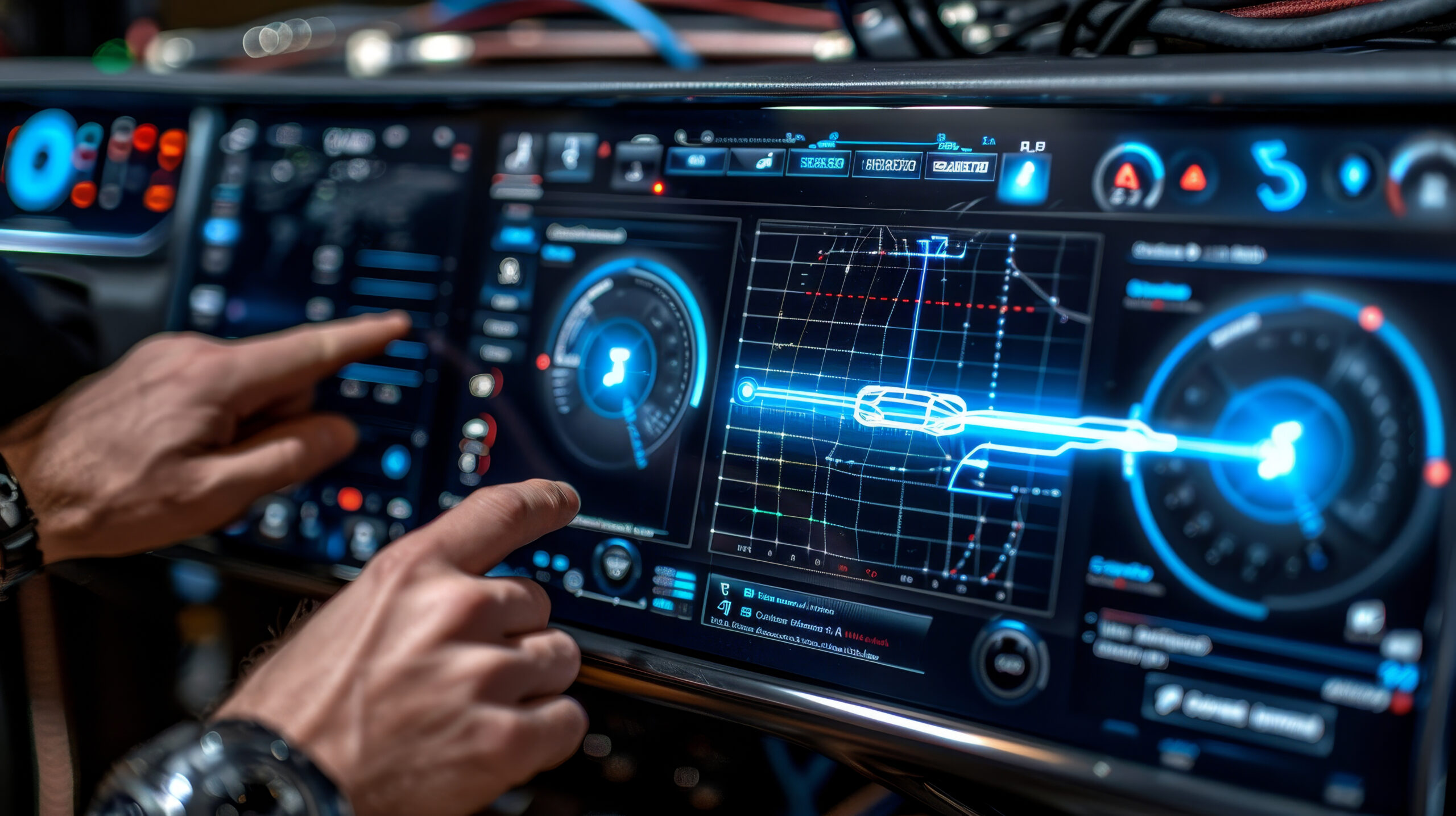
The automotive industry has seen an explosion of technological advancements in recent years.
From futuristic tech to luxury features, car manufacturers are constantly adding new elements to their vehicles to create a sense of innovation and convenience. However, not all of these features live up to the hype or are as practical as they seem. While some add undeniable value to the driving experience, others, no matter how advanced, end up collecting dust in the corner of the car.
Let’s dive into the top five car features that almost no one actually uses, despite being heavily marketed.
Gesture Control
Image Credit: antonio722/123rf Photos
In an age where touchscreens dominate, automakers have begun experimenting with gesture controls, features that allow you to control your car’s infotainment system with a simple wave of your hand. While it sounds futuristic, it’s far from practical.
The idea behind gesture control is to reduce distractions by allowing drivers to interact with their car’s systems without taking their hands off the wheel. Unfortunately, in practice, the technology is unreliable. Gesture controls struggle to recognize movements accurately, especially when conditions like lighting or hand position aren’t ideal. Drivers quickly realize that it’s easier and more effective to simply use the traditional knob or touch screen.
Automakers, like BMW, have already begun scaling back on gesture controls, acknowledging that they don’t add meaningful value to the driving experience. Despite their futuristic appeal, gesture controls often end up being more frustrating than functional, contributing little to the overall driving experience.
Paddle Shifters
Image Credit: danielcortezcc/123rf Photos
When paddle shifters were first introduced, they promised to give drivers the thrill of manual shifting without needing to master a manual transmission. The concept sounds appealing, being able to control the gears manually while driving an automatic car. However, after the initial excitement fades, most drivers rarely use paddle shifters.
While paddle shifters offer a more “engaged” driving experience, the reality is that modern automatic transmissions are incredibly efficient and precise. Most drivers simply don’t need to engage the manual mode, especially in everyday driving situations. Furthermore, shifting manually can feel cumbersome and unnecessary, particularly when the car is designed to handle shifting with superior timing.
You pull up to a crowded parking lot, and with a single button press, your car parks itself perfectly between the lines while you sit back and relax. Sounds like the future, right? Yet, this dream often doesn’t translate well into the real world.
In theory, automated parking assist systems are a game-changer. However, in practice, they often fail to meet expectations. The system struggles with real-world scenarios where timing and precision are essential. It can take too long to assess the parking space, leading to frustration, especially in crowded lots with impatient drivers honking their horns.
Voice control in cars was once hailed as the solution for hands-free driving. Unfortunately, most automakers’ proprietary systems fail to live up to the task, leaving drivers frustrated and often reverting to manual controls.
Before smartphone integrations like Apple CarPlay and Android Auto became standard, car manufacturers developed their own voice recognition systems. While the intention was to make it easier for drivers to answer calls, control the music, or change settings without taking their hands off the wheel, the results were often hit-or-miss. Misunderstood commands or poor recognition software made this feature more of a hassle than a help.
With the rising awareness of climate change and increasing fuel prices, eco mode has become a staple in many vehicles. Advertised as a way to save fuel and reduce emissions, the mode works by altering engine behavior to prioritize efficiency over power.
While the idea of saving fuel sounds appealing, the reality of eco mode is less exciting. When activated, eco mode often sacrifices performance, making the car feel sluggish and less responsive. The throttle response is reduced, and shifting happens earlier in the cycle, which can make acceleration feel sluggish and unresponsive.
While the automotive industry continues to innovate and introduce new technologies, many of these features end up being little more than flashy add-ons that don’t significantly improve the driving experience. As we move forward, the challenge for automakers will be to focus on practical, user-friendly features that truly enhance safety, convenience, and enjoyment on the road.
For now, many of the features we once thought would revolutionize driving remain unused and underappreciated, taking up space in our vehicles but not contributing much to the overall experience. As we look toward the future, it’s clear that less might be more when it comes to car technology, focusing on the essentials rather than gimmicks could ultimately lead to a more enjoyable, efficient, and user-friendly driving experience.
Patience is a writer whose work is guided by clarity, empathy, and practical insight. With a background in Environmental Science and meaningful experience supporting mental-health communities, she brings a thoughtful, well-rounded perspective to her writing—whether developing informative articles, compelling narratives, or actionable guides.
She is committed to producing high-quality content that educates, inspires, and supports readers. Her work reflects resilience, compassion, and a strong dedication to continuous learning. Patience is steadily building a writing career rooted in authenticity, purpose, and impactful storytelling.