
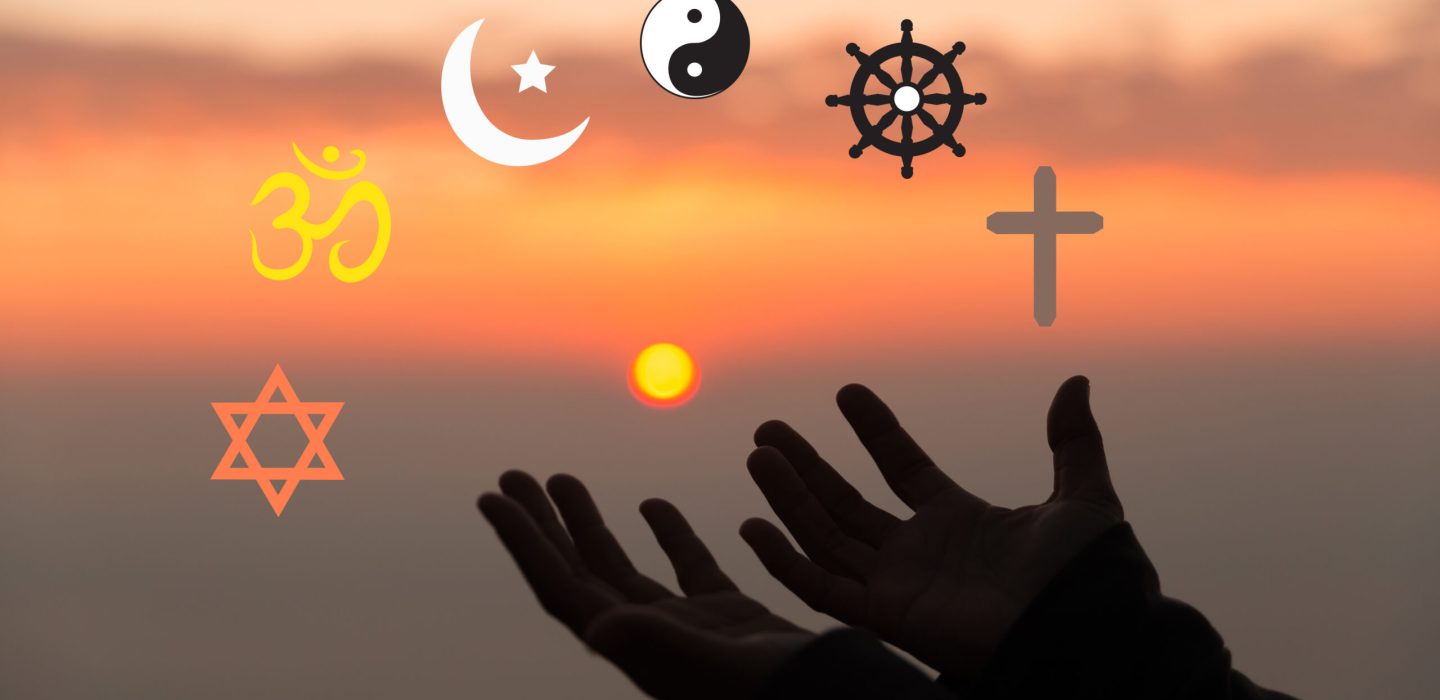


Religions do not exist in a vacuum. Across centuries, belief systems have repeatedly responded to political upheavals, scientific discoveries, migration, empire-building, moral revolutions, and cultural exchange.
Even when sacred texts remain fixed, interpretation evolves, often dramatically, as communities reinterpret their meanings to meet new realities.
Polygamy in Mormonism

Few religious practices demonstrate historical change as clearly as polygamy in early Mormonism.
In the 19th century, plural marriage was introduced among certain Latter-day Saint communities and was framed as a restored religious principle tied to prophetic authority and biblical precedent.
Over time, however, this practice became a direct flashpoint between religious identity and modern nation-state law.
Mounting political pressure, legal prosecution, and the desire for institutional survival transformed the practice from a sanctioned religious expectation into an officially banned act.
Today, The Church of Jesus Christ of Latter-day Saints formally prohibits polygamy, treating it as grounds for discipline.
Yet splinter movements and fundamentalist groups continue to claim theological continuity, creating a lasting divide between mainstream LDS policy and polygamist offshoot sects.
Slavery as “God’s Will”
One of the most ethically significant shifts in religious history is the transformation of attitudes toward slavery.
In many ancient societies, slavery was embedded in economics, warfare, and domestic life, so religious texts often addressed it not by abolishing it, but by regulating it.
- Some believers interpreted slavery as part of a divinely ordered hierarchy.
- Others treated emancipation and compassion as spiritual virtues.
- Later reformers reframed slavery as an intolerable moral contradiction.
This tension appears across multiple traditions, where texts contain laws and assumptions rooted in their historical worlds.
Over centuries, interpretive frameworks changed, especially as global abolitionist movements gained momentum.
Many modern religious communities now treat slavery as fundamentally incompatible with human dignity, even when earlier societies normalized it.
Heaven and Hell
Modern religious imagination often assumes that heaven and hell have always looked the way they do today: angels, harps, golden gates, fiery pits, demons, and explicit eternal punishments.
- Early traditions often emphasized judgment, resurrection, or divine justice, without a detailed geography of the beyond.
- Later theological development filled in imagery through preaching, poetry, art, philosophy, and political messaging.
- As moral systems became more formalized, afterlife visions became more structured, with rewards for loyalty and punishments for rebellion.
Over time, heaven and hell became not only theological positions but social technologies, shaping behavior through hope and fear.
This also led to debates over whether punishment is eternal, symbolic, purifying, or conditional, differences still visible across denominations today.
The Number of Gods
- Local deities are tied to cities, rivers, crops, storms, and fertility.
- Household gods and protective spirits
- Regional high gods are considered supreme among other deities.
- Polytheism → many gods
- Henotheism → one supreme god above others
- Monolatry → worship of one god while acknowledging others
- Monotheism → denial of other gods’ reality or legitimacy
This transformation was influenced by cultural centralization, nation-building, theological consolidation, and conflict with rival religions. As religious identity sharpened, devotion narrowed into exclusive worship.