


The post 10 Things That Can Make a Man Less Attractive to His Wife: The Everyday Habits That Can Quietly Change a Marriage first appeared on Crafting Your Home
Attraction doesn’t always end with a betrayal or fight.
Sometimes, it wears down quietly.
It happens in the kitchen when one spouse repeatedly carries the household while the other waits to be asked. It happens during arguments when a complaint becomes a character attack, or when one partner rolls his eyes and walks away. It happens when “thank you” disappears from the vocabulary and ordinary affection begins to feel like an obligation.
That is why the familiar question, What makes a husband less attractive to his wife?, deserves a more thoughtful answer than a list of physical flaws.
No checklist makes every husband unattractive, but research shows certain habits harm relationships.
Here are 10 worth paying attention to.
Contempt Becomes His Default Language
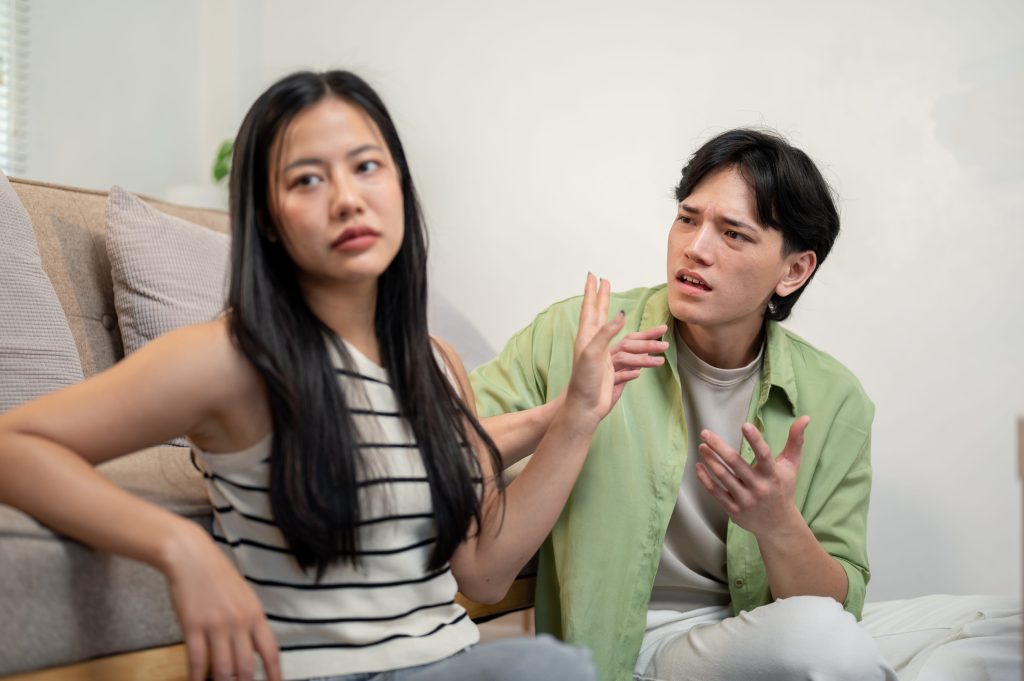
Few things are more corrosive to a relationship than contempt.
It can sound like sarcasm, mockery, name-calling, or ridicule. Sometimes it is visible in an eye roll or a sneer. The message underneath is even more damaging: I am better than you.
The Gottman Institute lists contempt as one of four destructive habits because it signals disrespect and superiority.
A husband does not have to agree with his wife to respect her.
That distinction can determine the entire emotional temperature of an argument.
Every Complaint Becomes a Character Attack
A wife says the trash wasn’t taken out.
Instead of addressing the trash, her husband responds: “You think I never do anything around here.”
Or worse: “You’re always complaining.”
Research distinguishes a complaint about behavior from criticism of character. Criticism can turn a solvable problem into a personal attack, but complaining itself isn’t unhealthy.
Married people have complaints.
The problem begins when every complaint becomes evidence that the other person is supposedly selfish, lazy, difficult, or impossible to please.
The argument stops being about what happened.
It becomes about who is supposedly wrong as a human being.
He Can Never Admit He Was Wrong
Defensiveness is familiar to almost everyone.
When criticized, people naturally want to explain themselves.
But relationship research distinguishes an explanation from a reflexive refusal to accept responsibility. The Gottman Institute describes defensiveness as self-protection that can turn into counterattack or blame-shifting. “I forgot. I’m sorry.”
Those four words can accomplish something a five-minute defense cannot.
Taking responsibility means admitting your part, not every accusation.
In a marriage, that willingness can matter enormously.
He Shuts Down Instead of Talking
Some husbands respond to conflict by leaving the emotional room even when they remain physically present.
They stop answering.
They stare at the television.
They walk away.
They become deliberately unavailable.
Gottman’s research calls this stonewalling, withdrawing from an interaction rather than engaging with it. There is an important qualification.
Taking a break during an intense argument isn’t necessarily stonewalling. The Gottman Institute recommends communicating the need for a break and returning to the discussion after calming down.
The difference is whether the pause is designed to regulate emotions or to punish the other person with silence.
One creates breathing room.
The other creates distance.
He Treats Household Responsibilities as Someone Else’s Problem
Marriage is built partly from invisible labor.
Someone notices the refrigerator is empty. Someone remembers the appointment. Someone buys the birthday gift, schedules the repair, plans the meal, or keeps track of the family obligation.
Research has found an association between perceptions of fairness in household labor and relationship quality. A 2019 PLOS ONE study analyzed 10,236 responses and found that perceptions of unfairness, particularly unfairness experienced personally, were associated with relationship outcomes.
That does not mean every couple needs a perfectly equal 50-50 division of chores.
Families have different circumstances.
What matters is how partners experience the arrangement.
A husband who waits to be assigned every task can unintentionally turn his wife into the household manager.
A husband who notices what needs doing is participating in the partnership itself.
He Stops Saying “Thank You”
Long marriages can create a dangerous illusion: that appreciation is no longer necessary because everyone already knows how everyone feels.
Research suggests otherwise.
A study involving 205 romantic dyads in one sample and 309 in another found that perceptions of a partner’s gratitude were associated with relationship satisfaction. People who perceived less gratitude generally reported lower satisfaction.
A separate study of 163 mixed-gender couples in Switzerland found that gratitude played a role in the relationship between supportive dyadic coping and relationship satisfaction. The words don’t have to be grand.
“Thank you for handling that.”
“I appreciate you.”
“You didn’t have to do that, but I’m glad you did.”
Small acknowledgments can carry a surprisingly large emotional message:
I see what you contribute.
He Listens Only to Solve the Problem
Not every conversation is a repair project.
Sometimes a wife tells her husband about a difficult day because she wants to be heard before she wants advice.
Relationship researchers describe perceived partner responsiveness as the experience of feeling understood, validated, and cared for by one’s partner. Research has repeatedly examined its relationship with relationship quality and satisfaction.
That doesn’t mean husbands must agree with every emotion or become amateur therapists.
It means listening is itself a form of participation.
Instead of immediately saying, “Here’s what you should do,” sometimes the better response is:
“That sounds exhausting.”
“What happened next?”
“I can understand why that upset you.”
The solution may come later.
Connection comes first.
Related: When Love Diminishes: 9 Subtle Signs Your Partner Wants to End the Relationship
He Treats Intimacy as an Entitlement
Marriage does not eliminate the need for mutuality in sexual relationships.
Research involving newlywed couples has examined the links between sexual satisfaction, marital satisfaction, and perceived partner responsiveness. In one daily-diary study, 34 newlywed couples reported on these experiences over 30 days.
The research does not establish that husbands or wives owe one another sex.
Instead, it highlights the importance of responsiveness and satisfaction within intimate relationships.
Desire cannot be demanded into existence.
Intimacy grows more naturally where both people can communicate openly about boundaries, needs, and expectations.
That makes respect part of attraction, not an obstacle to it.
Related: 10 Painful Signs You’re Losing Sexual Attraction to Your Partner
He Needs to Win Every Argument
Some disagreements cannot be permanently solved.
They can only be managed.
The Gottman Institute’s research describes many marital disagreements as perpetual problems, meaning they arise from enduring differences between partners rather than a single issue that can be fixed.
Consider money, family traditions, household routines, or different social preferences.
A husband may win the argument and still lose something more valuable.
If every disagreement becomes a contest, the marriage eventually becomes a place where both people prepare their defenses instead of revealing what they actually need.
The goal of conflict does not always have to be victory.
Sometimes it is understanding.
He Assumes Physical Appearance Is the Main Measure of Attraction
This is where popular relationship advice often becomes misleading.
Physical attraction can matter. But the evidence does not support the idea that wives’ marital satisfaction is determined by how handsome their husbands remain.
A longitudinal analysis drawing on four independent studies of newlywed couples followed spouses for four years. Researchers found that husbands’ satisfaction was associated with their wives’ objectively rated attractiveness, while wives’ satisfaction was not significantly associated with their husbands’ physical attractiveness in those studies.
That finding should not be interpreted as proof that women do not care about men’s appearance. The research involved newlywed couples and a specific experimental design.
It does, however, challenge the simplistic assumption that maintaining physical attractiveness is the central explanation for a wife’s satisfaction.
Marriage is considerably more complicated than a mirror.
The Habits That Matter Most Happen When Nobody Is Watching
The most revealing part of these findings is that many of the behaviors have nothing to do with physical appearance.
They involve how a husband behaves when he is frustrated, whether he accepts responsibility, whether he notices his wife’s contribution, and whether she feels heard.
Research on household fairness, gratitude, and partner responsiveness points toward the s