


The post 7 Places in the U.S. That Feel Like Europe first appeared on Crafting Your Home.
Dreaming of cobblestone streets, Alpine-style façades, windmills, or café-lined town centers? You don’t necessarily have to cross the Atlantic to find places with a distinctly European-inspired atmosphere.
Some U.S. destinations have genuine immigrant or colonial connections to Europe. Others deliberately adopted European architectural themes to reshape their identities and attract visitors. That distinction matters: these places are not substitutes for Europe, but they can offer architecture, landscapes, traditions, and streetscapes that bring parts of Europe to mind.
Here are seven worth putting on your travel radar.
Solvang, California
For Danish influence, Solvang has one of the strongest historical claims on this list. Danish immigrants founded the town in California’s Santa Ynez Valley in 1911, and even its name has Danish roots, translating to “sunny field.”
Today, downtown Solvang is known for windmills, bakeries, half-timbered façades, and Danish-inspired architecture. Its recognizable visual character didn’t appear all at once, though. The town’s Danish-medieval architectural look expanded after its founding, particularly in the 1930s.
That makes Solvang more than a decorative theme town, but it’s still best understood as an American community whose Danish identity evolved over time.
Related: 4 Most Affordable Towns to Buy a House in California
Leavenworth, Washington
Set against Washington’s Cascade Mountains, Leavenworth certainly looks ready for an Alpine postcard. Its Bavarian-style downtown includes timbered façades, German-influenced food, festivals, and a mountain backdrop that helps sell the illusion.
But its story is surprisingly modern.
Leavenworth began as a railroad and timber town, not a Bavarian immigrant settlement. After an economic downturn, local leaders transformed downtown into a Bavarian Alpine-themed destination in the 1960s. The first converted building reopened as the Edelweiss Hotel in 1965.
So enjoy the Bavarian atmosphere, just don’t mistake it for a centuries-old German village.
St. Augustine, Florida
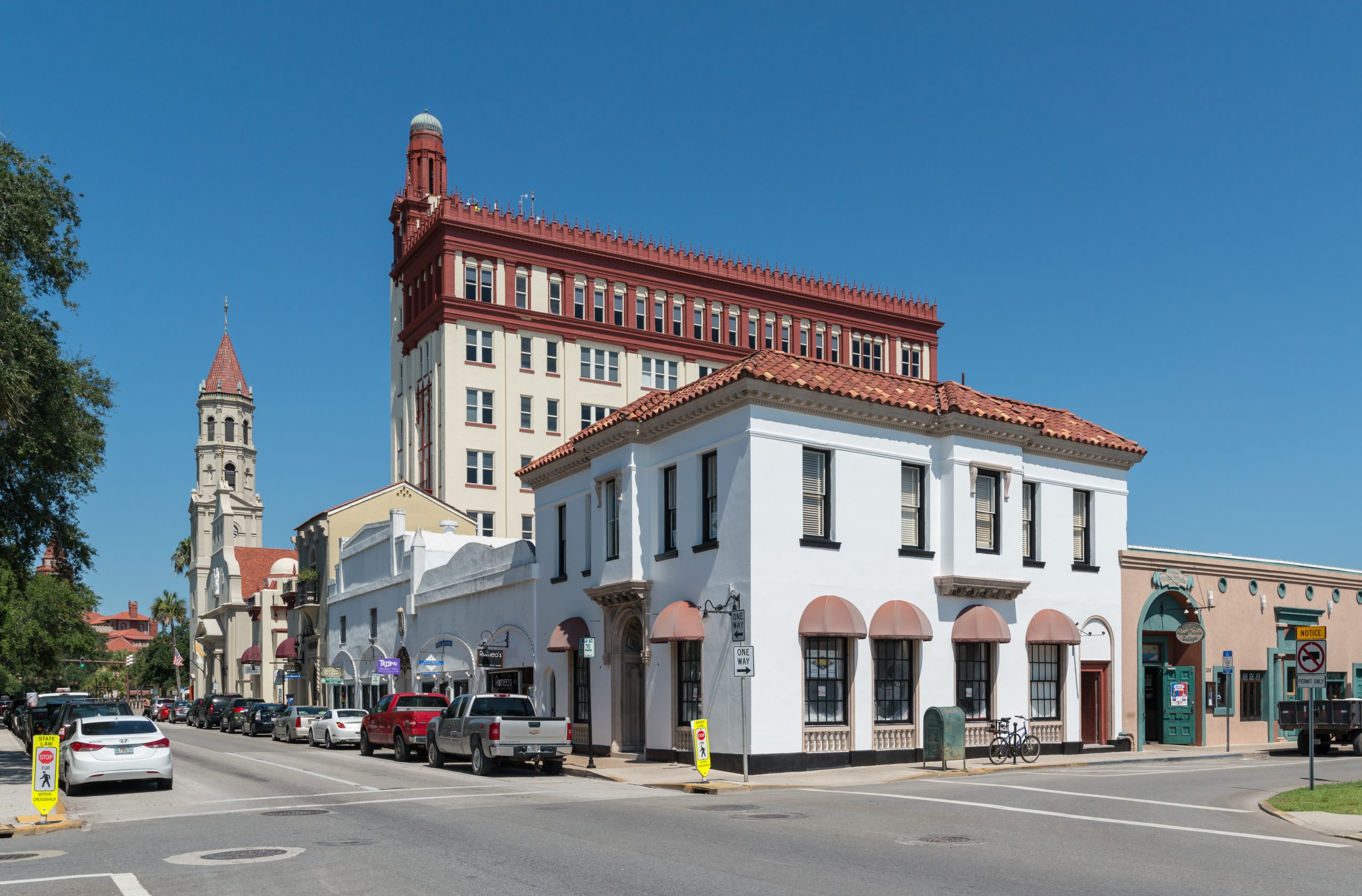
St. Augustine’s European connection is much older.
Founded by Pedro Menéndez de Avilés in 1565, the Florida city preserves important elements of its Spanish colonial past. Its historic core includes narrow streets, balconies, and a street pattern influenced by Spanish colonial design. The city identifies 36 original colonial buildings along with roughly 40 reconstructed buildings based on colonial models.
It’s important, however, not to describe all of St. Augustine as purely Spanish. Its history also includes British and later American periods, while Indigenous history in the region long predates European settlement.
New Glarus, Wisconsin
If rolling countryside and Swiss traditions sound appealing, New Glarus offers a particularly strong heritage connection.
Swiss immigrants from the canton of Glarus established the Wisconsin community in 1845 during a period of economic hardship. The town has maintained Swiss-German traditions, music, and cultural institutions, while its Swiss Historical Village Museum interprets local history through 14 buildings, including an 1850s log cabin and an 1890s cheese factory.
You may see New Glarus promoted as “America’s Little Switzerland,” but that nickname is promotional, not an official historical designation.
Holland, Michigan
Holland’s Dutch connection is right there in the name, and it runs deeper than decorative windmills.
Dutch Calvinist separatists led by Albertus van Raalte settled the Michigan community in 1847. Dutch heritage remains visible through Windmill Island Gardens, Dutch-inspired public features, and the annual Tulip Time celebration, which dates to 1929.
The town is especially associated with tulips, but that spectacle is seasonal, not year-round. Its overall architecture is also primarily American and Victorian, so think Dutch cultural heritage rather than a preserved old town in the Netherlands.
Related: 7 Best European Cities to Visit in 2026
Helen, Georgia
Helen offers another dramatic Bavarian-style transformation, but, like Leavenworth, its Alpine look is a deliberate reinvention.
The Georgia town began as a mining and lumber community. In 1969, it began transforming into a Bavarian-style tourist destination, with Alpine-inspired façades added to existing buildings. Artist John Kollock drew inspiration from his experiences in Germany and from Helen’s mountain-valley setting.
The result is a playful Alpine atmosphere in the Georgia mountains, but it shouldn’t be confused with a historic Bavarian immigrant settlement.
Charleston, South Carolina
Charleston rounds out the list with an Old World atmosphere rather than a direct European imitation.
Its historic core includes cobblestone streets, narrow alleys, church spires, pastel façades, and architecture shaped by its long history as a port city. The French Quarter takes its name from French Huguenot settlement and is recognized as a historic district.
Of all the destinations here, Charleston is perhaps the loosest European comparison. It remains unmistakably a Southern American city, and any discussion of its historic beauty should also acknowledge the city’s history of enslavement and the transatlantic slave trade.
Whether you’re drawn to Danish heritage, Swiss traditions, Spanish colonial streets, or playful Bavarian façades, these destinations offer very different versions of European influence. The most interesting part may be learning which places inherited those connections, and which ones reinvented themselves around them.
Other Posts You Might Like
If you like what you just read, then subscribe to our newsletter and follow us on social media.


