


The post 10 Things Kids in the 1970s Did on Halloween That Would Shock Parents Today first appeared on Crafting Your Home.
For many people who grew up in the 1970s, Halloween meant a costume, a bag full of candy, and hours spent moving from one house to another with friends. No smartphones tracked a child’s location, no group chats coordinated the evening, and no GPS-enabled watches showed parents exactly where their children were.
That does not mean every child had complete freedom, or that every 1970s family followed the same traditions. But Halloween culture then often looked very different from the highly organized celebrations many families know today. Contemporary government safety warnings show that parents were already being urged to think about traffic, costumes, candles, masks, and adult supervision.
The interesting part is not simply that Halloween was supposedly “safer” or “more dangerous” in the 1970s. The more useful comparison is how children interacted with their neighborhoods, their parents, and technology, or the complete lack of it.
The Neighborhood Was Their Halloween Playground
A 1970s Halloween could involve considerably more walking than the modern experience of moving between a few organized stops. Children might go from house to house throughout their neighborhood, often in groups of friends or siblings. A 1975 Consumer Product Safety Commission warning specifically told parents to keep young children accompanied by a responsible older person and in sight. The same guidance warned children against running across lawns and backyards and reminded them not to dash between parked cars.
That makes the period especially interesting from a technology perspective. A child didn’t need a smartphone because smartphones didn’t exist. Parents relied on agreed meeting times, familiar streets, and whatever supervision was available. Modern parents can use phones and location-sharing tools to stay in touch; parents in the 1970s generally could not.
Parents Didn’t Have to Know Where Their Kids Were Every Minute

The idea of giving children some independence was not unique to Halloween, but Halloween provided an unusual opportunity for children to spend an evening outside after dark. It would be inaccurate to claim that 1970s children universally roamed unsupervised. The contemporary CPSC guidance makes clear that supervision was expected for young children. What changed over time was the technology available to stay in touch. No texting, GPS location sharing, or instant video calls waited in a child’s pocket.
A PubMed-indexed study of children and neighborhood free play found that factors such as access to parks and perceptions of neighborhood safety can restrict independent mobility. The study shows that children’s ability to move around their neighborhoods is influenced by their surroundings and social environment.
A Pillowcase Could Become a Giant Candy Bag
Halloween did not require a specialized shopping trip for children to collect treats. A household pillowcase could serve perfectly well as a candy container. The larger historical point is that Halloween treats were not always limited to individually wrapped commercial candy. The Library of Congress notes that children historically received a mixture of fruit, nuts, coins, and toys, while candy became increasingly dominant during the 20th century. By the 1970s, concerns about unwrapped food had also begun influencing what parents considered acceptable Halloween treats.
That transition shows how technology, manufacturing, and consumer culture can change an ordinary childhood ritual. Individually wrapped products offered convenience and a visible barrier between the food and the outside world. For children, however, the basic goal remained remarkably simple: find as many treats as possible before heading home.
Related: 6 Top Halloween Candy Picks for Trick-or-Treaters
Homemade Costumes Could Be More Creative Than Store-Bought Ones
A homemade Halloween costume might involve old clothing, fabric, makeup, cardboard, or whatever materials were available at home. But homemade did not necessarily mean carefree. The CPSC’s 1975 and 1976 Halloween warnings explicitly addressed homemade costumes alongside commercially purchased ones. Officials warned families to avoid flimsy materials, oversized sleeves, and flowing skirts because they could catch fire or cause children to trip. They also recommended costumes that were bright enough to be visible to motorists.
This is an important detail that nostalgia stories sometimes miss. Homemade costumes were certainly part of Halloween culture, but safety officials were already concerned about the materials being used. The modern emphasis on flame-resistant fabrics and visibility did not suddenly appear with the internet age; federal agencies were publishing essentially the same concerns in the 1970s.
Homemade Food Was Part of Halloween History

For modern parents used to checking ingredient labels and allergy information, accepting homemade food from multiple households can seem surprisingly informal. Historically, however, Halloween treats were not always limited to factory-sealed candy. The Library of Congress records a much broader tradition of giving children food and other small gifts during Halloween celebrations. Its history of Halloween also notes that individually wrapped candy became increasingly favored during the 20th century and that concerns about unwrapped treats became particularly important by the 1970s.
It is worth avoiding the common claim that widespread Halloween candy tampering was an everyday occurrence. The evidence does not support that interpretation. In fact, the American Academy of Pediatrics later described tampering as rare while still recommending that parents inspect children’s treats. The shift toward packaged treats therefore tells us more about changing expectations around food safety and trust than it does about children routinely encountering poisoned candy.
Real Candles Lit the Jack-o’-Lanterns
This one has a strong documentary record. Real candles were used inside traditional jack-o’-lanterns, and federal safety officials were sufficiently concerned about fire hazards to issue explicit warnings. In 1975, the CPSC stated that children should never carry candles or other open flames, even when the candle was inside a pumpkin. Officials also warned that candlelit pumpkins should be kept away from places where costumes could brush against the flame.
The 1977 CPSC guidance repeated the warning, specifically noting the danger posed by candlelit jack-o’-lanterns near doorsteps and flammable decorations. Today, battery-powered LED lights make it easy to recreate the glow without an open flame. From a technology perspective, it is a small but revealing change: an inexpensive piece of modern electronics has replaced one of the simplest, and riskiest, parts of the traditional Halloween setup.
Halloween Could Mean Walking Through Traffic After Dark
Walking around after dark was central to traditional trick-or-treating, and it created a serious pedestrian-safety problem. The CDC examined U.S. mortality data from 1975 through 1996 and found that childhood pedestrian deaths were approximately four times higher on Halloween evenings than on other evenings. The analysis covered children and adolescents and used the federal Fatal Analysis Reporting System.
That statistic provides useful context for the 1970s. It does not prove that a particular child in 1972 or 1978 walked alone, nor does it show that Halloween was inherently unsafe. It does show why visibility and traffic became central parts of Halloween safety guidance. The CPSC recommended bright clothing, reflective material, and flashlights, while later CDC guidance emphasized sidewalks, crosswalks, and staying together.
Related: 9 American Towns That Go All Out for Halloween
Masks Were More Than a Costume Choice
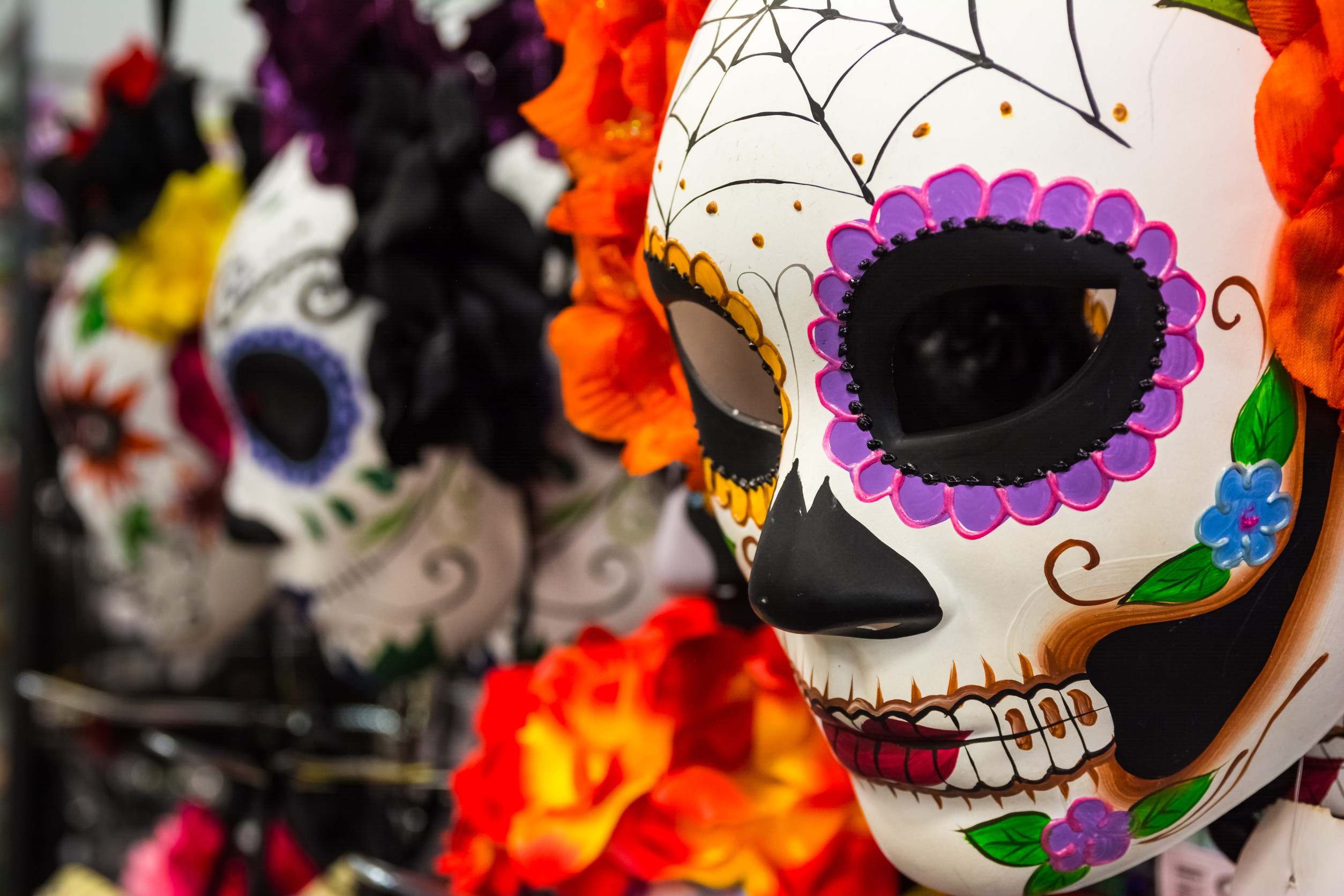
A classic Halloween image from the era involves a child wearing a plastic or rubber mask. Today, many parents would immediately wonder whether the child can see properly through it. That concern was already recognized in the 1970s. The CPSC warned that masks should not restrict vision or breathing and suggested face cosmetics as an alternative. Officials also warned against placing plastic bags over children’s faces.
Modern readers sometimes assume that earlier generations simply ignored these risks. The historical record is more complicated. Parents and federal safety officials were actively discussing them. The difference was that the products, communication systems, and safety standards available to families were different.
Halloween Mischief Was Part of the Culture
The word “trick” in trick-or-treating wasn’t purely decorative. Halloween has long been associated with pranks and mischief, and the historical record predates the 1970s by many decades. UNICEF USA’s history of its Halloween campaign notes that trick-or-treating became popular partly because people viewed giving children treats as a way to discourage teenage pranks. The organization began its Trick-or-Treat for UNICEF campaign in the early 1950s, and by the 1970s celebrities such as Sammy Davis Jr. and members of The Brady Bunch were promoting it to millions of children.
So the 1970s Halloween experience was not simply about collecting candy. It could also involve community events, charity drives, and the playful mischief long associated with the holiday. That said, harmless mischief differs from vandalism. Portraying every Halloween prank from the period as socially acceptable would be misleading.
Related: Pumpkins and Hot Dogs: The Halloween Costumes Americans Pick Most for Their Pets
Nobody Could Text Mom When They Wanted to Come Home
Perhaps the biggest difference between a 1970s Halloween and today’s Halloween was not a particular costume or candy. It was the absence of instant communication. No smartphones, messaging apps, or consumer GPS trackers. If a child left home for the evening, communication generally depended on plans made beforehand or finding a telephone. That sounds primitive to a technology-oriented reader, but it also explains why the neighborhood itself mattered so much. Children and parents had to coordinate using physical places and agreed times rather than live digital information.
Modern pediatric guidance reflects how much expectations around child mobility have changed. The American Academy of Pediatrics recommends that children younger than about 10 generally should not be unsupervised pedestrians, except in limited situations, because developmental ability, traffic conditions, and the individual child’s maturity all matter.
Key Takeaways

It is tempting to divide Halloween history into two simple categories: fearless children in the 1970s versus overprotected children today. The evidence does not support such an easy conclusion.
Federal safety agencies were already warning families in the 1970s about flames, costumes, masks, traffic, visibility, and supervision. The CPSC’s 1975 Halloween guidance is particularly revealing because it shows that many of the hazards modern parents worry about were already recognized then.
At the same time, modern technology has transformed how parents manage those risks. A smartphone can provide immediate communication and location information. LED lights can replace candles. Reflective materials are easier to obtain. Online resources make safety guidance instantly accessible.
What makes 1970s Halloween fascinating, then, is not that children lived in a completely risk-free world. They did not. It is that ordinary childhood activities happened in a world without the digital infrastructure that now surrounds children.
Other Posts You Might Like
- 10 Easy Halloween Costumes for Couples on a Budget
- ‘It’s the Great Pumpkin, Charlie Brown’ Turns 60 This Month — 8 Things You Might Not Know
- Real Criminals Who Used Halloween Night to Hide Their Crimes
If you like what you just read, then subscribe to our newsletter and follow us on social media.


