


The post How to Write a Eulogy When You’re Not a Writer: Start With the Story, Not the Perfect Sentence first appeared on Crafting Your Home
Being asked to write a eulogy is especially hard: you must find the right words when grief makes it nearly impossible.
You may stare at a blank page, knowing who the person was, but not how to explain it to others who loved them.
The reassuring truth is that a eulogy is not a test of writing ability.
A eulogy honors the person who died and shares meaningful memories. Co-op describes it as a way to say goodbye while remembering their life and qualities.
Scholars have found that eulogies help survivors make sense of identity, relationships, and loss.
You do not need to write like a professional.
You need to remember them as someone who knew them.
Begin With Memories, Not a Blank Page
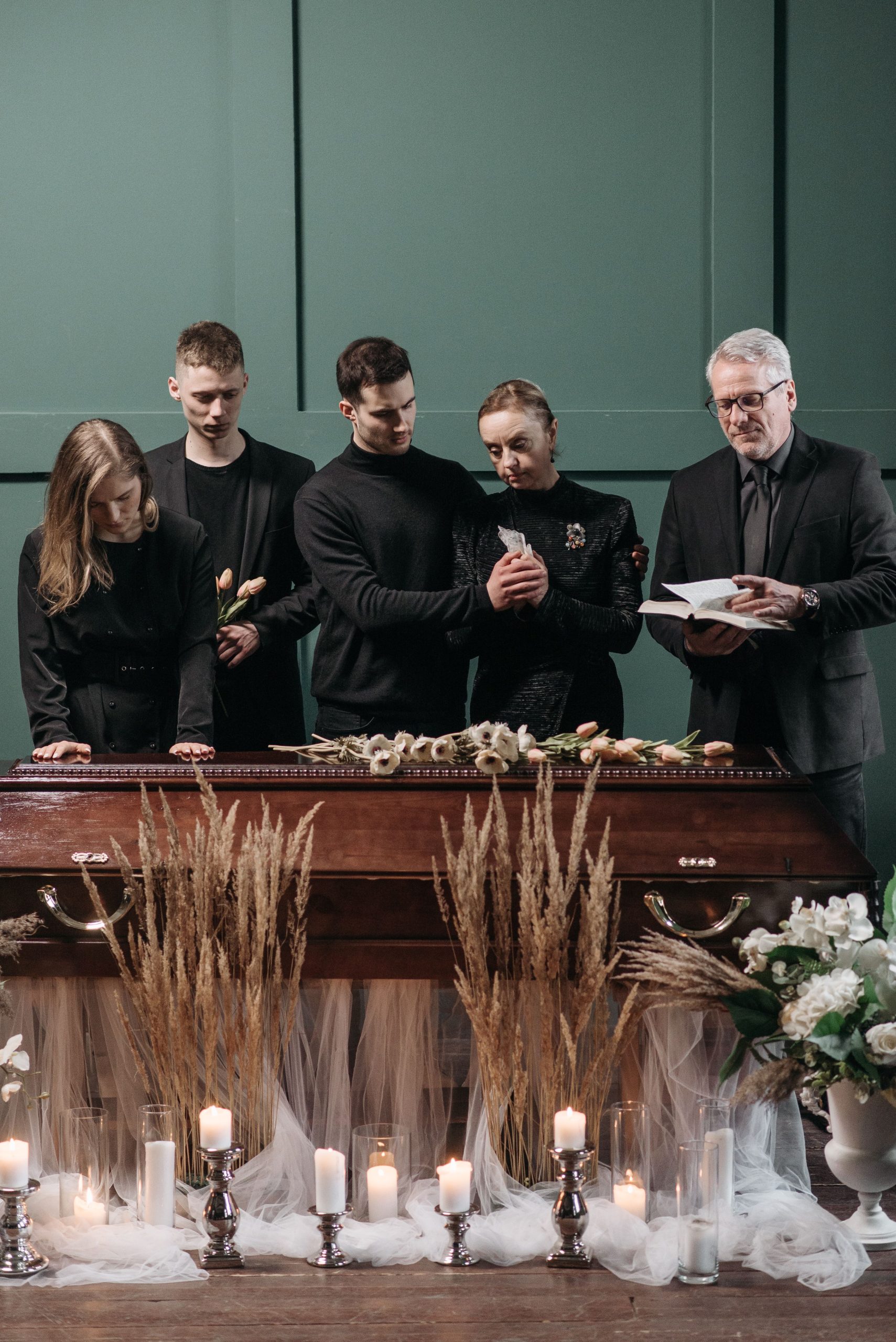
The worst way to start is to stare at the cursor and demand that it produce a beautiful opening sentence.
Instead, make a list.
Write down the person’s name. Then write whatever comes to mind:
- A phrase they always used
- A meal they were famous for making
- A funny habit
- A place they loved
- A childhood story
- A lesson they taught you
- A difficult period they survived
- A person they cared for
- A tradition they created
- A moment when they made you feel loved
Do not edit these memories yet.
Co-op’s funeral guidance recommends remembering both major events and small details, and suggests talking to friends and family to gather stories.
A life is not a résumé.
People remember the little things.
The way someone laughed before finishing a joke. The Sunday phone call. The birthday cake that was always slightly burned. The coat they wore everywhere. The expression they used whenever somebody arrived late.
Those details may never appear in an obituary.
They can make a eulogy unforgettable.
Choose Stories That Reveal the Person
Once you have memories on paper, look for the stories that tell you something about the person’s character.
Instead of writing:
“My father was generous.”
Tell the story that demonstrates his generosity.
Instead of:
“She loved her grandchildren.”
Describe the Saturday mornings when the grandchildren arrived, and she already had their favorite breakfast waiting.
A specific story gives an audience something abstract praise cannot: a person they can picture.
Co-op recommends organizing memories around major events, small characteristics, happy moments, and challenges. At the same time, its suggested eulogy structures include stories from childhood and adulthood, important interests, memories, and what the person meant to the speaker.
You do not need a dozen anecdotes.
Two or three strong stories are enough to create a portrait.
Build a Simple Structure
When grief has made concentration difficult, structure is a kindness.
A useful eulogy can be built around four movements:
Introduce the person.
Say who they were and your relationship to them.
Tell the stories.
Choose two or three memories that reveal their character, passions, or influence.
Explain what they meant.
What did they change in your life? What will people miss? What did they teach others?
Say goodbye.
End simply. Thank them, honor them, or say the words you wish you could say privately.
Co-op suggests selecting three major points or building the speech around a theme, while Emily Post recommends staying focused and avoiding unnecessary repetition.
There is no mandatory formula. A chronological life story can work. So can a eulogy organized around one theme, such as kindness, family, music, faith, humor, service, or adventure.
The structure exists to carry the emotion.
It should never become more important than the person.
Write in Your Own Voice
One of the easiest ways to make a eulogy feel false is to make it sound like someone else wrote it.
If you normally speak plainly, write plainly.
If the deceased had a particular expression, use it. If your family has an inside joke that is appropriate for the occasion, it may belong there. If your relationship with the person was complicated, you do not have to pretend it was perfect.
Co-op specifically notes that a eulogy does not have to portray the deceased as perfect and that the tone can be personal, formal, or light-hearted depending on the person and circumstances. Emily Post similarly recommends stories that show the deceased in a positive light while advising sensitivity around humor and potentially difficult material.
The objective is not literary polish.
It is recognition.
When relatives hear your words, they should think: Yes. That sounds like him.
Ask Other People for Their Memories
Do not assume you are responsible for remembering an entire life alone.
Call a sibling. Message an old friend. Speak with a colleague. Ask a grandchild what they remember.
You may discover a story you have never heard.
You may also discover a different side of the person. This teacher stayed late for struggling students, the neighbor who quietly shoveled somebody else’s sidewalk, the colleague who kept emergency candy in a desk drawer.
Those stories expand the eulogy beyond one person’s perspective.
They also help with factual accuracy.
Co-op and Emily Post both recommend gathering input from other people when preparing a eulogy. Emily Post also suggests checking with family about subjects that should or should not be mentioned and coordinating with other speakers to avoid unnecessary repetition.
Do Not Turn the Eulogy Into a Biography
One of the most common temptations is to list everything.
Born here. Went to school there. Started this job. Married. Had three children. Retired. Won an award.
Those facts may belong in the broader funeral program or obituary. They do not necessarily belong in the center of a personal eulogy.
The question is not:
“What happened during this person’s entire life?”
It is:
“What should people understand about this person when I finish speaking?”
That is a much more manageable question.
A eulogy can leave out hundreds of facts and still tell the truth.
How Long Should It Be?
There is no universal scientifically established “correct” length.
Practical guidance varies. Co-op suggests roughly three to five minutes as a useful guideline while advising speakers to check the available time with the funeral officiant. Emily Post recommends roughly two to 10 minutes, depending on the circumstances and number of speakers.
The important point is to follow the arrangements for the service.
If six people are speaking, a 10-minute speech may be impractical. If you are delivering the only tribute, a longer eulogy may be appropriate.
Ask.
Then edit accordingly.
Read It Aloud Before the Funeral
A eulogy is written to be heard, not merely read.
Reading it aloud exposes sentences that are too long, words that feel unnatural, and sections that do not flow. It also lets you discover which passages are likely to overwhelm you emotionally.
Emily Post recommends practicing several times and using an easy-to-read printed copy. It also advises speakers to slow down, speak conversationally, and pause to breathe if emotion becomes overwhelming.
Co-op likewise recommends practicing, breathing deeply, and speaking slowly. It notes that becoming emotional is completely acceptable and that another person can deliver the eulogy if you ultimately decide you cannot.
That last option is worth remembering.
Needing help does not mean you failed.
Related: 9 Famous Reported Last Words That Still Spark Curiosity
It Is Okay to Cry
There is no requirement to deliver a eulogy without emotion.
In fact, trying desperately not to become emotional can make the experience harder.
Pause.
Take a breath.
Look at the page.
Take a sip of water.
Continue when you can.
Emily Post explicitly notes that audiences understand when speakers become emotional at funerals and recommends simply pausing and breathing before continuing.
If your voice breaks while describing your mother’s laugh, your brother’s terrible jokes, or your grandfather’s morning ritual, that is not a flaw in the speech.
It is evidence that the person mattered.
Can Writing the Eulogy Help With Grief? The Science Is More Complicated
It is tempting to say that writing about a loved one automatically helps people heal.
The evidence does not justify such a sweeping claim.
A 2002 prospective study found no evidence that emotional disclosure itself facilitated adjustment to bereavement, and a writing intervention in that study did not reduce distress or doctors’ visits.
Other research has produced different findings. A randomized controlled trial involving 68 bereaved participants found that directed writing focused on meaning-making or benefit-finding produced improvements in several grief-related outcomes at three months, suggesting that the content and structure of writing may matter.
More recently, a 2026 randomized controlled trial involving 66 bereaved Chinese adults found that a six-session, structured online expressive-writing intervention targeting disruption of the self reduced grief severity compared with a waitlist control. The researchers also acknowledged an important limitation: their measure of self-disruption had not been validated, so the mechanism remained uncertain.
Taken together, the responsible conclusion is not that “writing a eulogy heals grief.”
It is that writing and structured reflection can sometimes play a useful role in processing aspects of bereavement, but results vary, and a funeral speech is not a clinical