



The post 10 Old-Fashioned Lullabies and the Stories Behind Them first appeared on Crafting Your Home.
Many of us heard these songs before we could even speak. Yet few people stop to wonder why one lullaby puts a cradle in a treetop, another promises a mockingbird, or how a poem about a star became a bedtime song known worldwide.
Lullabies travel quietly through families. A grandmother sings one to her child, that child grows up and sings it again, and decades later the melody survives even when almost nobody remembers where it came from. Some of their histories are surprisingly well documented. Others are mysteries wrapped in centuries of folklore.
Here are 10 old-fashioned lullabies and the stories behind them.
“Rock-a-Bye Baby”
Few bedtime songs contain an image quite as unsettling as a cradle falling from a tree. The words appeared in print in Mother Goose’s Melody, published in London around 1765. The Library of Congress notes that the words and the melody familiar to many modern listeners did not originate together.
Many colorful explanations have been proposed for the rhyme, from political satire involving King James II to stories about Native American cradleboards hanging from branches. Scholars have not established any of those explanations as the definitive origin.
That may be the most interesting part of the song: everyone knows the falling cradle, but nobody can say with certainty what first inspired it.
“Twinkle, Twinkle, Little Star”

“Twinkle, Twinkle” did not begin as the song most of us know. The words originated in “The Star,” a poem by English writer Jane Taylor, published in 1806 in Rhymes for the Nursery, a collection associated with Jane and her sister Ann.
The familiar tune is older. It comes from the French melody “Ah! vous dirai-je, maman,” published in the 18th century. Mozart later wrote famous variations on that melody, although he did not compose the tune itself.
The words and melody were eventually joined, transforming a children’s poem into one of the world’s best-known bedtime songs.
“All Through the Night”
The melody behind “All Through the Night” comes from Wales, where it is known as “Ar Hyd y Nos.” The tune appears in Edward Jones’ Musical and Poetical Relicks of the Welsh Bards in the 1780s. Later, poet John Ceiriog Hughes wrote Welsh words, and several English versions circulated afterward.
One familiar English version is associated with Harold Boulton. Its gentle melody and imagery of peaceful nighttime watching helped it become a natural lullaby, even though its history is broader than a simple nursery song.
It reminds us that some bedtime standards began life within much larger national folk traditions.
“Golden Slumbers”
Long before the Beatles used the title “Golden Slumbers,” the words belonged to an English Renaissance play. Thomas Dekker’s lullaby appeared in Patient Grissell, first printed in 1603. The text directly addresses soothing children to sleep, making its lullaby purpose unusually clear compared with many nursery songs whose original uses are uncertain.
The words survived for centuries and were set to music by different composers. Paul McCartney later borrowed part of Dekker’s centuries-old text for the Beatles’ 1969 recording, setting it to new music. That gives “Golden Slumbers” an extraordinary bridge between Elizabethan theater and modern popular music.
“Lavender’s Blue”
The gentle nursery version of “Lavender’s Blue” hides a much rowdier past. An early surviving form appears on a 17th-century English broadside titled “Diddle Diddle, or The Kind Country Lovers.” The broadside indicates that it was sung to an already-known tune associated with “Lavender Green.”
Its early verses were not written for children and included adult themes involving courtship and drinking. Over generations, however, the song changed. Verses disappeared, gentler ones survived, and the tune eventually entered nursery and lullaby tradition.
It is a good example of how folk songs can become almost unrecognizable as families reshape them.
“Bye, Baby Bunting”
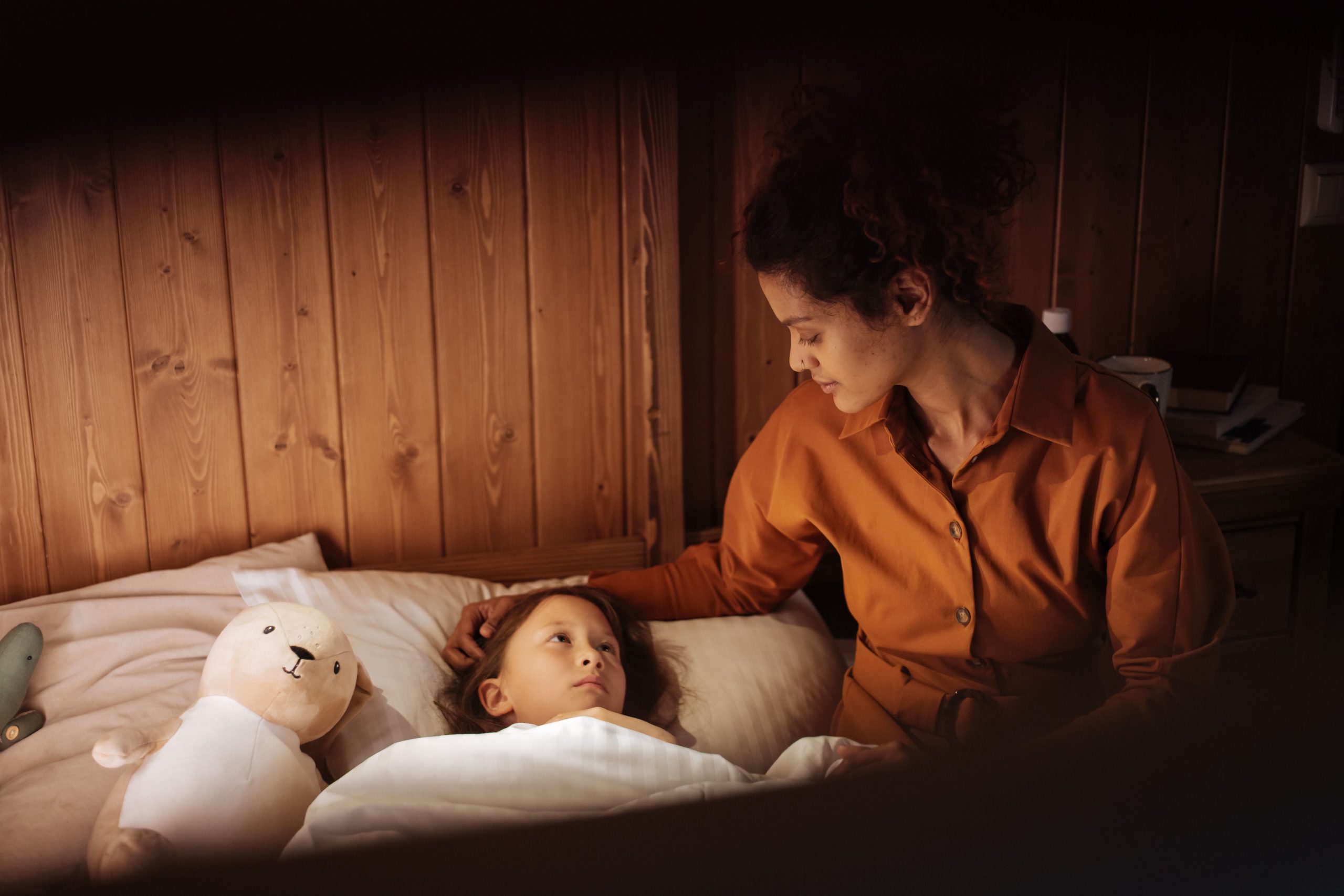
“Bye, Baby Bunting” is another old rhyme whose simple words reflect a world very different from modern childhood. Versions were circulating in England by the 18th century, with printed examples appearing by the 1730s and later nursery collections recording the familiar idea of a parent going hunting to obtain a skin to keep the baby warm.
“Bunting” was also used as an affectionate term for a small or plump child. Modern listeners may find the reference to animal skins unusual, but in an earlier household it evoked something practical: warmth.
No need to invent a darker secret meaning. The surviving evidence supports a much simpler nursery context.
“Hush, Little Baby”
The parent in “Hush, Little Baby” keeps making promises: if one gift disappoints, another will take its place. Unlike a composed song with an identifiable songwriter, this traditional American folk lullaby has an unknown origin.
Folklorist Cecil Sharp collected versions in Virginia and North Carolina in the early 20th century, and the song later appeared in well-known American folk-music collections. Smithsonian records also preserve performances, including versions connected with Appalachian and children’s folk traditions.
Its repeating structure probably helped it survive. Singers can add or change promised gifts almost indefinitely.
“Brahms’ Lullaby”
The melody often represented by the words “lullaby and good night” comes from Johannes Brahms’ Wiegenlied, Op. 49, No. 4. Brahms published it in 1868 and dedicated it to his friend Bertha Faber after the birth of her second child. The song was written for voice and piano and later became one of Brahms’ most recognizable compositions.
There was also a personal connection. Accounts of the work’s history note that Brahms incorporated a musical reference to a song Bertha had once sung to him. A piece written for one family eventually became musical shorthand for putting babies to sleep almost everywhere.
“Sleep, Baby, Sleep”

“Sleep, Baby, Sleep” grew from the German lullaby “Schlaf, Kindlein, schlaf.” Versions of the text can be traced back centuries, while the song became especially well known through German folk-song traditions and later English translations. One influential form appeared in the early-19th-century collection Des Knaben Wunderhorn.
The song surrounds a sleeping child with peaceful rural imagery: sheep, lambs and a watchful nighttime world. That pastoral picture made the song easy to carry into other languages. Instead of telling a complicated story, it does what many lullabies do best: turns the world outside the cradle into something gentle and safe.
“All the Pretty Little Horses”
This American lullaby is beautiful, but its origins are difficult to pin down. The Library of Congress preserves field recordings made by John and Ruby Lomax in Texas in 1939, showing the song was already part of American folk tradition by then.
Various later accounts have attached specific stories about enslaved caregivers to the song. Those interpretations are frequently repeated, but the song’s exact origin is not firmly documented enough to present one dramatic explanation as settled fact.
What is certain is its dreamlike promise of beautiful horses waiting for a sleeping child. That image helped make it one of America’s most haunting traditional lullabies. Lullabies survive differently from ordinary songs.
Their composers may be forgotten, their verses altered, and their original meanings blurred, yet someone keeps singing them. Perhaps that is why these songs feel so old even when we do not know their histories. They reach us less like museum pieces and more like whispered inheritance, one sleepy child at a time.
Other Posts You May Like
- 10-worst-things-people-post-on-their-stories-without-realizing-everyone-is-judging
- 10-unforgettable-triumphs-remarkable-arctic-survival-stories
If you like what you just read, then subscribe to our newsletter and follow us on social media.


