


The post Why More U.S. Towns Are Turning Empty Lots into Community Gathering Spaces first appeared on Crafting Your Home.
In cities across the country, a familiar patch of weeds, broken glass, and trash behind a chain-link fence is being replaced by something else: a fire pit, a row of planters, a bench where neighbors sit. What used to be an eyesore that people walked past is becoming a place they walk to.
This isn’t a handful of isolated feel-good projects. It more’s a pattern showing up in big cities and small towns alike, backed by a growing body of research on what happens to a neighborhood when its empty lots get put to use.
The Scale of the Problem Behind the Trend
The push exists because there’s a lot of land to work with. Researchers estimate that roughly 15% of the land in U.S. cities is vacant or abandoned an area the size of Switzerland, according to a citywide study published in the Proceedings of the National Academy of Sciences. Individual cities illustrate the scope: Philadelphia has about 40,000 vacant lots citywide,and Detroit owns more than 59,000, with an October 2025 report from Detroit Future City counting more than 100,000 vacant lots across the city overall.
For decades, these lots mostly sat untouched or were treated as a cleanup problem rather than an opportunity. That’s shifted.
The Research That Changed the Conversation
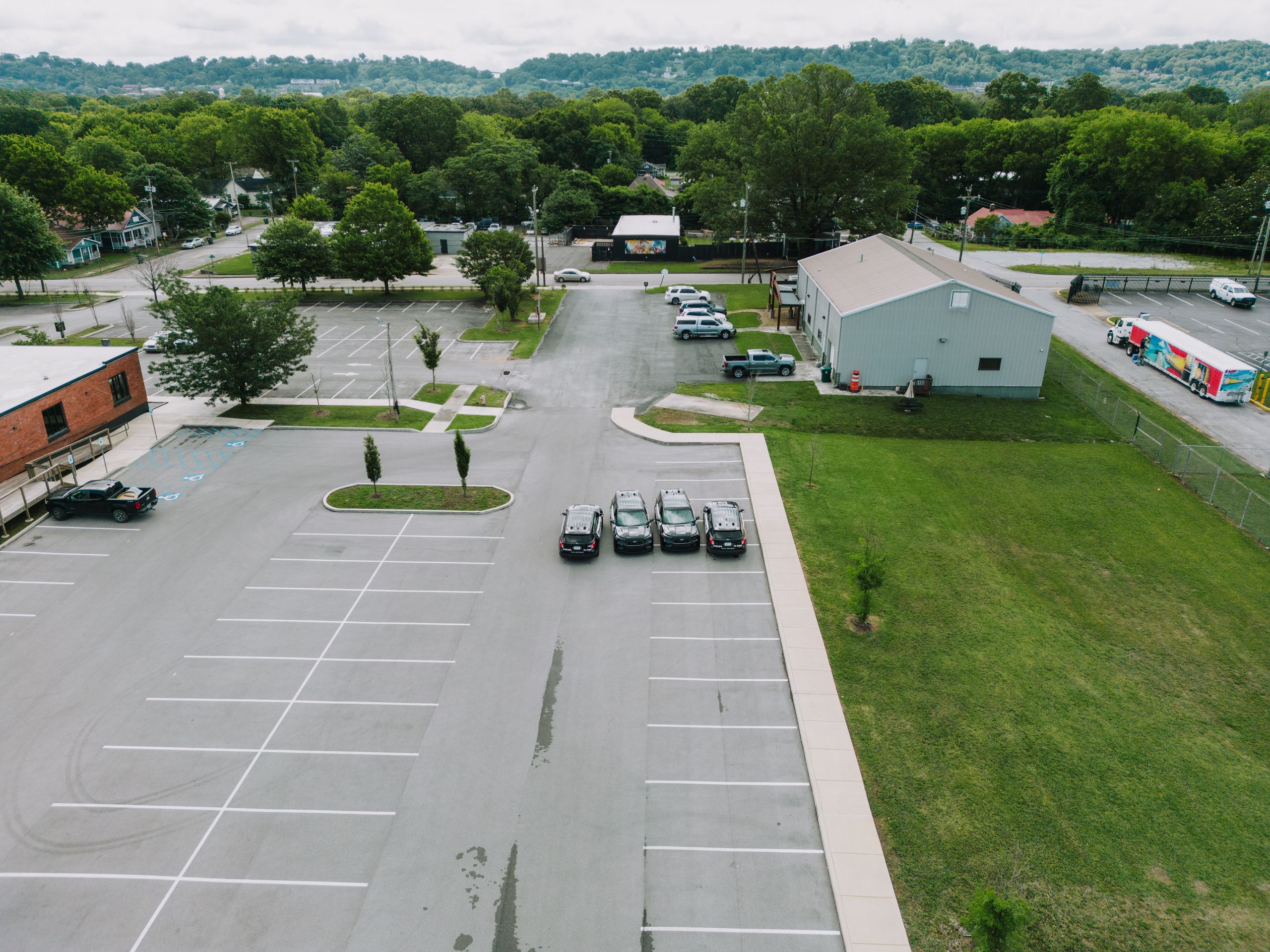
Much of the momentum traces back to work out of the University of Pennsylvania. In 2012, epidemiologist Charles Branas and colleagues published the first randomized controlled trial testing whether simply cleaning and “greening” vacant lots clearing debris, planting grass and trees,adding low fencing affected crime. It did: total crime and gun assaults dropped in the treated lots’ surrounding areas compared to untouched controls, and residents reported feeling safer.
A larger, citywide version of the trial, published in 2018 in the Proceedings of the National Academy of Sciences, confirmed the pattern at scale: treated areas saw a 9.2% reduction in all crimes and significant drops in gun violence compared to control areas, 18 months after the intervention. Branas has suggested the effect comes from two things: greened lots reduce hiding spots for illegal guns, and maintaining a shared space signals to the neighborhood that someone is paying attention and tends to bring neighbors into contact with each other in the process.
Related: 9 Things Only People with Siblings Truly Understand
What’s Actually Happening on the Ground
That research has helped justify a wave of city-led programs:
Philadelphia launched its “Lots capes” pilot program in April 2026,converting 10 publicly owned vacant lots into community-designed spaces categorized by the city as “greenspaces” (planters, rain gardens), “playscapes” for kids, “socialscapes” with seating and shade, and “Artscape’s.” The city says the effort responds partly to illegal dumping and plans to expand it in 2027.
Detroit has leaned on both city agencies and nonprofits. Detroit Future City and Arboretum Detroit transformed a cluster of vacant lots in the Poletown East neighborhood into Circle Forest, a park with an ADA-accessible boardwalk, a fire pit, and more than 200 newly planted trees. The nonprofit is now proposing a land conservancy to replicate that model elsewhere in the city.
Cleveland, working with the Western Reserve Land Conservancy, has converted a former auto dealership lot into the Ubuntu Gathering Space and created the Garden of Eleven Angels, which honors local history while doubling as a gathering and play space.
Chicago’s Neighbor Space organization partners with residents to turn vacant lots into community gardens, nature areas and small urban farms across the city.
New York City has one of the longest histories with this model groups like the Green Guerillas, have helped neighborhoods convert empty lots into community gardens and green hubs since the 1970s.
