

The post 12 Age-by-Age Chores Kids Can Actually Handle first appeared on Crafting Your Home.
Helping around the house is a skill kids build over time. The goal is not perfection on day one; it is learning routines, following simple steps, and becoming a regular part of the household team. The American Academy of Child and Adolescent Psychiatry recommends starting children with small, manageable chores and increasing responsibility as they develop. Starting ages are guides, not strict deadlines, because every child and home situation is different.
Here are 12 practical chores that can grow with your child, from simple preschool jobs to bigger household responsibilities.
Age 2–3: Put toys away
A toy cleanup routine is one of the easiest places to begin. Instead of saying “clean your room,” make the task specific: “Put the blocks in the blue bin.” Short, clear instructions help young children understand exactly what needs to happen.
Lightweight bins and simple storage spaces make this job easier. Focus on participation, not a perfectly organized play area.
Related: 7 Timeless Toys That Defined a Boomer Childhood
Age 2–3: Help put away safe groceries
Toddlers can join in after shopping by putting away simple, safe items. Think paper towels, boxed foods, or packaged snacks that are easy to carry.
This is a “helping” job, not a child taking over the kitchen. Adults should handle breakable containers, heavy items, and anything that needs special care.
Age 4–5: Help feed a pet
A pet’s routine can introduce responsibility. Children in this age range can help with tasks such as filling a pet’s food dish while an adult remains responsible for the animal’s overall care.
Keep the routine simple: help measure, place the food, and learn that pets need regular care.
Age 4–5: Make the bed
Making the bed does not need to look magazine-ready. At this age, the win is learning a morning routine and taking part in caring for personal spaces.
AACAP lists making the bed as a possible chore for ages 4–5, while noting that it may not be perfect. A child who straightens blankets or places a pillow neatly is already practicing the habit.
Age 4–5: Clear the table
After meals, young children can help carry lightweight items like napkins, placemats, plastic cups, or unbreakable dishes.
Adults should take care of hot cookware, knives, glass items, and anything heavy before the child begins. This turns cleanup into a teamwork activity without giving a young child a task that is too difficult.
Age 5–7: Put dirty clothes in the hamper and sort laundry
Laundry is a great place to introduce routines. Kids can start by putting worn clothes in the hamper, matching socks, or sorting clothing into simple groups.
HealthyChildren.org lists tasks such as putting dirty clothes in a hamper and sorting laundry for this age range. Keep laundry products stored away from children and make the first steps easy to follow.
Age 6–7: Wipe tables and counters
A damp cloth can give kids a real cleaning job they can see and complete. Wiping a table after a meal or cleaning up a small surface helps children learn that everyone contributes to keeping shared spaces tidy.
Avoid giving children cleaning products to use. The American Cleaning Institute advises that children should not handle cleaning products.
Age 6–7: Sweep floors
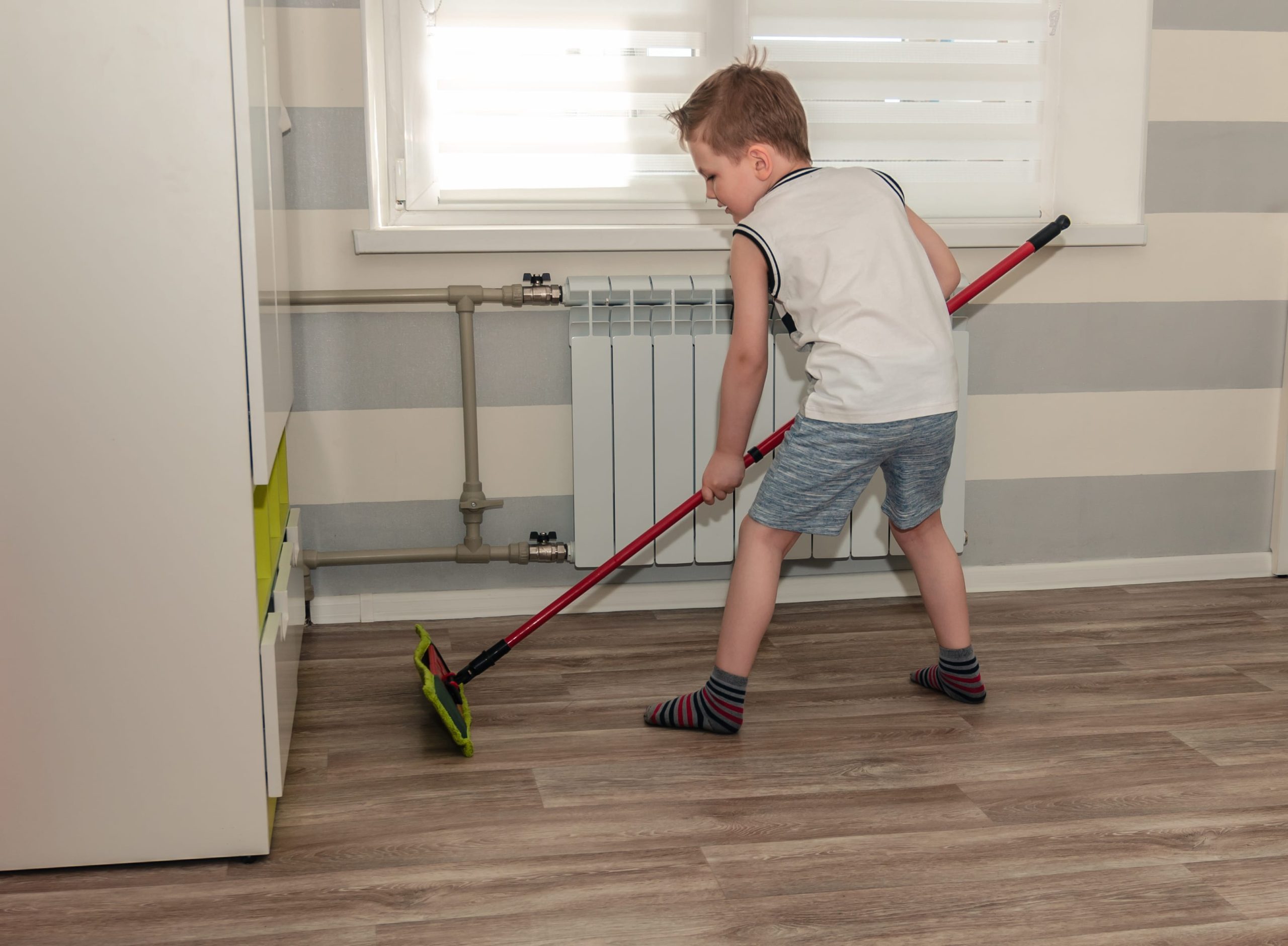
Sweeping is another simple way for children to help with everyday upkeep. A child-sized broom can make the job feel more manageable.
Start with easy areas and focus on learning the motion, not on expecting a spotless floor. Adults should handle broken glass, spills, and other hazards.
Age 7–9: Load or unload the dishwasher
Dishwasher duty builds organization and the ability to follow a system. Children can learn where items belong and how kitchen routines work.
Begin with safer items such as plastic containers or suitable utensils. Adults should manage sharp knives, fragile dishes, and hot items.
Related: 9 Common Dishwasher Myths Debunked: Expert Advice for Cleaner, More Efficient Use
Age 7–9: Help prepare meals or pack lunch
Older children can begin helping with parts of meal preparation, such as washing produce, assembling simple foods, or packing a lunch from adult-approved options. AACAP includes helping prepare meals and packing school lunches among chores for ages 7–9.
The exact task depends on the child and the kitchen setup. Supervision and clear instructions still matter.
Age 10–11: Change bed sheets
Changing sheets is a bigger multi-step task. It involves removing old bedding, handling new linens, and finishing the job from start to finish.
AACAP lists changing sheets for ages 10–11. Some children may need help with heavy mattresses, fitted sheets, or difficult bed setups.
Age 11–12: Do laundry or clean a bathroom—with training
By this stage, some children can begin taking on more detailed household jobs, such as folding laundry or helping clean a bathroom. HealthyChildren.org lists these types of responsibilities for 11–12-year-olds, while AACAP includes kitchen and bathroom cleaning among examples for older children.
The key word is training. Show children how to complete the task, explain what products and tools are for, and keep household cleaners secured.
Chores work best when they become part of family life rather than a test children have to pass. Give clear instructions, expect learning curves, and choose responsibilities that match your child’s abilities and your home environment.
Other Posts You Might Like
If you like what you just read, then subscribe to our newsletter and follow us on social media.


