



The post 8 Jobs That Were Everywhere When Boomers Were Kids but Barely Exist Now first appeared on Crafting Your Home.
For many Americans who grew up in the 1950s and 1960s, everyday life came with a cast of workers who seem almost invisible today. People operated elevators, connected telephone calls, delivered milk to the doorstep, and set bowling pins by hand.
The Baby Boomer generation is generally defined as Americans born from 1946 through 1964. Not every Boomer encountered every one of these workers, but many of the occupations were much more visible in American communities during their childhood years.
Some disappeared because machines could perform the same tasks faster. Others declined as shopping habits, transportation, communications, and entertainment changed. A few still exist, but on a much smaller scale.
Here are eight jobs that show how dramatically everyday American work has changed.
Elevator Operators
In the early postwar years, stepping into an elevator could mean being greeted by an actual person whose job was to operate it.
Elevator operators controlled the car, stopped it at the appropriate floor, and opened and closed the doors. They worked in office buildings, hotels, department stores, and apartment buildings.
The occupation was still substantial in 1950. Census data recorded 89,185 elevator operators that year, according to a historical statement from the Building Service Employees’ International Union.
Then automatic elevators changed the job. Push buttons, improved controls, and other automation meant passengers could operate elevators themselves. By the early 1960s, elevator operators had largely disappeared from everyday American life.
The occupation hasn’t vanished completely, but today’s elevator operator is usually associated with unusual or historic settings rather than an ordinary office building.
Telephone Operators and Switchboard Operators
Before direct dialing became commonplace, making a telephone call could involve another person.
Telephone operators connected calls through telephone systems, while switchboard operators handled incoming, outgoing, and internal calls for businesses and organizations.
The decline was gradual but dramatic. BLS research found that telephone-operator employment began declining after 1950, as automated switching, direct dialing, and other technological changes reduced the need for human operators. Between 1972 and 1980 alone, telephone-operator employment fell by about 75,000.
The occupation still exists in limited forms. In 2025, BLS counted about 3,430 telephone operators and 35,400 switchboard operators, including answering service workers.
That’s a long way from an era when calling someone often meant reaching an operator first.
The Neighborhood Milkman
For generations, buying milk could mean waiting for a delivery instead of driving to a supermarket.
Milkmen delivered glass bottles directly to homes, sometimes leaving them in special insulated boxes built into the side of a house. The National Museum of Transportation notes that milkmen routinely delivered fresh milk to homes before supermarkets and electric refrigerators became widespread.
The system began changing rapidly after World War II. Refrigerators made it easier for families to store milk, supermarkets made grocery shopping more convenient, and increased automobile ownership made those stores easier to reach.
By 1963, about 30% of milk sold in the United States was still home-delivered, according to figures cited by The Washington Post. Home delivery then continued its steep decline.
Home milk delivery still exists in some places, but the milkman is no longer the routine neighborhood fixture he once was.
Bowling Alley Pinsetters
Today’s bowlers can concentrate on their next throw without worrying about who will reset the pins. That wasn’t always the case.
Before automatic pinsetting machines, human workers—often young men cleared fallen pins and set them back up after each turn. The Smithsonian’s Lemelson Center describes the work as tiring, inefficient, and low-paid.
Automatic pinsetters changed everything.
AMF introduced its automatic Pinspotter in the postwar era, and by 1958 the company leased 40,000 machines, helping mechanize bowling centers nationwide.
That timing is especially interesting for Boomers. Bowling boomed in the 1950s, while the technology replacing the pin boy spread through the same industry.
The pinsetter job largely disappeared because the machine could do the work continuously and consistently.
Railroad Station Agents
Small-town railroad stations once served as much more than places to catch a train.
Station agents could sell tickets, handle freight and express shipments, communicate with railroad officials, and serve as important representatives of the railroad in their communities. Historian H. Roger Grant describes station agents as widely recognized community figures, numbering in the tens of thousands.
After World War II, however, rail transportation changed. Declining passenger and freight traffic, centralized operations, and advancing technology reduced the need for agents at small stations.
By the 21st century, the occupation had nearly vanished in its traditional form, particularly at the small-town and rural depots where agents had once been familiar with figures.
Some railroad companies still employ agents and related workers, but the classic small-town station agent is now largely a piece of American transportation history.
Related: 8 Things Americans Should Know When a Country Runs Out of Money
Telegraph Operators
Long before email and text messages, the telegraph was one of America’s fastest ways to send information over long distances.
Telegraph operators transmitted and received coded messages, often using Morse code. Railroad companies, telegraph offices, and communications companies depended on workers with these specialized skills.
The occupation was still significant in the middle of the 20th century. A 1970 Bureau of Labor Statistics industry study showed that telegraph operators accounted for 22% of employees at the international telegraph carriers covered by the survey, down from 34% in 1947.
As telephone networks, newer communications systems, and eventually digital technology transformed long-distance communication, the need for traditional telegraph operators collapsed.
The technology that once represented cutting-edge communication eventually became a historical curiosity.
Movie Projectionists
Going to the movies once meant more than buying a ticket and finding a seat. Behind the screen, projectionists operated the equipment that brought films to audiences.
Traditional movie projection used physical film reels fed continuously through a projector. The Smithsonian notes that this was how movies were projected until the late 20th century.
Digital cinema eventually transformed that process. Today’s theaters can use digital projection systems instead of traditional film reels that require specialized handling.
Projectionists haven’t completely disappeared. But the occupation has become dramatically smaller.BLS reported only 1,030 motion picture projectionists in 2025, compared with the much larger role projection work once played in the theater industry.
For many younger moviegoers, the projection booth is now something they may never even think about.
Professional Typists
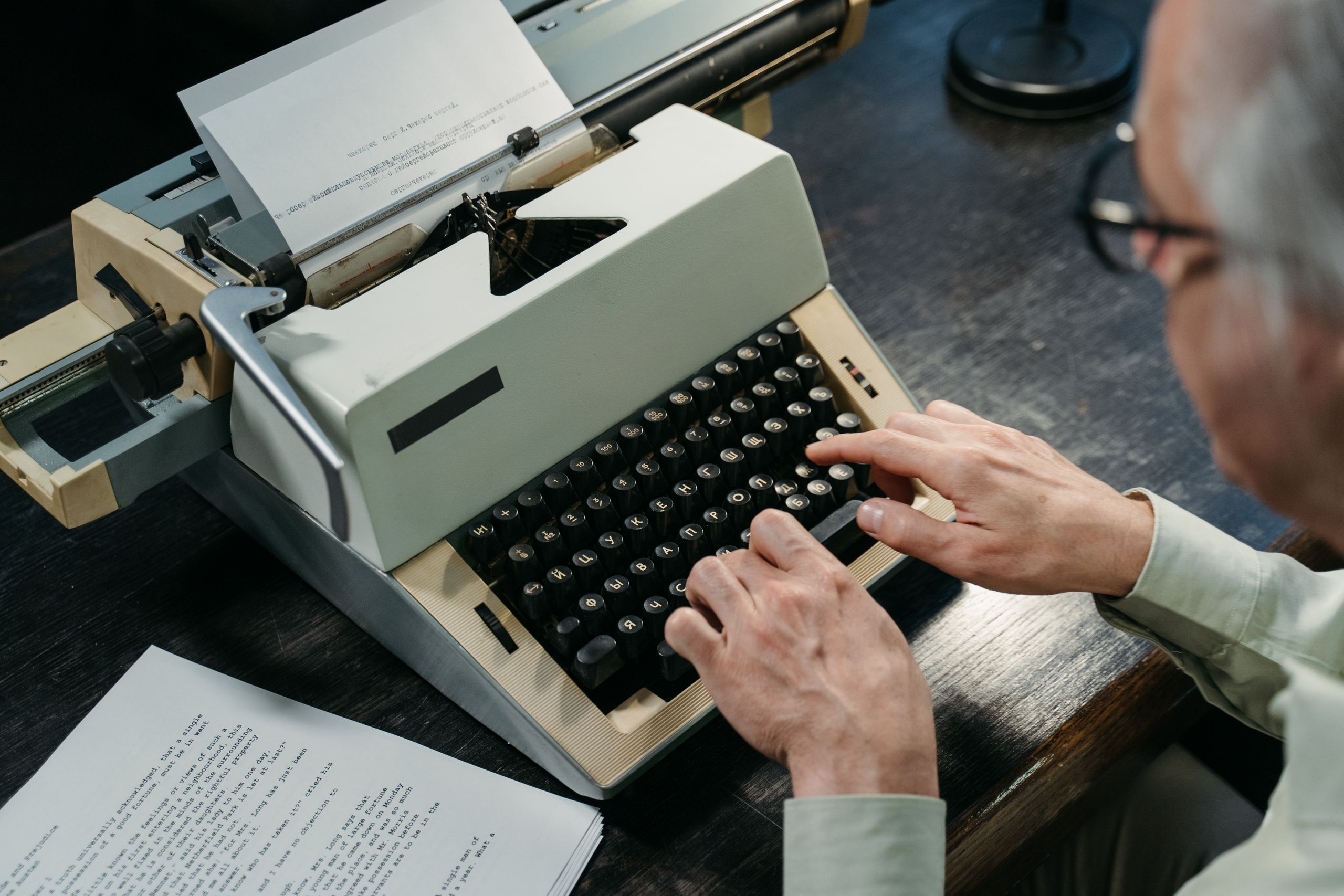
Typing used to be a specialized workplace skill.
Before personal computers became standard, businesses relied heavily on people whose primary responsibility was typing letters, reports, forms, and other documents, often from handwritten drafts or dictation.
BLS research on occupational changes during the 20th century found that the spread of personal computers, word-processing software, optical scanners, and electronic mail helped drive the decline of stenographers, typists, and related clerical occupations.
The occupation hasn’t technically vanished. BLS still counted about 37,200-word processors and typists in 2023, and its latest projections list them among the fastest-declining occupations.
What changed most dramatically is that typing stopped being something only a specialized worker did. Computers put word processing tools directly into the hands of millions of other workers.
Related: 9 Things You Should Never Tell People Until They’re Done
The Jobs Didn’t Just Disappear: America Changed
No single invention caused these occupations to disappear.
Automatic elevators replaced elevator operators. Direct dialing and automated switching reduced the need for telephone operators. Refrigerators and supermarkets changed milk delivery. Machines took over bowling pin setting. Computers transformed typing and communication.
Together, these changes show something bigger about American life: when technology or consumer habits make a task faster, cheaper, or easier, an entire occupation can shrink with little notice.
For Boomers who remember these workers, their disappearance reminds them how different an ordinary day could look a few generations ago.
Other Post You Might Like
- 7 Harsh Realities of Living in Poverty That Most People Never See
- 10 Reasons Some Americans Secretly Hate McDonald’s
If you like what you just read, then subscribe to our newsletter and follow us on social media.


