


The post Why L.A. Developers Aren’t Building More Apartments Despite the Housing Shortage first appeared on Crafting Your Home.
Los Angeles has a housing shortage, strong demand for apartments, and a long-running need for more homes. Yet developers who could add thousands of new apartments are increasingly putting projects on hold.
A recent Los Angeles Times report found that multifamily property values in Los Angeles County have fallen sharply, while financing, construction, and development costs remain high. That combination has made developers much more cautious about starting large apartment projects.
Apartment Values Have Fallen
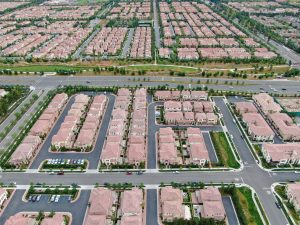
According to data from commercial real estate firm Kidder Mathews cited by the Los Angeles Times, the average sale price per unit in new and existing multifamily buildings in Los Angeles County fell from $397,289 in 2022 to $280,591 in 2026.
For a developer considering a major apartment project, that matters enormously. Building a property requires spending millions of dollars before a single apartment can be rented. If the finished building is worth substantially less than expected, the project can become difficult to justify to investors and lenders.
Higher Interest Rates Are Making Projects More Expensive
Apartment developers typically need significant financing to purchase land and pay for construction. When interest rates rise, the cost of carrying that debt rises as well.
The Los Angeles Times reported that developers who could previously borrow at rates around 2% are now facing rates closer to 7% in some circumstances.
A development that once looked profitable can become unworkable when millions of dollars in additional interest expenses are added to the budget.
Construction and Development Costs Keep Adding Up
Developers also face what the industry calls soft costs, expenses such as permits, inspections, professional services, and other development-related fees.
Developer Yoni Chriqui told the Los Angeles Times that these costs once represented roughly 10% to 12% of a project’s budget. He estimated that they now account for about 20% to 25%.
Los Angeles also charges development-related fees. The Times reported that the city’s multifamily park fees reached $8,929 per unit in 2026.
The Mansion Tax Has Become Another Consideration
The measure imposes a 4% or 5.5% transfer tax on certain property sales above $5.4 million. Despite its nickname, the tax applies to more than luxury homes. Apartment buildings, parking lots, and other properties can also be affected.
The Los Angeles Times reported that some developers say the tax reduces the potential return from apartment projects and makes it harder to attract investment.
Developers Are Choosing Smaller Projects
Instead of constructing a building with dozens of apartments, some developers are turning toward smaller projects such as single-family homes, townhouses and accessory dwelling units.
The Times reported that some developers who previously built projects containing 20 to 30 apartments are now choosing four units or fewer.
That decision may make sense for an individual developer trying to limit financial risk, but it also has an important consequence for the housing supply.
Transit-Friendly Land Isn’t Automatically Producing Apartments
California’s SB 79, which took effect in July 2026, allows qualifying development near transit stops to exceed some local zoning restrictions.
The Los Angeles Times reported that, as of September, no project had been proposed in Los Angeles under SB 79, according to the city’s planning department.
Developers still have to make the financial numbers work.
The Housing Shortage Doesn’t Automatically Solve the Development Problem
California’s broader housing picture shows the same problem. A recent CalMatters analysis found that fewer than one-third of California cities and counties were on pace to meet their state targets for market-rate housing. In contrast, progress toward lower-income housing targets was even slower.
In Los Angeles, the result is a market where renters still need more housing while developers face an unusually difficult environment to produce it.
What Could Change?
The Los Angeles Times reported that some developers believe apartment construction could become more attractive if financing conditions improve, property values stabilize, and development costs become easier to manage.
Efforts to speed up parts of the approval process are already underway. Mayor Karen Bass’ administration has introduced measures intended to accelerate permitting, while California has adopted policies intended to allow more housing near transit.
Right now, many developers in Los Angeles say no.
That helps explain one of the city’s most difficult housing paradoxes: Los Angeles needs more apartments, but the people who build them don’t necessarily see enough financial incentive to do so.
Until that calculation changes, some parcels capable of holding dozens or even hundreds of homes may continue to sit as parking lots, low-density developments, or unfinished projects.
Other Posts You Might Like
- Common Homebuyer Regrets and How You Can Avoid Them
- Brilliant Ways to Make Your Home Holiday-Ready
- Places In America That Locals Suggest Avoiding
If you like what you just read, then subscribe to our newsletter and follow us on social media.
