


The post No, Tillamook Didn’t Just Make Its Cheese Halal: It Always Was first appeared on Crafting Your Home.
Halal is an Arabic word meaning lawful or permitted, and the label reaches far beyond meat aisles into cosmetics, medicine and packaged food shelves worldwide.
That single word triggered a week of confused headlines when shoppers noticed a halal seal on Tillamook cheese and assumed the Oregon dairy cooperative had just made a change. It had not.
The rennet switch happened nearly a decade before anyone noticed the label
Tillamook has used fermentation-produced rennet instead of animal rennet since 2016 for nearly its entire cheese lineup, according to the company’s own FAQ page. That microbial enzyme carries both kosher and halal certification and doubles as a vegetarian ingredient, since it replaces the animal-derived enzyme traditionally pulled from calf stomach lining.
The one notable holdout is the Maker’s Reserve 10-Year Extra Sharp Cheddar, which Tillamook still produces with animal rennet for shoppers who prefer that older flavor profile, per the company’s cheese FAQ.
Everything built on the newer enzyme predates the recent social media attention by years, a timeline confirmed by IBTimes UK’s reporting on the backlash.
Most Tillamook cheese carries the seal, but not every product in the lineup does
The halal certification does not stretch across the entire Tillamook catalog.
The majority of its cheeses are halal certified, and shoppers can check for the certification symbol printed directly on the packaging, according to Tillamook’s own consumer FAQ.
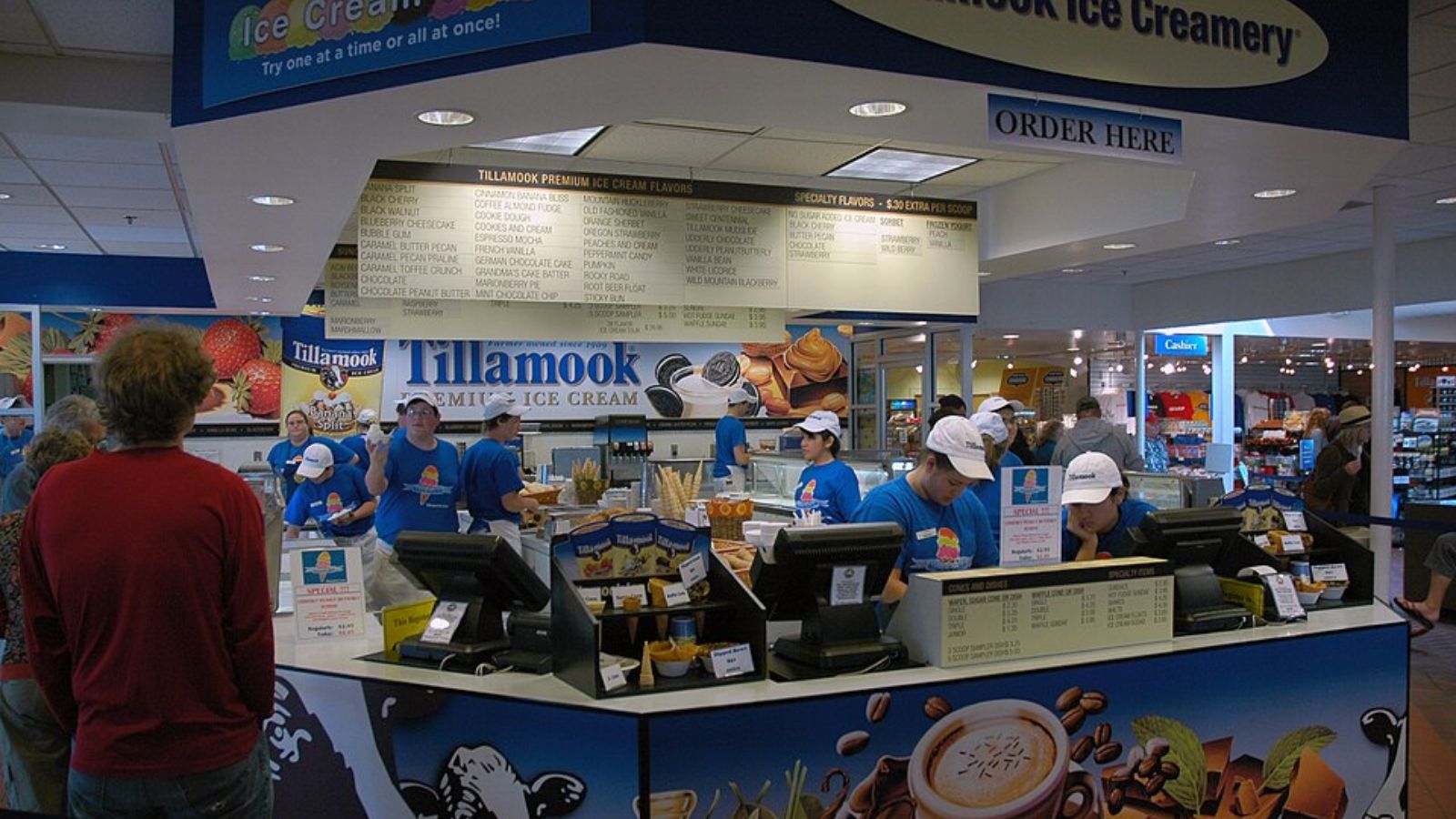
Ice cream is excluded from that certification, though the company notes that every flavor besides Rocky Road remains vegetarian and skips animal-derived ingredients aside from milk and eggs.
Yogurt, sour cream, butter and cream cheese spreads also fall outside halal certification despite being vegetarian, and some frozen meal products contain meat and carry no such label at all.
The distinction matters because a single brand can hold multiple, sometimes contradictory certifications depending on the product line rather than a blanket policy across everything it sells.
An independent nonprofit decides what earns the seal, not the company itself
Halal certification is not something a food brand can simply print on its own label.
The Islamic Food and Nutrition Council of America, founded in Chicago in 1982, audits ingredients, sourcing and manufacturing processes before granting its Crescent-M mark.
IFANCA now certifies products for more than 600 companies, including Nestle, Godiva and Organic Valley, spanning categories from chocolate to frozen food, per the group’s certification overview.
Its process examines supply chains for hidden animal derivatives such as gelatin or certain emulsifiers before a product qualifies, a standard that applies the same rules to dairy cooperatives and multinational conglomerates regardless of size.
A years old label turned into a viral flashpoint almost overnight
Conservative accounts on X pushed boycott calls after spotting the halal certification, with critics branding the product using inflammatory language rather than engaging with what the certification actually verifies.
Coverage from the Daily Dot traced a parallel strand of the controversy back to consumers questioning whether the switch to non-animal rennet made the cheese less authentic, a claim the outlet noted misunderstands how common fermentation-produced rennet has become across the cheese industry.
Tillamook has not altered its recipe or flavor profile in response to the backlash, since the ingredient change predates the criticism.
Vegetarian rennet became standard practice well before this controversy existed
Tillamook’s shift was not an isolated move. Fermentation-produced rennet has become common across cheesemaking broadly because it avoids the bitter flavor risks tied to some animal-derived alternatives. That practical, flavor-driven motivation predates any connection to religious dietary standards, even though the resulting enzyme happens to satisfy both kosher and halal requirements simultaneously.
Demand for halal-certified products has been climbing steadily on the business side, with the halal food sector projected to grow at a compound annual rate of 9.7% through 2032, according to a Future Market Insights report.
Companies pursuing that certification are not always chasing religious observance specifically. Many are chasing broader vegetarian and additive-free labeling that halal standards happen to overlap with, which explains why brands with no explicit religious marketing angle end up carrying the seal anyway.
Related: 10 Delicious Cheese Types Perfect for Boards and Cooking
The controversy reveals more about labeling literacy than about Tillamook’s recipe
Nothing about Tillamook’s cheese changed the week the internet noticed its packaging.
The confusion traces back to a gap between what a certification symbol communicates and what shoppers assumed it meant when they first saw it. Halal certification confirms a manufacturing standard was met, not that a product’s ingredients, taste or intended audience shifted overnight.
That gap between labeling and public understanding is not unique to Tillamook, and it tends to resurface whenever a widely distributed product picks up a certification most consumers rarely think to look for until it is already printed on the package they have been buying for years.
Other Posts You May Like
- USDA’s ESG Funding Rollback Could Affect Over 20,000 Dairy Farms
- Canadian Grocers Are Ditching US Products as Buy Canadian Movement Grows
If you like what you just read, then subscribe to our newsletter and follow us on social media.


.jpg)