

The post “Your Home Might Not Be Messy, You Might Just Have Too Many ‘Landing Spots’ first appeared on Crafting Your Home.
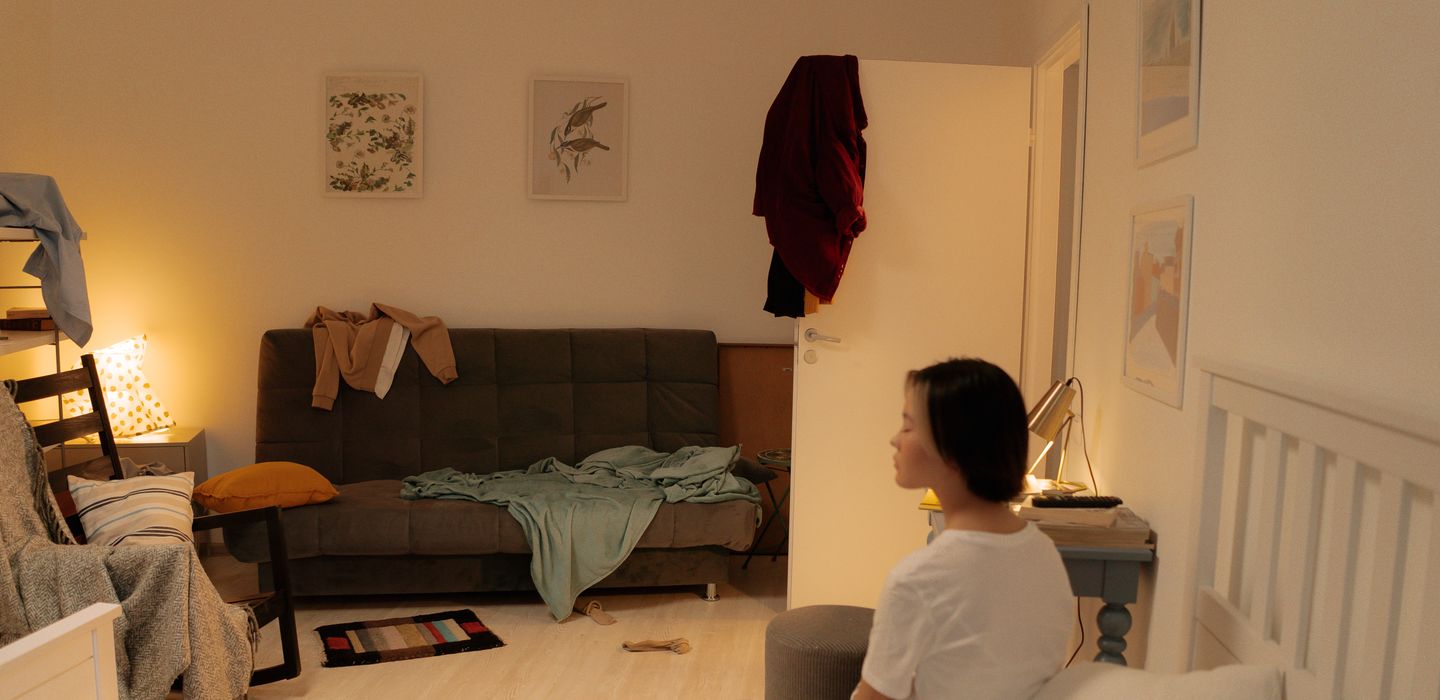
If your kitchen island collects mail, your dining table holds bags, your bedroom chair wears half your wardrobe, and the sofa arm somehow holds chargers, remotes, and receipts, you may not have a cleaning problem. You may have too many places where everyday objects can pause and then quietly become permanent residents.
Professional organizers often call these areas “landing zones,” “drop zones,” or “landing strips.” A functional one can make a household run more smoothly. The trouble starts when every flat surface becomes one. Suddenly, the mess is not really about laziness or a lack of storage; it is about a home with no clear answer to one deceptively important question: Where does this item go when I’m done with it?
The Difference Between a Landing Zone and a Clutter Magnet

A true landing zone is a deliberate place for the items that enter or leave your home most often: keys, shoes, mail, bags, coats, umbrellas, and the things you need to remember on the way out. Cas Aarssen, the professional organizer and host of HGTV’s Hot Mess House, puts it plainly: “Having a place to catch the things when you first come into the home is really critical.”She notes that this area is often among the home’s most cluttered precisely because a dedicated system hasn’t been established.
That distinction matters. A landing zone is designed for movement: you come in, put down what needs to be put down, deal with it or retrieve it later, and move on. A clutter magnet, by contrast, is an accidental holding area. It is the kitchen counter where unopened mail goes to “live for a minute,” the end of the bed where clean laundry waits indefinitely, or the dining chair that has quietly been promoted from seating to closet annex.
The issue is not that these surfaces exist. They do exactly what surfaces do: hold things. The problem is that they are doing too many jobs without rules. When the same console table becomes a mail sorter, purse parking lot, return pile, shoe shelf, and spot for yesterday’s coffee cup, it no longer helps your routine. It is simply documenting it.
C. Lee Cawley of Simplify You, Inc., explained the boundary well in advice to Good Housekeeping: “The landing zone should be a functional drop spot, not a storage area.” She also recommends clearing it regularly because a zone used daily can easily become a “dysfunctional doom pile” if you don’t reset it. In other words, your entry table doesn’t need to look like a showroom, but it shouldn’t become a long-term archive of life’s unfinished errands, either.
Why the Same Mess Keeps Coming Back
The most frustrating kind of clutter is the clutter you swear you just cleaned. You clear the counter on Sunday, then by Tuesday it has produced a water bottle, school papers, unopened packages, a tote bag, three receipts, and at least one object no one can identify. That is often a sign the counter is filling a need your home hasn’t officially acknowledged.
People naturally set things down where they stop, transition or change tasks. You arrive through the garage and place your bag on the island. You open mail near the dining table. You take off a sweater while sitting on the bed and drape it over a chair. You charge your phone on the sofa and leave its cord there. The pattern is not random; it is behavioral. A useful organizing system works with those habits instead of demanding that everyone suddenly become someone else.
That is why convenience matters more than a picture-perfect system. The New York Times’ Wirecutter recommends that frequently used belongings be easy to reach and, just as importantly, easy to put back. The logic is simple: when returning an item takes too many steps, it is more likely to stay on a counter, floor, or chair. A gorgeous basket hidden in a closet may look organized, but it will not solve the backpack pile if everyone drops backpacks six feet away from it.
Julie Morgenstern, an organizing expert, has similarly advised dividing rooms into activity zones and storing items “at its point of use.” She adds that a workable household system gives each object only one place to belong, supported by a routine in which everyone returns items to their homes. The goal isn’t to force your entire family into a strict, museum-like setup. It is to remove the tiny decisions that turn daily life into visual noise.
Think about the places where clutter appears most predictably. That spot is giving you information. If shoes always migrate to the doorway, the home may need a shoe solution there, not a lecture about putting shoes away. If mail keeps accumulating by the coffee maker, that may be the real mail-processing station, whether you intended it or not. The answer may be a small recycle bin and an action tray near that location, rather than trying to make everyone walk papers to an office they rarely use.
Give Your Home Fewer Places to “Hold That for Now”

The solution is not necessarily to eliminate every landing spot. Instead, make fewer of them official, useful, and easy to maintain. Start by walking through your home and identifying the repeat offenders: the counter, chair, bench, side table, stair step, or bedroom floor that attracts things day after day. Then ask what consistently lands there. The answers are usually revealing: keys, packages, handbags, laundry, mail, work gear, children’s school items, or objects that belong in another room.
Once you know what is landing, create a narrow job description for that area. A front-door station, for example, might handle keys, shoes, a handbag, mail that needs action, and items that must leave the house tomorrow. It doesn’t need to store every coat you own, every reusable bag in the household, or a month’s worth of paper. Apartment Therapy’s guidance for a home “landing strip” recommends locating it at the entrance you use most and building it from practical basics such as hooks, a small surface, a container for keys and wallet, a place for shoes, and a basket or bin.
The key word is intentional. A tray can signal where keys belong; hooks can make bags easier to hang than toss; a small recycling bin can catch junk mail before it reaches the counter. These are not magic products. They are visual and physical limits that make the right action easier than the messy one.
It can also help to separate items by what they need next. Mail is a great example. Junk mail can go straight into recycling. Time-sensitive mail can go into one clearly visible “action” tray. Papers that belong elsewhere should leave the landing area rather than becoming part of its décor. Apartment Therapy recommends sorting incoming papers immediately, recycling what you don’t need, and placing mail that requires attention in a prominent, accessible spot. That is a much more manageable task than promising yourself you will “deal with the pile later.”
Other posts you might like:
- 5 Things You’re Probably Organizing the Hard Way (And What to Do Instead)
- Why Your Home May Still Look Messy After Cleaning and What’s Really Causing It
- Why Your Home Never Feels Fully Clean, Even After You’ve Tidied Up


