


The post Turns Out Men Only Liked Reading Books When They Thought a Man Wrote Them first appeared on Crafting Your Home.
Women make up roughly two-thirds of fiction readers in the US, compared with about a third of men, according to data cited by Oxford’s Cherwell in a 2026 analysis of the publishing industry.
Yet on podcasts, arguably publishing’s noisiest modern cousin, men are nearly twice as likely to be the ones behind the mic.
Audio researcher Tom Webster’s newsletter, drawing on the Creators 2025 report, found that 15% of male podcast consumers go on to create a show, compared with just 8% of women. Swap the microphone for a pen and the ratio starts to look familiar.
And even inside that broader slide, the old gender pattern hasn’t budged: in every state snapshot the agency published for 2024, boys scored lower than girls in reading, by margins that ran from roughly 8 to 14 points depending on the state. Reading is shrinking as an activity overall, and boys are still the ones furthest behind inside that shrinking pool.
That gap has a long paper trail. Long before streaming platforms or literary agents existed, women were already solving the same problem the same way: writing under a man’s name to get taken seriously.
Borrowed names, real books
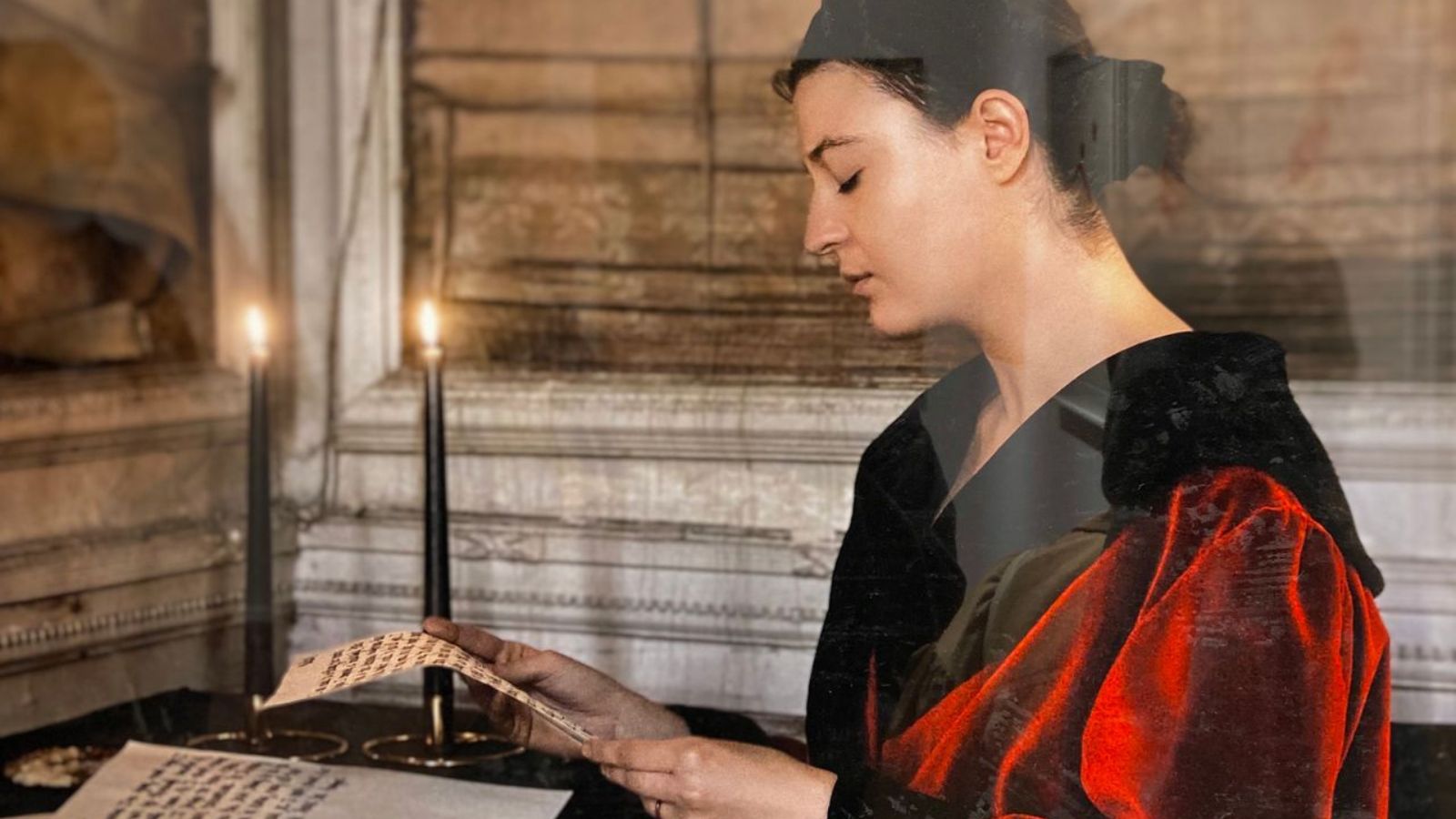
In 1837, a 20-year-old Charlotte Brontë sent poems to Britain’s poet laureate, Robert Southey, hoping for encouragement. He told her, in words she kept for the rest of her life, that “literature cannot be the business of a woman’s life, and it ought not to be.”
Nine years later, Charlotte and her sisters Emily and Anne published their first collection as Currer, Ellis, and Acton Bell: initials that matched their own names but hid their sex. Charlotte later explained the choice as a hedge against a vague impression that women writers were liable to be looked on with prejudice, a line she wrote into a biographical notice after both her sisters had died.
Mary Ann Evans made the same calculation a few years later, publishing as George Eliot so Middlemarch would be judged on its prose rather than her gender. In France, Amantine Lucile Aurore Dupin did the same as George Sand.
Louisa May Alcott split her identity in two, writing Little Women under her own name while releasing her darker, pulpier fiction as A.M. Barnard.
None of this was vanity.
It was a workaround for a market that had already made up its mind.
The workaround never really closed
The practice didn’t stay in the 1800s.
In 2015, writer Catherine Nichols ran a live experiment: she sent the identical manuscript and cover letter to literary agents, once under her own name and once under a male pseudonym. The male version drew eight and a half times more replies.
Two years earlier, J.K. Rowling had already lived a version of this in reverse- her publisher pushed Joanne Rowling toward gender-neutral initials in 1997, worried that young boys wouldn’t pick up a book with a woman’s name on the spine.
Numbers from inside the industry back up what those individual cases suggest.
A 2018 study in the journal PLOS ONE, authored by Queens College sociologist Dana Beth Weinberg and mathematician Adam Kapelner, analyzed more than two million US titles between 2002 and 2012.
On average, books by women sold for 45% less than books by men. Even inside single genres, stripping out the effect of women being funneled into cheaper categories, the gap held at 9%. The researchers didn’t pin this on individual publishers so much as a market-wide habit of valuing male-authored work more highly by default.
The comeback narrative doesn’t hold up everywhere

Here’s what the recent success stories leave out.
Economist Joel Waldfogel’s 2023 NBER paper found that women’s share of published titles crossed 50% by 2020, up from around 20% in the 1970s, and that female-authored books were by then outselling male-authored ones on average. It’s a genuinely good headline. On closer inspection, it’s also thinner than it sounds.
Cherwell’s later breakdown of the same data found that women produced a clear majority of output in only two of 41 book categories: romance, at 78.3%, and cookbooks, food, and wine, at 51.4%.
Everywhere else, the split stayed close to even or tilted male.
Waldfogel’s method- sorting authors as male or female by first name- also risks misclassifying anyone with an ambiguous or non-Western name, a flaw the World Economic Forum’s coverage of the study acknowledged.
Parity in raw output isn’t the same as parity in prestige, and stacking women into two categories while thinning them out everywhere else looks less like progress and more like the same genre segregation dressed up as good news.
What actually changed, and what didn’t
Some ground has genuinely shifted.
In 2020, the Women’s Prize for Fiction launched Reclaim Her Name, republishing 25 historically pseudonymous works under their authors’ real names for the first time. Mary Ann Evans finally got her own name on Middlemarch, more than 160 years after George Eliot did.
But the podcast numbers this piece opened with suggest the underlying pattern hasn’t gone anywhere; it’s just moved platforms.
Women still read more, still consume more, and still show up less often as the credited voice behind the work, whether that work is a 19th-century novel or a 2026 podcast feed.
The pseudonym might be gone.
The math it was covering for isn’t.
Other Posts You May Like
- 5 Ultimate Guide to Creative and Functional Bookshelf Designs for Every Space
- 8 Popular Activities Everyone Enjoys—But Deep Thinkers Secretly Dislike
If you like what you just read, then subscribe to our newsletter and follow us on social media.


