


The post Ex-Air Force Secretary Frank Kendall Accuses Defense Secretary Pete Hegseth of Politicizing the U.S. Military: ‘Long-Term Serious Damage Is Occurring’ first appeared on Crafting Your Home.
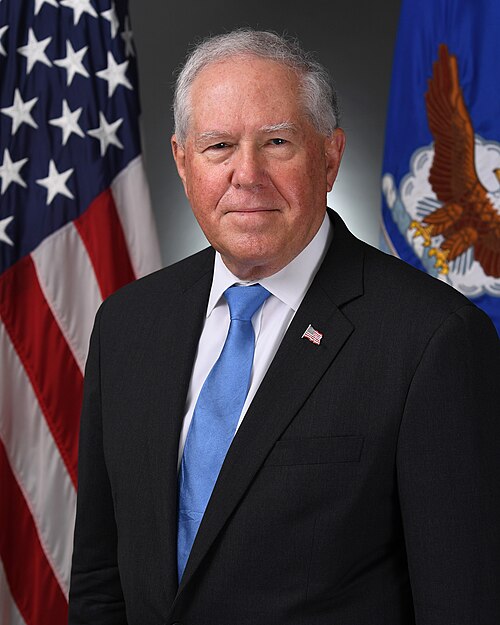
Former Air Force Secretary Frank Kendall has accused Defense Secretary Pete Hegseth of politicizing the U.S. military, warning that changes at the Pentagon could produce serious long-term consequences for the armed forces. Kendall, who served as Air Force secretary from 2021 to January 2025, has argued that Hegseth’s leadership is affecting military officials’ willingness to offer candid advice. He has also described what he sees as a “climate of fear” at the Pentagon.
His comments come as Hegseth’s tenure has seen substantial turnover among senior military and civilian officials. The departures have included high-ranking officers and Pentagon leaders, while disagreements over military transformation, readiness and leadership have become increasingly public.
The dispute raises a larger question beyond the personalities involved: how should civilian political leadership exercise authority over the U.S. military without weakening the professional military advice civilian leaders rely on?
What Did Frank Kendall Say About Pete Hegseth?
Kendall’s criticism centers on what he describes as the politicization of the military under Hegseth. In recent remarks, he said the environment inside the Pentagon has become sufficiently fearful that it is affecting the quality of advice provided to senior leaders. PBS reported that Kendall described the “climate of fear” as palpable and said it was affecting military advice. Kendall is not simply criticizing individual personnel decisions. He argues that how senior officials are selected, removed, or encouraged to leave can affect whether military professionals feel able to offer assessments that may conflict with political leaders’ preferences.
Kendall has also warned of what he regards as long-term institutional damage. That is a former senior defense official’s assessment, not an independently established finding. The evidence surrounding the controversy is therefore best understood in two parts: Kendall’s claims about the Pentagon’s internal culture and the independently documented turnover among senior officials.
The latter is substantial. Reuters reported in August that Army Secretary Dan Driscoll submitted his resignation following months of tension with Hegseth. Reuters also reported that Driscoll raised concerns about Army transformation and readiness, and that Hegseth fired senior Army leaders involved in those efforts.
What Does Kendall Mean by Politicizing the Military?
“Politicizing” can mean different things in political debate, so Kendall’s criticism needs to be understood in its institutional context. The U.S. military operates under civilian control. Elected political leaders set national-security priorities, while military commanders and professional defense officials advise on how to achieve them.
That arrangement does not mean military leaders are independent of civilian authority. The Secretary of Defense is a civilian official with substantial authority over the armed forces. Civilian leaders can also make personnel and policy decisions within the legal framework governing the military. Kendall raises a narrower concern: whether political considerations are becoming too influential in decisions involving military leadership and professional advice.
A change in military leadership is not, by itself, evidence of politicization. Nor does disagreement between a defense secretary and a military officer automatically indicate inappropriate political interference. The question is whether personnel decisions and the broader leadership culture encourage military officials to provide accurate professional assessments, including assessments that may be unwelcome to political leaders.
A Pentagon Marked by Senior Leadership Turnover
Kendall’s comments have emerged against a backdrop of extensive turnover at the top of the U.S. military. Axios reported in September that a series of senior military and Pentagon officials had departed since President Donald Trump’s second term began. The list included former Joint Chiefs Chairman Gen. CQ Brown Jr., former Chief of Naval Operations Adm. Lisa Franchetti, Army Chief of Staff Gen. Randy George, Army Gen. Christopher Donahue, and other senior commanders.
The circumstances surrounding the departures have differed. Some officials retired, some were fired or encouraged to leave, and some departures followed policy or leadership disagreements. That distinction matters because grouping every departure into a single “purge” can obscure important differences between individual cases. Still, the scale of the turnover has attracted attention. Axios reported that Hegseth has been seeking to reshape the military and reduce the number of generals and senior ranks, placing him at the center of the leadership changes.
The changes have also extended beyond uniformed officers. Reuters reported that Army Secretary Dan Driscoll resigned after months of tension with Hegseth. According to a source cited by Reuters, Driscoll had concerns about Army transformation and readiness, while the White House praised his work advancing Trump’s agenda.
Hegseth’s Approach to the Pentagon
Hegseth’s supporters argue that significant change is necessary to make the military more focused on readiness, lethality, and military effectiveness. The administration has emphasized restructuring and reducing what it considers unnecessary bureaucracy. At a July 2026 Cabinet meeting, Hegseth described his approach as rebuilding a “lethal, merit-based military,” while highlighting the administration’s efforts to remove diversity, equity, and inclusion programs from the military.
That approach represents a clear policy choice. A new administration is entitled to set different priorities than its predecessor and to select senior officials prepared to implement them. The debate is over how far those changes should go and how they affect the military’s professional culture.
Critics, including Kendall, argue that loyalty to a political administration should not replace professional competence or independent military judgment. Supporters of Hegseth counter that civilian leaders have the authority to replace officials who do not support the administration’s policy direction. Both principles can coexist: civilian authority over the military and the need for candid professional advice are not inherently contradictory.
What Hegseth’s Critics Say Is at Stake
Critics see several potential risks. The first is the quality of military advice. Senior political leaders need accurate information to decide on military operations, threats, and resources.
The second is institutional continuity. Repeated changes among senior officers can disrupt established plans and relationships.
The third is morale and retention. If experienced officers conclude that professional disagreement carries unacceptable career risks, some may choose to leave rather than remain in the system.
The fourth is public confidence. The U.S. military has traditionally maintained a reputation for professional service that is separate from partisan politics. A sustained perception that military advancement depends on political loyalty could affect that reputation.
These are potential risks, not established outcomes. Available evidence shows significant leadership turnover and serious criticism from former officials, but it does not, by itself, prove that the U.S. military has become a partisan institution.