


The post Boomers, Here Are 8 Main Character Syndrome Habits You Show Every Day first appeared on Crafting Your Home.
The phrase main character syndrome sounds clinical, but it is not. The Cleveland Clinic describes it as an informal social-media term for behavior in which someone treats their own experiences as the center of the story, sometimes at others’ expense. Psychologist Susan Albers, PsyD, has also linked the phenomenon to constant social-media exposure, comparison, and the construction of a personal highlight reel.
Applied to Baby Boomers, the phrase becomes more interesting because some of the habits critics associate with the generation have little to do with Instagram poses or TikTok trends. They show up in family conversations, expectations around technology, assumptions about housing, and the belief that younger people should adapt to systems Boomers once navigated.
That doesn’t mean everyone born between 1946 and 1964 behaves this way. It means certain generational habits can look remarkably self-centered when viewed from the perspective of Americans who inherited a different economy.
You expect younger people to live by rules that no longer exist
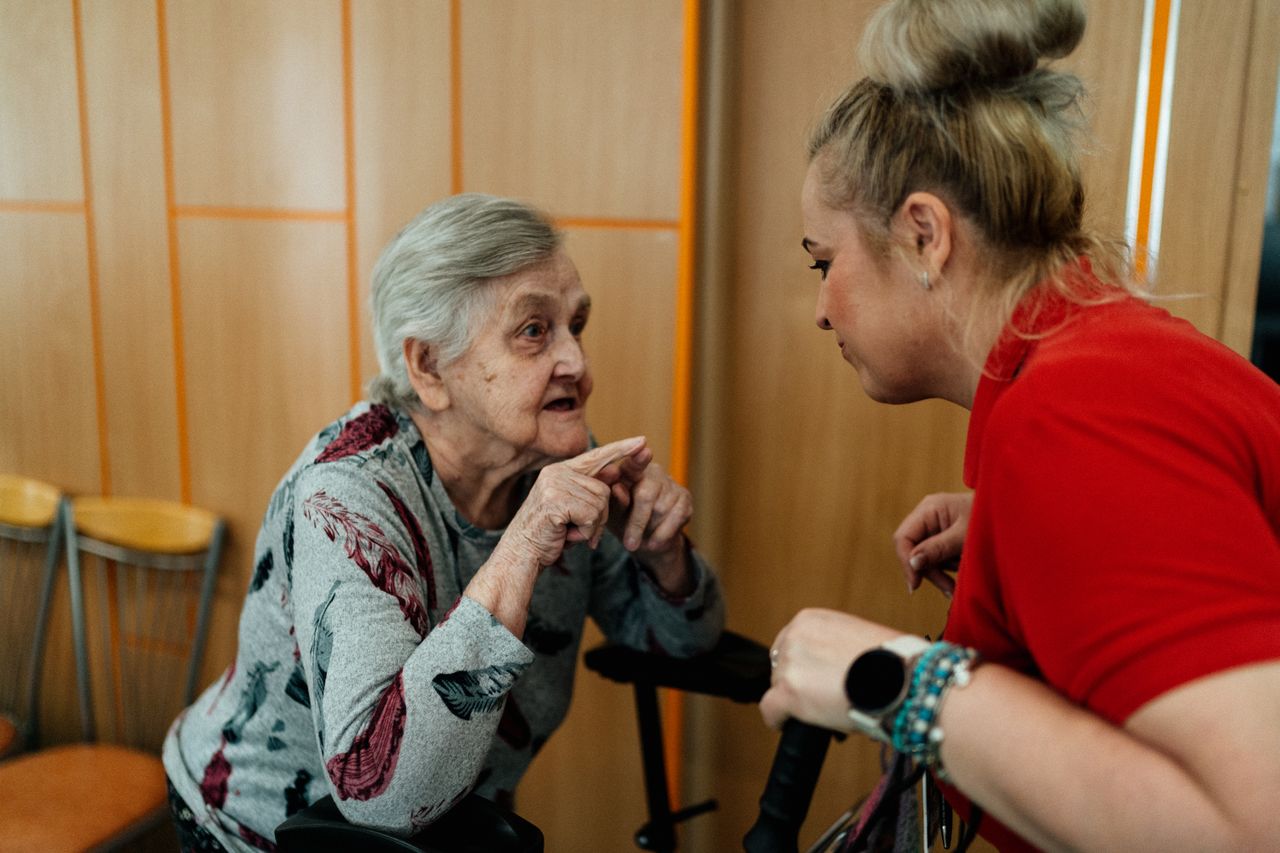
A common complaint aimed at Boomers is that younger Americans are lectured about financial discipline by people who entered adulthood under very different economic conditions.
Housing offers an obvious example. Federal Reserve researchers Carola Frydman, Raven Molloy and Austin Palis found that the U.S. homeownership rate rose by 20 percentage points between 1940 and 1960, the largest increase over any comparable period in the previous century. Their analysis points to expanding mortgage credit, rising household income, and demographic changes as forces behind that shift.
The contrast with younger adults is stark. The Federal Reserve reported that in 2025, 83% of adults ages 60 and older owned homes, compared with 58% of those ages 30 to 44 and just 24% of adults ages 18 to 29.
Telling a younger worker to buy a house and work harder can therefore sound less like wisdom and more like a refusal to acknowledge how much the starting conditions have changed.
You treat your personal experience as universal evidence
The sentence I did it so that you can do it carries enormous rhetorical power. It also has an obvious weakness: one person’s experience cannot explain an entire economy.
Boomers entered adulthood across decades when homeownership, pensions, and long-term employment were more prominent features of the American economic landscape. The Federal Reserve’s 2025 household survey found that 52% of adults ages 65 and older had defined-benefit pensions, compared with 39% of adults ages 55 to 64 and 20% of those ages 25 to 54.
That difference matters when older Americans describe financial security as a product of individual discipline alone.
Personal responsibility matters. So do interest rates, housing prices, employer benefits, wages, inheritance, geography and timing.
You assume the family schedule still revolves around you
Some Boomers have reached an age when their adult children are themselves middle-aged. That changes the family hierarchy whether everyone acknowledges it or not.
Pew Research Center’s research on older Americans found that 71% of adults ages 65 and older with adult children remain in contact with those children at least several times a week. The same study found that 41% of older adults with grandchildren reported similarly frequent contact.
Frequent contact can be affectionate and healthy. The problem begins when access is treated as entitlement.
Adult children have jobs, marriages, children, friendships and private lives of their own. Expecting immediate replies, demanding frequent visits or assuming family events should accommodate one generation’s preferences can turn closeness into control.
The uncomfortable part is that the person doing it may see the behavior as family involvement, while everyone else sees it as interference.
You expect technology to adjust to you
Boomers did not grow up with smartphones, social platforms or algorithmic feeds. That difference is real. Treating the difference as evidence that younger people should constantly provide technical support is another matter.
Pew Research Center’s 2024 survey found that 30% of Americans ages 50 to 64 used at least five of the social platforms included in the survey, compared with 8% of adults 65 and older. YouTube and Facebook were the only platforms used by a majority of every age group.
The data complicates the stereotype of older Americans as technologically detached. Millions use social media regularly.
The main-character behavior emerges when technological unfamiliarity becomes someone else’s permanent responsibility. Younger relatives can become unpaid help desks, translators and troubleshooting departments simply because they were born later.
Related Post: Are Boomers the New Screen Generation? 10 Ways Technology Is Changing Life After 60
You criticize social media while using it to broadcast your life
This is a particular generational irony.
Social media is often blamed for younger people’s narcissism, yet older Americans are increasingly part of the same attention economy. 54% of Americans ages 50 to 64 used Facebook, and 56% of adults 65 and older did, while YouTube remained widely used across age groups.
The issue is therefore less about age and more about behavior.
Posting family milestones, political opinions, vacation photographs or personal victories is ordinary. Problems arise when every disagreement becomes an audience event and every personal preference becomes a demand for public validation.
Main-character behavior does not require a ring light.
You confuse seniority with authority
Age brings experience. It does not automatically settle every argument.
That distinction matters most in workplaces and families where older adults may expect deference based on years lived rather than the strength of the evidence.
A 65-year-old has accumulated decades of experience that a 25-year-old does not. A 25-year-old may possess current knowledge about technology, labor markets or cultural norms that the older person does not.
Treating either fact as a universal trump card is intellectually lazy.
The more interesting question is whether the person has something useful to contribute in the specific situation. Experience should improve judgment, not eliminate the need to listen.
Related Post: 10 Reasons Why Millennials and Gen Z Blame Boomers for the Broken American Dream
You defend the house as a symbol of success

Housing is the clearest place where generational privilege can become invisible to the person benefiting from it.
Older homeowners are hardly a monolith, and plenty face insurance costs, taxes, maintenance and other expenses. The same Federal Reserve report noted that homeowners faced higher-than-expected insurance costs, with some going without coverage or carrying less coverage than they wanted.
Still, a homeowner who bought decades ago may struggle to understand what the same property means to someone trying to buy it today.
That is where the main-character habit becomes economic rather than social: assuming the current housing market should behave like the one that rewarded your earlier decisions.
You expect your generation to receive the final word
Generational identity can become a strange form of authority.
Boomers are the generation born from 1946 through 1964. They occupy a large and economically significant part of the older American population, which gives their experiences considerable cultural visibility.
But visibility can become self-importance.
Younger generations are not obligated to reproduce every social arrangement they inherited. They can reject assumptions about work, marriage, housing, parenting, retirement and status without declaring their elders’ failures.
The reverse is also true. Younger Americans can criticize Boomer-era advantages without pretending every older person had an easy life.
Other Posts You May Like
- Boomers Keep Upsizing While Younger Americans Struggle to Buy Homes
- 7 Ways Boomers Keep Proving They’re the Worst Generation
If you like what you just read, then subscribe to our newsletter and follow us on social media.


