

The post Amazon Workers’ Reliance on Food Stamps Soars as the Company’s Profits Reach $78 Billion first appeared on Crafting Your Home.
Twelve thousand three hundred forty-six Amazon workers were enrolled in food stamps last year, according to enrollment records pulled from just eleven states. The company posted $77.67 billion in profit over roughly the same stretch, according to the same federal review.
That gap sits at the center of a Government Accountability Office report released July 22, 2026, commissioned by Vermont Senator Bernie Sanders, ranking member of the Senate Health, Education, Labor and Pensions Committee. The office pulled enrollment data covering February 2020 through September 2025, then compared it against a nearly identical study GAO ran in October 2020.
What changed since the first count
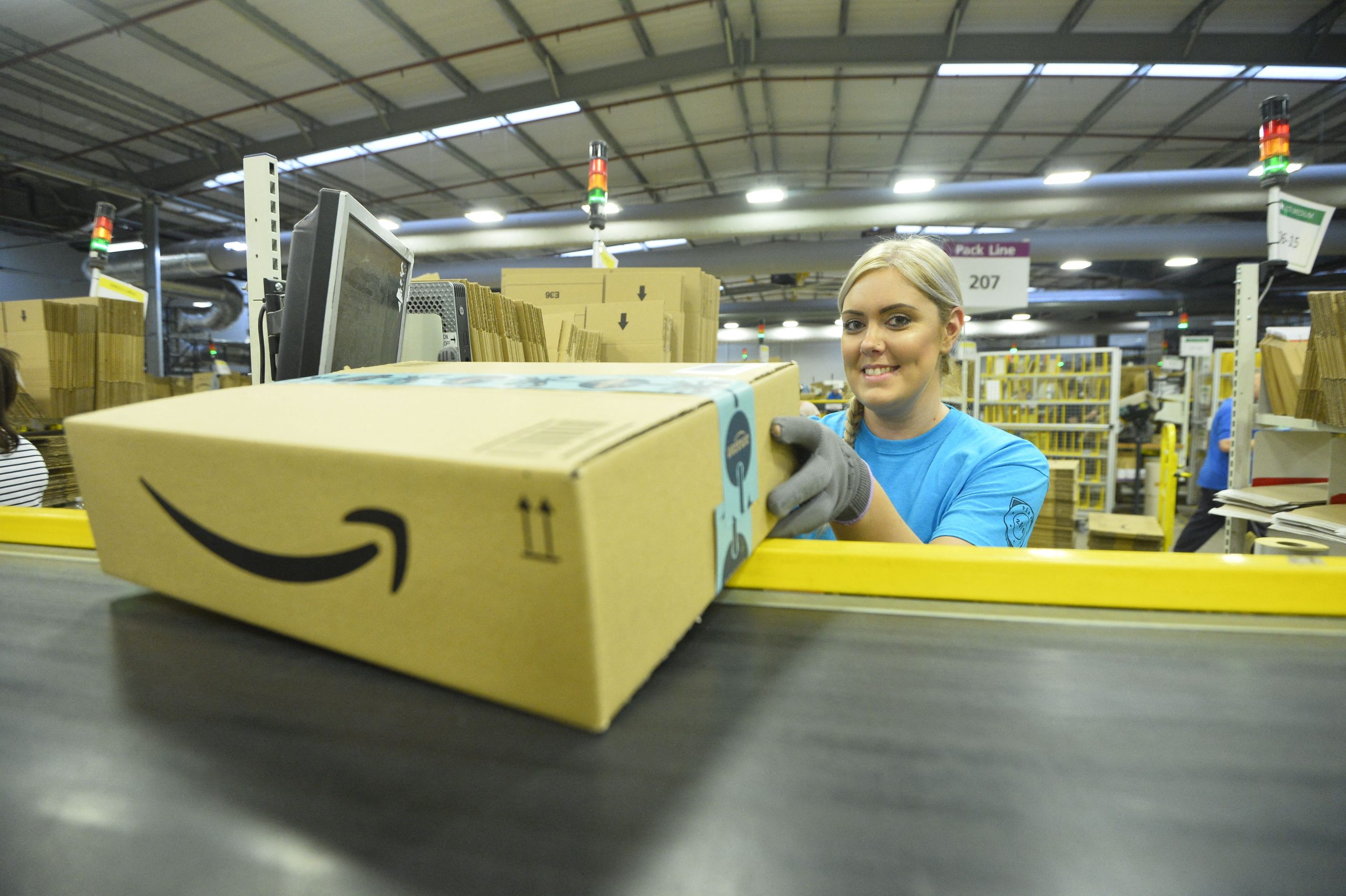
Amazon’s SNAP enrollment climbed to 12,346 people, and Medicaid enrollment reached 11,338, across the eleven sampled states. Sanders’ office describes both totals as nearly triple the counts recorded six years earlier.
The sample covers Arkansas, Georgia, Indiana, Maine, Massachusetts, Nebraska, North Carolina, Oklahoma, Rhode Island, Tennessee and Washington, a group GAO says holds close to one-fifth of the US population. The agency avoided extrapolating beyond those eleven states; the report presents its figures as a sample, not a national count.
Nationally, GAO estimated 13.8 million working Americans were enrolled in Medicaid at the time of the review, up from 12 million in 2020, with 10.6 million on SNAP, up from 9 million.
Related Post: With SNAP Benefits Cut Off During the Government Shutdown, Here’s Where Americans Can Still Find Free Food
A profit line growing far faster than the workforce needing aid
Amazon’s annual profit rose from $11.59 billion in 2020 to $77.67 billion by 2026, a jump GAO’s release places directly beside the enrollment figures. Fiscal 2025 revenue reached $716.92 billion, a 12 percent increase from $638 billion the prior year, with operating income at $79.98 billion.
Walmart’s trajectory follows a similar arc at a different scale. The retailer’s profit grew from $14.88 billion to $21.89 billion over the same period, while its Medicaid enrollment jumped 55% to 16,055 workers and its SNAP enrollment reached 15,515; the highest of any employer GAO tracked.
Sanders framed the pattern as a policy failure rather than a coincidence. He argued that companies posting billions in profit have no excuse for a workforce still poor enough to need federal food aid, and pointed to recent federal cuts to Medicaid and SNAP funding as compounding the strain on affected households.
Amazon disputes the framing, not the headcount
Amazon spokesperson Rachael Lighty told Fortune the report’s conclusions are wrong, noting that SNAP and Medicaid eligibility depends on total household income and family size, not an individual employee’s wage or benefits package.
Workers who qualify through a spouse’s income or a smaller household budget, she said, would show up in the data regardless of what Amazon pays them directly.
The company’s own headcount growth complicates a one-to-one reading of the numbers. Amazon’s global workforce expanded from about 798,000 employees at the end of 2019 to a peak of 1.61 million in 2021, settling at 1,576,000 by the end of 2025. That’s nearly double its pre-pandemic size, a shift that alone would boost raw enrollment counts regardless of pay.
Amazon also points to a $1 billion investment announced in late 2025 for fulfillment and transportation staff, which raised average base pay above $23 an hour and offers health coverage from an employee’s first day for $5 a week in individual premiums.
Wages moved on paper more than in practice
Bureau of Labor Statistics figures help explain why raises have not necessarily reduced the number of workers needing aid. Average hourly earnings across the private sector reached $37.64 in June 2026, but once adjusted for inflation, real average hourly earnings sat at $11.32; barely above the $11.18 recorded two years earlier.
SNAP eligibility begins around 130% of the poverty line, a bar reachable even for people working full-time. Most people relying on either program are already working, she noted, and many work full time.
Related Post: New Snap Rules, Same High Prices: How Low-Income American Families Are Coping
Retail and warehouse jobs are no longer the biggest driver
Gig economy platforms have overtaken traditional retailers as the largest source of SNAP-enrolled workers in the states GAO reviewed. Uber, Lyft, DoorDash, Grubhub and Instacart together accounted for 22,709 SNAP recipients across nine states, surpassing Walmart and Amazon combined in those same states.
FedEx followed a trajectory similar to Amazon’s, at a smaller scale. Its Medicaid enrollment climbed to 3,814 workers and SNAP enrollment reached 4,944, roughly tripling and doubling, respectively, since 2020.
A six-year pattern with an uncertain next chapter
GAO first ran this analysis in 2020, a year when Amazon’s workforce and profits looked nothing like they do now. Repeating the exercise gives lawmakers a rare apples-to-apples read on how pay, eligibility, and corporate earnings moved together over six years, even as the underlying eleven-state sample limits how far the findings can be generalized nationally.
Whether the report leads to changes in eligibility rules, corporate tax treatment, or wage floors remains an open question in Congress. Sanders has released similar findings before without securing legislative action.
Amazon’s rebuttal suggests the next round of scrutiny will again hinge on how the enrollment numbers are interpreted, either as evidence of low pay or as a reflection of a workforce that has nearly doubled in size.
Other Posts You May Like
- 5 States With the Most People on Food Stamps
- Police Warn Shoppers Not to Toss Amazon Boxes Without Doing This First
If you like what you just read, then subscribe to our newsletter and follow us on social media.


