



The post 7 Ways to Finally Get Your Front Garden Under Control first appeared on Crafting Your Home.
A trimmed hedge and an even bed of mulch tell a neighbor you are paying attention. An overgrown yew doing its best impression of a haystack tells a different story, whether that is true or not.
Real estate professionals put a number on that first impression. In the National Association of Realtors 2023 Remodeling Impact Report, agents estimated that a full yard upgrade, including a new walkway, planters and fresh mulch, recovered close to the entire cost of the project for sellers. Curb appeal is not decoration. It is one of the few home projects that pays for itself.
Getting a front garden back under control rarely means starting over. It usually means fixing the two or three things quietly working against everything else, then building outward from there.
Here are seven places to start.
A clean edge stops grass from swallowing the beds

A ragged border between lawn and bed reads as neglect faster than long grass does, because the eye catches the boundary line first. A half hour with an edging tool along the driveway, walkway and bed lines resets the whole yard’s silhouette before a single blade of grass gets cut.
Edging also solves a problem most homeowners never learn about. Many common turf grasses spread through underground stems called rhizomes, which push out new shoots wherever the soil is loose or thin, according to Oregon State University’s Extension Service.
Left uncontained, that growth habit is exactly what lets a three-foot bed narrow to eighteen inches over a few seasons. A blade edge cut two or three times a year holds the line these grasses are built to cross.
Height should step down from the house to the walkway
Front gardens tend to grow tall through the middle of the season and stay that way, blocking windows and swallowing the porch. Landscape architect Christopher J. Cohan, speaking to This Old House, recommends placing the tallest shrubs nearest the house, shorter shrubs in front of those, then staggering perennials and bulbs along the front edge.
That structure does something a flat bed cannot. It gives a front garden that is often only six or eight feet deep a sense of depth it does not actually have, so the planting reads as designed rather than installed and left to fend for itself.
Pull mulch back from every trunk and stem
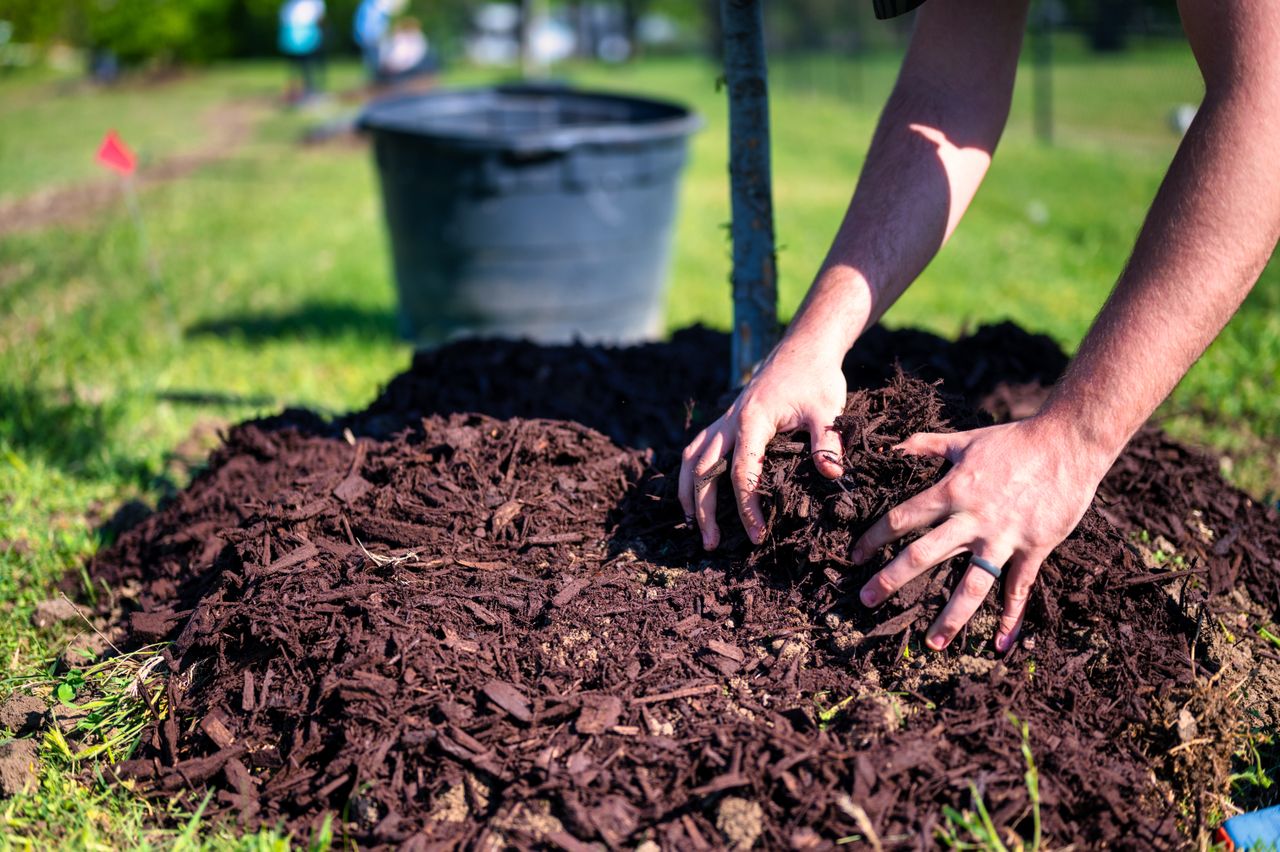
Mulch volcanoes, the cone-shaped piles built up against a tree trunk, rank among the most common mistakes in residential landscaping, and among the easiest to reverse.
A mountain of mulch piled high against a tree trunk will not kill it immediately, but the damage compounds quietly for years before it shows.
The fix takes minutes, not a weekend. Pull mulch back two to three inches from the base of every shrub and tree so the natural trunk flare stays visible above the soil, then keep the surrounding layer at two to three inches deep rather than building it up season after season.
Related Post: 8 smart gardening hacks that can help you spend less money
One repeated bloom color
A front bed with a dozen flower colors competing for attention often looks busier than it is, especially from a moving car or a glance while parking. Picking two or three colors and repeating them in clusters, instead of scattering single plants of many varieties, gives the eye a pattern to follow rather than a puzzle to solve.
Repetition is doing the work here, not restraint. A bed of five plants in the same blue and white palette reads as more intentional than five different plants in five different colors, even though the plant count never changes.
The walkway carries more weight than the beds around it
The path from the sidewalk to the front door gets more visual scrutiny than most homeowners realize, since it is the one part of the garden that guests actually walk through rather than glance at from the curb. Cracked pavers, a shifting stone, or a gravel path worn thin in patches can undercut a garden no matter how well the beds around it are kept.
Resetting a paver walkway is a manageable weekend project. Lift the loose stones, add a fresh half inch of sand or paver base beneath each one, then reset and tamp them level. A gravel path usually needs less, just a fresh top layer and a rake to pull back what has scattered into the surrounding grass.
Related Post: 6 Gorgeous Garden Lighting Ideas To Transform Your Space
Keep planting beds a real distance from the foundation
Shrubs planted directly against the house rarely stay that way for long. Washington State University Extension recommends keeping small shrubs at least two feet from the foundation wall, medium shrubs about three feet and tall shrubs four to five feet, spacing that gives roots room and keeps siding clear of trapped moisture.
That gap is not wasted space. It becomes its own narrow bed, and filling it with something low and appropriate for the site tightens the whole front elevation instead of leaving a bare strip that collects windblown mulch and stray weeds.
When a garden feels out of control, remove something instead of adding
The instinct when a front garden feels overwhelming is to add, a new shrub, another round of flowers, a decorative border. Often the better move is subtraction. University of Maryland Extension notes that shrubs kept too small for their space and repeatedly sheared back develop dense growth that traps moisture and invites disease, boxwoods in particular.
Walking the front garden from the sidewalk, the vantage point a stranger actually sees it from, tends to make the crowded spots obvious in a way that standing in the bed itself does not. What looks fine up close sometimes reads as cramped from twenty feet back, and that gap between the two views is usually where the real fix is hiding.
Other posts you might like:
- 9 Garden Sheds That Prove Outdoor Storage Can Look Beautiful
- 8 Pretty Flowers That Can Help Support a Thriving Vegetable Garden


