

The post We’ve Overcomplicated Decorating: 10 Ways to Get Back to Basics first appeared on Crafting Your Home.
American living rooms spent the last few years absorbing whatever a For You page pushed on them one season, then dropping it for whatever came next.
Coastal grandmother gave way to mob wife, and mob wife gave way to something else before anyone had settled in.
What is shifting now is not the next look coming down the pipeline. It is the appetite for the pipeline itself. Getting back to basics does not mean gutting a house down to a single gray sofa and bare walls, since that trend already had its own moment and its own expiration date.
It means choosing fewer, more deliberate moves and letting each one carry weight. The ten changes below come from what designers, researchers and industry data are pointing toward this year, not from another list of things to buy.
The trend cycle is the actual clutter

Homeowners are not tired of a specific look. They are tired of replacing it.
The cost of chasing whatever is current tends to make a home look dated faster than owners realize, since a room built around this month’s algorithm has no reason to hold up past this month.
Personalization has become the real marker of luxury. That reframes the first basic step. Before buying anything, the useful question is not what is trending, but what has already earned a permanent spot in the room.
Buy four pieces built to survive a decade
A 2026 furniture trends analysis from home retailer Oak and Loom describes a shift beneath the aesthetic churn: homeowners buying less, buying better and expecting what they buy to last, reversing years of treating furniture as seasonal.
The report points to four anchor pieces worth investing in first: the dining table, the bed frame, the sideboard, and the coffee table, arguing that solid wood is the one material that improves with age instead of needing replacement.
Getting one of those pieces right raises the bar for what sits around it. Everything cheap and disposable becomes easier to spot once a genuinely good piece already anchors the room.
Let a warm neutral carry the room
Houzz’s 2026 U.S. Fall Design Trends Report, built on interviews with nearly 50 home design professionals, found that homeowners have moved on from stark white and gray interiors toward warm wood tones, earthy colors and natural materials layered throughout a space.
Search behavior backs this up. Houzz’s Emerging Summer Trends Report tracked a 178% jump in searches for rust tones and a 153% rise in chocolate brown over the prior year.
Warmth is the new default backdrop, not a passing color trend, so the safest first move in any room is to pick one grounding tone and repeat it instead of introducing several competing palettes at once.
Fewer objects make a room easier for the eye actually to read
Visual clutter is more than an aesthetic concern because the brain has limited capacity for processing competing information. A study by Stephanie McMains and Sabine Kastner at Princeton found that multiple stimuli in the same visual field can compete for neural representation, with their signals mutually suppressing one another.
A room packed with competing shapes and colors forces the brain to do that suppression work constantly, whether or not a person notices.
Editing a shelf down to fewer, more deliberate objects reduces that competition directly. The payoff is not just a tidier photo. It is a room that takes less effort actually to rest in.
A hard reset just became the year’s official color

Pantone named PANTONE 11-4201 Cloud Dancer, a soft white, its Color of the Year for 2026, describing the shade as a whisper of calm and peace in a noisy world.
Leatrice Eiseman, executive director of the Pantone Color Institute, framed the choice as a response to overstimulation, a color meant to quiet the mind rather than compete for attention. Not everyone reads it as meaningful.
Thomas McMillan, director of the Center for Retailing Innovation at Texas A&M University’s Mays Business School, called the pick underwhelming, arguing white is already pervasive across retail and that Pantone chose safety over a bolder cultural statement.
Whichever reading holds up, an industry built on predicting mood picked quiet over noise this year, which tracks with everything else on this list.
Related Post: Fall Home Colors Are Moving Beyond Pumpkin Orange in 2026
Borrow the logic agents use to sell an empty room
Real estate offers a useful test case for what works in a room, since sellers have financial reasons to get it right.
The National Association of Realtors’ 2025 Profile of Home Staging surveyed 1,266 agents and found that 83% of buyers’ agents said staging made it easier for a buyer to picture a property as their own home.
Living rooms were staged in 91% of listings and mattered most to buyers, with 37% citing them as the room they cared about most. That pattern holds outside a sale. A room edited down to its clearest, most functional version reads better to guests and to the people who live there, not only to a stranger touring it for twenty minutes.
Mix styles instead of committing to a single lane
Streamlined minimalist furnishings can work as one part of a larger design, especially when paired with curved silhouettes and traditional details. That is a departure from years of homes built entirely around one aesthetic label, whether farmhouse, midcentury or all-white minimalism.
The point is less about which styles to combine and more about resisting the idea that a room needs a single identity to feel finished. A space with one modern chair, one inherited side table and one curved lamp reads as more considered than a room where every object was chosen to match a single mood board.
Choose furniture that already has a history
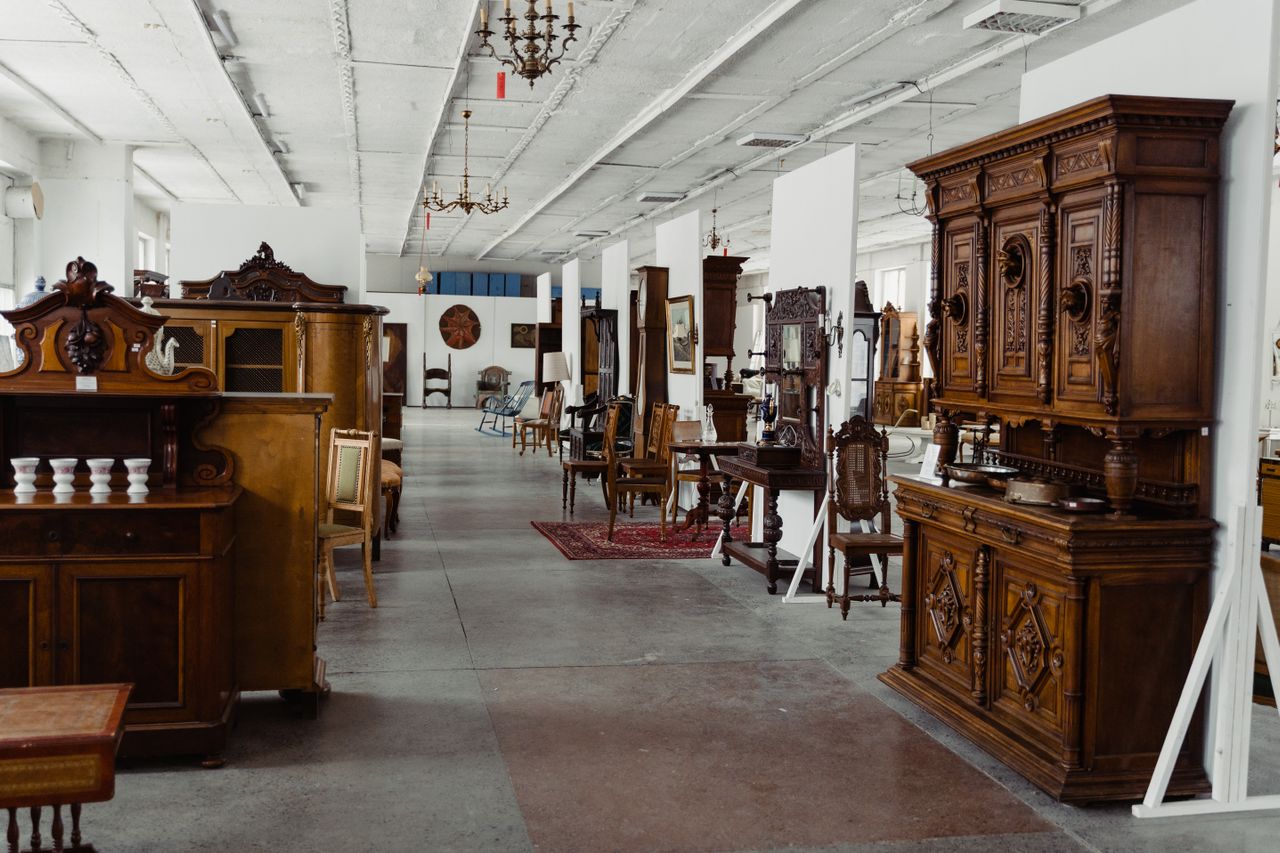
The vintage and resale furniture market is growing faster than any other resale category, according to a Chairish-commissioned analysis by GlobalData.
Home furnishings resale sales are up 62.6% since 2015 compared with 34.7% growth in new furniture sales over the same stretch. Interior designers are driving part of that shift.
Chairish’s own survey of designers found that 98% had used vintage furniture or art in a project, and 70% said they were buying more of it than in prior years.
A piece with a previous life tends to carry proportion and craftsmanship that mass-produced furniture skips, and it sidesteps the trap of buying something built to be replaced in two years anyway.
Related Post: I’m a professional thrift shopper—these are the holiday decorations I routinely buy secondhand
Retire the matching set for one piece
Designers are steering clients away from the matching-everything look, favoring rooms built around pieces chosen because they mean something rather than because they came in a set.
A single heirloom-style item, an antique-inspired chair or an inherited dresser, can ground an entire room even when everything around it is new. That one imperfect, storied object does more work than a coordinated three-piece set, since a set signals a catalog page while one meaningful piece signals a decision.
Design around how the room gets used
Homes are moving away from rigid style categories toward rooms designed for actual human behavior, treating furniture and space as a single functional whole rather than decorating around a fixed theme.
That shift is quieter than any single color or material trend, and it shows up in practical choices: a reading chair placed where afternoon light actually falls, a console sized for the mail and keys that land there daily rather than for how it photographs.
A basic room, done well, follows how people move through it before it follows any aesthetic rulebook.
Other posts you might like:
- Handmade-Looking Décor Gains Attention as 2026 Home Design Trend
- 7 forgotten decor styles that Millennials are actually bringing back
If you like what you just read, then subscribe to our newsletter and follow us on social media.


