

This article was originally published on Crafting Your Home. A human contributor also wrote and edited the post.
The $400 million luxury jet entered presidential service only weeks ago. Now it needs another round of security upgrades, raising an uncomfortable question: How much will this supposedly free aircraft ultimately cost American taxpayers? Americans know this story all too well. Something advertised as “free” arrives with hidden expenses, unfinished work, and a repair bill large enough to make the original bargain look ridiculous.
This time, however, we are not talking about a used car with a bad transmission. We are talking about the aircraft carrying the president of the United States. President Donald Trump says the Boeing 747-8 donated by Qatar will soon be removed from service for another round of upgrades. The announcement came only weeks after Trump began using the lavish aircraft as Air Force One and after his administration celebrated its conversion as a triumph of speed, innovation, and smart spending.
Asked whether the plane lacked missile-defense capabilities found on the older Air Force One aircraft, Trump said it had “a lot of capability.” He then revealed that officials would send it away in roughly a month to have it “maxed out.”
The additional work could take about a month. What will be added? Trump did not say. How much will it cost? The administration has not disclosed that either.
Why was an aircraft already declared secure and mission-ready placed into presidential service before these upgrades were completed? Americans have yet to receive a convincing answer.
A $400 Million “Gift” That Could Cost Taxpayers Almost $400 Million
The plane’s sales pitch was simple: Qatar was giving the United States a luxury Boeing 747-8 worth approximately $400 million. Trump argued that rejecting such an expensive aircraft would be foolish, especially as Boeing continued struggling to deliver two permanent Air Force One replacements. The word “gift,” however, performs a remarkable amount of work in that explanation. Qatar provided the airframe, but American taxpayers must pay to transform it from an airborne luxury suite into a secure presidential command center.
Air Force Secretary Troy Meink told Congress that the initial retrofit would cost less than $400 million. We are therefore looking at a free aircraft that could require a conversion bill approaching its estimated value. That figure may not cover every related expense. The Air Force has also leased or purchased additional Boeing 747-8 aircraft for pilot training, maintenance instruction, and spare parts. It created a full-scale interior mock-up so White House personnel could train before the bridge aircraft entered service.
New supply chains, maintenance procedures, and logistical systems also had to be established. Some of that spending will support the two permanent Boeing 747-8 presidential aircraft expected later. That does not make the Qatar jet costless. It means Americans are financing a complicated temporary fleet while continuing to pay for the delayed permanent one. Now Trump has announced another upgrade phase without providing a price.
For families struggling with grocery bills, rent, medical costs, and rising insurance premiums, “less than $400 million” is not pocket change. It is public money being poured into an aircraft that was promoted as a taxpayer-saving gift. The bargain looks less impressive every time another invoice appears.
The plane was declared ready, so why is it returning for more work?
The timeline makes the situation even harder to defend. On May 1, 2026, the Air Force announced that the aircraft had completed its modification and flight-testing phases. On June 19, it arrived at Joint Base Andrews for commissioning flights. The Air Force described the jet as safe, secure, and equipped with the advanced technology needed for presidential missions. It said that “no risk was taken” involving security, safety, or mission communications. Trump took his first presidential flight aboard the aircraft on July 1.
Less than three weeks later, he told the public that it would be sent away to have its capabilities “maxed out.”
We cannot dismiss that as a minor tune-up. Trump made the statement while directly answering a question about missile defenses. His response did not identify a mechanical problem, but it strongly suggested that the plane had entered service without reaching its intended final defensive configuration.
The administration cannot have it both ways. It cannot celebrate the jet as fully secure when unveiling it and then wave away serious questions once the president announces another round of protective work. Additional upgrades do not automatically mean the aircraft was unsafe. Military planes receive improvements regularly. Yet the government’s language created an expectation that the essential work had already been completed. If the next upgrade was always part of the schedule, officials should say so.
If new concerns emerged after the aircraft began flying, officials should explain how they were discovered. If the plane currently meets only a limited mission standard, Americans deserve to know what restrictions apply without being handed classified technical details. Instead, the public has received a vague promise that the aircraft will somehow become “maxed out.” That sounds impressive. It explains almost nothing.
The Rush to Put Trump’s Qatar Jet in the Air
The conversion was completed in approximately 10 months, a remarkably short period for an aircraft expected to carry the president, senior officials, military personnel, Secret Service agents, and communications equipment essential to national command. L3Harris Technologies led the conversion under intense pressure to get the aircraft flying before the permanent Air Force One replacements arrive in 2028. Speed became the program’s biggest selling point. It may now be its biggest vulnerability.
Converting a former foreign head-of-state aircraft requires far more than repainting the exterior and installing secure telephones. Every major component must be inspected. Engineers must search for unauthorized technology, verify the aircraft’s wiring and integrate American communications and defensive systems into a plane that was never designed for the full presidential mission. The aircraft must support encrypted communications, function during national emergencies, and protect its passengers against threats that an ordinary private jet would never be expected to face.
The government must then train pilots, flight attendants, communications specialists, security personnel, and maintainers. Replacement parts must be available wherever the president travels. Ground crews must understand the aircraft, and support equipment must be positioned in advance. That process usually takes years because failure is not an acceptable option. The Air Force acknowledged that officials made “trades” involving some less commonly used mission sets to accelerate delivery.
It insisted those choices did not compromise security, safety, or communications. But once we learn that the aircraft will return for more work after only weeks of presidential use, those earlier tradeoffs deserve deeper scrutiny. What did officials leave for later? Who decided those capabilities were not immediately necessary? What changed?
The Turkey Flight Raised a Red Flag
Security questions intensified on July 8, when Trump suddenly used one of the older Air Force One aircraft to leave Turkey after attending a NATO summit. The Qatar-gifted plane had carried him into the country. It did not carry him on the next leg to Britain. The switch occurred as tensions with Iran were rising and concerns about threats against Trump remained high. The president said he used the older plane “for old time’s sake.” He also said the newer aircraft had gone ahead so American service members stationed in Britain could tour it.
Later reporting presented a more troubling explanation. Sources said the Secret Service had recommended using the older VC-25A partly because the Qatar jet did not possess all the security features available on the established presidential aircraft. The legacy planes reportedly carry missile-warning and diversion technologies that the bridge aircraft did not initially match. The administration has not fully explained the discrepancy.
Trump eventually rejoined the Qatar aircraft in Britain and flew home aboard it. That suggests officials did not consider the plane universally unsafe. The sequence nevertheless exposes a major weakness in the bargain. If the aircraft cannot confidently serve on sensitive trips during periods of heightened threat, then its usefulness as an Air Force One replacement is limited precisely when the president may need the strongest protection. Americans did not spend hundreds of millions of dollars to create a fair-weather presidential plane.
The “Flying Palace” Is Not Yet a Flying White House
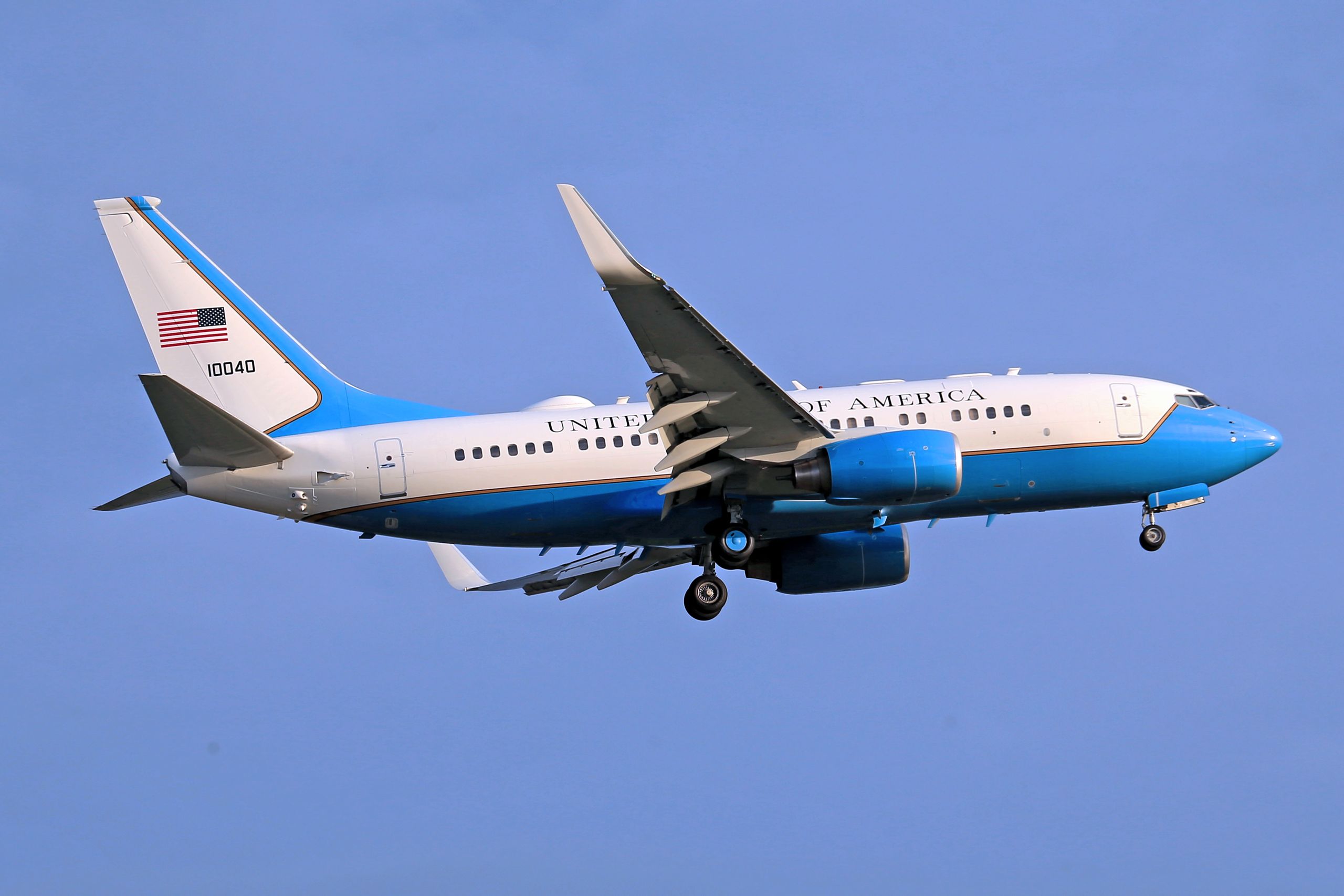
The Qatar jet arrived with an undeniably luxurious interior. It was built to transport members of Qatar’s ruling family and reportedly included private rooms, lounges, offices, conference spaces, and expensive furnishings.
None of those features can stop a missile. A presidential aircraft is judged by what passengers cannot see: hardened communications, independent power, secure data systems, countermeasures, and the ability to keep the commander in chief connected during a crisis.
The older VC-25A planes may look dated, but they were built and repeatedly updated around that mission. The Qatari jet began life as a luxury transport. Its conversion required engineers to fit presidential capabilities inside a structure and layout designed for a different purpose. That is the central problem behind the glittering “free plane” narrative. America did not receive a ready-made Air Force One. It received an expensive airframe that still required an enormous amount of American money, expertise, and classified equipment.
We can admire the chandeliers and custom furnishings. They do not answer the only question that matters at 35,000 feet: Can this aircraft protect the president and keep the government functioning during the worst day imaginable?
Americans Are Paying for Three Air Force One Solutions
The public is effectively supporting three presidential aircraft efforts at the same time. First, the Air Force must keep the two aging VC-25A aircraft operational. Those planes entered service in 1990 and now face increasingly demanding maintenance cycles. Second, taxpayers are financing the conversion, operation, and further modification of the Qatar-gifted bridge aircraft. Third, Boeing is still building two permanent VC-25B planes under a contract originally valued at $3.9 billion.
The wider program’s cost has climbed above $5 billion, and delivery has slipped approximately four years. Boeing says the new aircraft remain on schedule for 2028. The company also expects further cost growth as it completes wiring, structural work, and certification. The first plane should begin testing in 2027. Trump’s frustration with Boeing’s delays is understandable.
Americans should be frustrated too. But frustration does not turn a rushed substitute into a responsible purchase. A temporary solution should reduce cost, risk, or operational pressure. The Qatar plane has introduced new expenses, fresh political controversy, and security questions that now require another trip to the shop.
The Gift Also Comes With Political Baggage
The aircraft was donated by Qatar’s royal family and formally accepted by the Defense Department in 2025. Trump has repeatedly emphasized that Qatar gave the plane to the United States, not to him personally. The planned future of the aircraft complicates that defense. The plane is expected to serve as a temporary government aircraft before eventually being transferred to Trump’s presidential library foundation.
Critics argue that moving an enormously valuable, taxpayer-modified asset into a foundation bearing Trump’s name creates an appearance of personal benefit, even if Trump never owns or uses the plane privately. Qatari Prime Minister Sheik Mohammed bin Abdulrahman Al Thani denied that the donation was an attempt to purchase influence. He called it a “normal thing that happens between allies.” There is little that feels normal about a foreign monarchy donating a $400 million luxury jet for the American president’s use.
Critics have raised concerns under the Constitution’s Foreign Emoluments Clause, although no court has ruled that the arrangement violates the Constitution. The Justice Department approved the deal, and the administration insists it complied with federal law. Legality, however, is only one part of the issue. Americans are also entitled to judge appearances, priorities, and judgment.
A foreign gift can be technically lawful and still create questions about influence. A plane can be owned by the government and still produce a future benefit for a president’s library. A free aircraft can still leave taxpayers with hundreds of millions of dollars in expenses. Those contradictions are not political inventions. They are built into the arrangement.
A Simple Question the Administration Has Not Answered
Was this plane truly necessary? The United States already had two operational Air Force One aircraft. They were old and expensive to maintain, but they remained capable of transporting the president. Two permanent replacements were already under construction, even if badly delayed. The bridge aircraft may reduce wear on the older fleet and help crews prepare for the transition to Boeing 747-8 operations. Those are legitimate benefits. But we still do not have a transparent accounting of whether those benefits justify the full cost.
The government has not released a complete public total covering conversion, training aircraft, spare parts, security inspections, maintenance infrastructure, and the newly announced upgrades. Without that figure, the administration cannot credibly call the plane a bargain. Americans would not buy a house based only on the price of the building while ignoring repairs, insurance, taxes, and maintenance. We should not evaluate a presidential aircraft that way either.
If you like what you just read, then subscribe to our newsletter and follow us on social media.


