

This article was originally published on Crafting Your Home. A human contributor also wrote and edited the post.
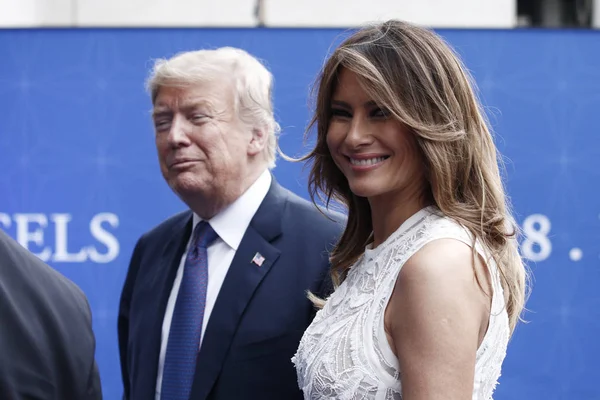
TEHRAN, Iran A giant billboard depicting President Donald Trump, first lady Melania Trump and members of the Trump family above American flag-covered coffins has become the latest symbol of the rapidly escalating confrontation between Iran and the United States.
The display reportedly carries the Persian slogan “Blood for Blood.” Its imagery appears designed to communicate something more personal than Iran’s familiar anti-American messaging. Rather than condemning the United States as a country or focusing solely on its military, the billboard targets Trump and his immediate family.
Images and reports about the display spread quickly across international media and social platforms, including a widely shared online discussion. However, the online post itself is not an independent news report. It links to a Times of India article, which means the underlying claim should be assessed through the original reporting and additional sources rather than through the popularity of the online discussion.
The billboard turns a geopolitical message into a personal warning.
Author
tanitost/depositphotos
The central image reportedly places Trump, Melania and Trump’s five children above coffins covered with American flags. The family members shown include Donald Trump Jr., Ivanka Trump, Eric Trump, Tiffany Trump, and Barron Trump, according to reports describing the display.
That distinction matters.
Iranian propaganda has frequently presented the United States and Israel as military enemies. Coffins, missiles, destroyed equipment, and national flags have appeared in previous public displays. The new billboard appears to narrow the target, shifting the visual message from the American government to one specific political family.
That does not prove Iran has an operational plan to attack Trump’s relatives. A billboard is political messaging, not evidence of an active assassination plot. Still, portraying identifiable family members alongside coffins gives the display the appearance of a death threat and could increase concerns about the security of people who are not directly responsible for military decisions.
The slogan “Blood for Blood” also leaves little room for diplomatic interpretation. It presents the conflict through the language of revenge, suggesting that deaths on one side should produce deaths on the other.
Tehran has been building a wider campaign around Trump.
The family billboard did not appear in isolation.
Reuters documented separate billboards in Tehran showing Trump lying inside an open coffin. Those displays carried slogans in English and Persian, including a direct threat stating that Trump would be killed. Reuters footage showed the images positioned on prominent streets and building fronts in the Iranian capital.
Another large display at Enghelab Square also showed Trump in a coffin near a sculpture of a raised fist associated with the late Iranian Supreme Leader Ayatollah Ali Khamenei. The installation connected Trump directly to Iran’s demand for retaliation following Khamenei’s death.
During Khamenei’s funeral procession, mourners carried revenge-themed signs and chanted against Trump. Reuters reported that one banner bearing Trump’s image warned that bloodshed would follow. The demonstrations came after Khamenei and several family members were killed in an American and Israeli strike.
Together, the displays suggest a coordinated narrative rather than a single provocative artwork. Trump is being presented not simply as the leader of an opposing government, but as the individual Iran holds personally responsible for its wartime losses.
Why giant billboards matter in Tehran
Author
efesenko/depositphotos
Large political billboards occupy a special place in Iran’s public messaging system.
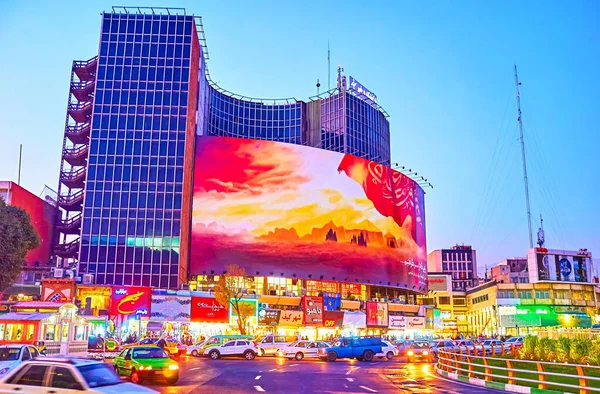
Prominent locations such as Valiasr Square and Enghelab Square have been used for years to promote government-approved narratives about wars, religious commemorations, foreign enemies, and domestic political priorities.
Their size and location allow messages to dominate public spaces while also producing images that can circulate internationally.
These displays serve two audiences.
Inside Iran, they can reinforce the government’s claim that the country is resisting foreign aggression. They place the conflict in emotional and moral terms, often emphasizing sacrifice, martyrdom, and revenge.
Outside Iran, they work as low-cost instruments of psychological pressure. A billboard can generate headlines, television coverage, and millions of social media impressions without requiring a formal statement from a senior official.
That ambiguity is useful. Iranian authorities can benefit from the threatening message while avoiding the legal and diplomatic consequences that might follow an explicit government announcement targeting a president’s relatives.
The timing makes the imagery more dangerous.
The billboard emerged as American and Iranian forces continued exchanging attacks.
Two American military personnel were killed in Jordan during an Iranian attack, while another service member was reported missing. The United States responded with renewed strikes against Iranian targets, extending a cycle in which every retaliation creates pressure for another response.
American operations have targeted Iranian military infrastructure and positions connected to the Strait of Hormuz. Iran, meanwhile, has launched missiles and drones toward American forces and regional partners, including sites in Jordan, Bahrain and Kuwait.
In that environment, public threats cannot be dismissed as ordinary political theater.
Governments often use aggressive language during conflict to strengthen public resolve. Yet messages that identify individual family members can influence supporters, proxy groups, or unaffiliated extremists who may interpret propaganda as encouragement to act.
The danger is not limited to a direct Iranian operation. Highly personalized imagery can inspire lone actors, fuel harassment, or force security agencies to redirect resources toward protecting relatives who might otherwise face a lower threat level.
Social media changed the billboard’s real audience.
Although the display stands in Tehran, its most important audience may be thousands of miles away.
The image reached international readers through news sites, reposts, and discussions such as the r/worldnews thread.
Many Reddit comments treated the billboard as dark comedy or another episode in the personal conflict between Trump and Iran. Others warned that depicting children and relatives in connection with death crossed a serious boundary.
That divided reaction illustrates how modern propaganda travels.
A message created for a physical square can be photographed within minutes, translated into several languages, and redistributed to audiences that Iranian authorities could never reach through domestic television. Anger, fear, and mockery all increase engagement, helping the image spread regardless of whether viewers accept its political message.
The billboard therefore functions as both propaganda and internet content. Its success is measured not only by how many people see it in Tehran, but by how many foreign newsrooms, political accounts, and online communities repeat it.
What remains unconfirmed
Author
marog-pixcells/depositphotos
The existence of multiple Tehran billboards depicting Trump in a coffin has been independently documented by Reuters and other international outlets. The larger family image has also been reported by several publications, including The Telegraph, Times of India, and NDTV.
However, publicly available reporting has not established who personally approved the family billboard, which organization designed it, or whether it was accompanied by a specific operational threat.
Those unanswered questions are important. Describing the image as threatening is justified by its content, but claiming it proves an imminent assassination plan would go beyond the available evidence.
There was also no clearly documented public response from the White House to the family display in the sources reviewed for this story.
A warning about where the conflict may be heading
The billboard’s significance lies less in its artistic quality than in the boundary it appears willing to cross.
Earlier Iranian propaganda largely framed the struggle as Iran against the American government, American forces, or Israel. By visually placing Trump’s wife and children beside coffins, the latest message transforms a national conflict into a family vendetta.
That shift makes diplomacy harder. Leaders can negotiate over territory, sanctions, shipping lanes, and military deployments. Revenge narratives are more difficult to contain because they turn compromise into betrayal and escalation into a moral obligation.
The image may be intended to frighten Trump, rally Iranian supporters, or provoke an emotional response from Americans. It may accomplish all three. What it does not provide is a path away from the violence.
As American and Iranian attacks continue, the most troubling detail may not be the billboard itself. It is the political atmosphere in which a public image of an entire presidential family connected to coffins can be presented as the next logical message in an expanding war.
If you like what you just read, then subscribe to our newsletter and follow us on social media.


