


This article was originally published on Crafting Your Home. A human contributor also wrote and edited the post.
The Trump administration has launched a major political and national security campaign against what officials describe as “left-wing terrorism,” with senior adviser Stephen Miller declaring that the government will treat violent left-wing movements as a serious terrorism threat. The announcement has triggered a fierce national debate over domestic security, political violence, and the limits of government power.
The move represents a major shift in the administration’s counterterrorism focus, placing far-left extremist groups at the center of a new enforcement strategy. Officials argue that violent groups on the left have been underestimated for years and require the same level of attention historically directed toward other extremist threats.
Critics, however, warn that the broad language surrounding the policy could blur the line between violent extremism and lawful political activism. They argue that the government must carefully distinguish criminal acts from protected speech and protest.
The announcement has transformed a debate over political violence into a much larger fight over civil liberties, federal authority, and the future direction of American law enforcement.
Stephen Miller Announces New Focus on Left-Wing Political Violence

Gage Skidmore from Peoria, AZ, United States of America, CC BY-SA 2.0, via Wikimedia Commons
Stephen Miller, a senior White House adviser, announced that the Trump administration is officially treating violent left-wing activity as a terrorism concern.
The announcement came as administration officials outlined a broader effort targeting what they describe as radical left-wing extremist networks. Secretary of State Marco Rubio has also promoted the administration’s argument that left-wing political violence represents a growing international security challenge.
Miller and other officials have argued that violent groups associated with anarchist and anti-fascist movements pose a serious threat and that previous administrations failed to address the issue aggressively enough.
The administration’s supporters say the policy represents a necessary expansion of counterterrorism efforts.
Their argument:
Political violence should be confronted regardless of whether it comes from the left or the right.
Why the Administration Says the Threat Requires Action
Trump administration officials argue that violent extremism has evolved and that government agencies must adapt.
They say modern threats are no longer limited to traditional terrorist organizations operating overseas.
Instead, officials point to decentralized movements that can organize through online networks, recruit supporters digitally, and coordinate disruptive actions.
The administration has focused on several concerns, including:
- Attacks linked to political ideology
- Violence against government officials
- Property destruction
- Threats against public institutions
- Organized extremist activity
Officials argue that treating politically motivated violence as terrorism allows law enforcement agencies to respond more effectively.
The Political Battle Over the Definition of Terrorism
At the heart of the controversy is a difficult question:
When does political extremism become terrorism?
Supporters of the administration argue that ideology should not protect individuals who commit violent crimes.
They say a person who uses violence to advance political goals should face serious consequences regardless of political affiliation.
Critics argue that the government must be extremely precise when using terrorism-related language.
They warn that broad definitions could potentially affect:
- Protest movements
- Advocacy organizations
- Political activists
- Nonviolent opposition groups
The debate reflects a long-running challenge in democracies:
How can governments fight genuine threats without restricting lawful political expression?
The New Counterterrorism Strategy Changes Washington’s Priorities
The administration’s announcement reflects a broader shift in national security priorities.
For decades after the September 11 attacks, U.S. counterterrorism policy focused heavily on foreign terrorist organizations and Islamist extremist threats.
The new strategy places greater attention on domestic ideological violence, particularly groups officials associate with the far left.
Administration officials argue that domestic extremist threats require the same seriousness as international terrorism.
Critics argue that counterterrorism policies must rely on evidence and avoid becoming tools for political retaliation.
Supporters Say the Government Is Finally Addressing a Blind Spot
Supporters of the policy argue that left-wing political violence has received insufficient attention.
They say previous approaches focused heavily on other forms of extremism while failing to recognize threats from radical left-wing groups.
Officials involved in the new strategy argue that ignoring any form of political violence creates security risks.
Their position is:
A threat should be judged by actions, not ideology.
If a group uses violence, intimidation, or terrorism tactics, the government should respond.
Critics Warn of Political Overreach and Civil Liberty Risks
Opponents of the administration’s approach say the danger lies in how broadly the government defines extremism.
They argue that political beliefs, unpopular opinions, or participation in protests should not be confused with terrorism.
Civil liberties advocates have raised concerns that aggressive enforcement policies could discourage lawful activism and political participation.
Their argument is that America’s constitutional protections require a careful separation between:
- Violent crimes
- Extremist beliefs
- Political disagreement
They warn that expanding the use of terrorism labels without clear boundaries could create unintended consequences.
Why the Announcement Has Become a Major Election-Year Issue
The debate comes during a politically divided period in the United States, where concerns about political violence have become central to national conversations.
Republicans supporting the administration argue that voters want stronger action against groups they believe threaten public safety.
Democrats and civil rights groups have questioned whether the policy could be used against political opponents.
The issue is likely to remain politically significant because it touches multiple areas at once:
- Public safety
- Free speech
- Government authority
- Political polarization
The Role of Antifa and Decentralized Movements
Much of the administration’s focus has involved Antifa and other loosely organized far-left movements.
Unlike traditional organizations with clear leadership structures, decentralized movements can be difficult for law enforcement agencies to categorize.
Supporters argue that the lack of formal structure does not eliminate the possibility of coordinated violence.
Critics argue that labeling broad movements as terrorist threats can be problematic because individuals may participate in protests or activism without involvement in criminal activity.
This disagreement highlights one of the biggest challenges facing modern governments:
How do authorities respond to decentralized networks without treating entire political movements as criminal organizations?
A New Era of Political Violence Debate
The announcement has reopened a national conversation about rising political tensions in America.
Political violence has become a major concern across the ideological spectrum, with officials, researchers, and communities debating how best to respond.
The challenge is finding a balance between two goals:
Protecting Americans from violence while protecting constitutional freedoms.
That balance has become increasingly difficult as political divisions deepen.
The Bigger Question Behind Trump’s Terrorism Announcement
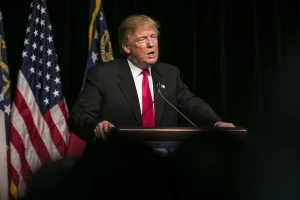
Author
actionsports via deposit photos
The administration’s decision to prioritize left-wing violence as a terrorism threat marks a significant change in the country’s domestic security debate.
Supporters see the move as a long-overdue response to extremist violence.
Critics see a risk that political language could expand government power in dangerous ways.
The debate is unlikely to end with one announcement.
The central question remains:
How can America confront political violence without allowing the fight against extremism to undermine the freedoms it is meant to protect?
If you like what you just read, then subscribe to our newsletter and follow us on social media.


