


This article was originally published on Crafting Your Home. A human contributor also wrote and edited the post.
A new election integrity dispute has erupted after the Department of Homeland Security alleged that more than a quarter-million noncitizens may appear on voter registration rolls in four key states, reigniting a national debate over citizenship verification, voter access, and trust in America’s elections.
The claim has quickly become a major political flashpoint, with supporters arguing that the findings underscore the need for stronger safeguards ahead of future elections, while critics warn that unverified voter roll data can create confusion and unfairly target eligible citizens.
At the center of the controversy is a fundamental question:
How can the country ensure that only eligible citizens vote while protecting millions of lawful voters from being wrongly removed or questioned?
The debate has placed election administration, immigration records, and voter registration systems under renewed scrutiny as lawmakers prepare for another major fight over election rules.
DHS alleges potential noncitizen registrations in key states

The Department of Homeland Security has alleged that more than 250,000 individuals who may not be U.S. citizens could be listed on voter registration rolls in four important states. The allegations have become part of a broader push by the Trump administration and its allies for stricter election verification measures.
Officials supporting the review argue that election systems must have stronger tools to identify and remove people who are legally ineligible to participate in federal elections.
They say even a small number of improper registrations can damage public confidence.
Critics, however, argue that appearing on a voter list does not automatically prove that someone illegally registered or voted.
They point out that voter databases can contain outdated information, administrative errors, and instances in which individuals’ citizenship status has changed over time.
The distinction between a possible registration issue and an illegal vote has become a central argument in the debate.
The difference between being registered and actually voting
One of the most important questions surrounding the allegations is whether the individuals identified actually cast ballots.
Being listed on a voter registration database does not necessarily mean someone voted in an election.
A person may appear in records because of:
- Data matching errors
- Outdated information
- Delayed updates
- Incorrect records
- Changes in immigration or citizenship status
Election officials regularly maintain voter rolls to remove individuals who are no longer eligible, have moved, or have passed away.
The challenge is determining whether a name on a list represents a genuine election violation or an administrative issue.
This distinction has become a major part of the national debate.
Supporters of stronger verification argue that every questionable record deserves investigation.
Opponents argue that investigations must be careful not to wrongly remove eligible citizens.
Why election integrity has become a major political issue
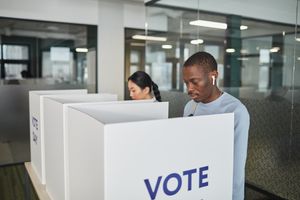
Election security has become one of the most divisive issues in American politics.
Supporters of stricter verification measures argue that public confidence depends on knowing that every voter meets eligibility requirements.
They point to concerns involving:
- Citizenship verification
- Accurate voter lists
- Election administration procedures
- Protection against unlawful participation
The Trump administration has used the issue to support proposals such as the SAVE Act, which would require proof of citizenship when registering to vote in federal elections.
Supporters argue that stronger documentation rules would prevent problems before they occur.
Critics argue that existing laws already prohibit noncitizens from voting in federal elections and that additional requirements could create barriers for eligible Americans.
The challenge of verifying citizenship in voter systems
One reason this debate is complicated is that the United States does not have a single national voter database.
Election administration is largely handled by states, which maintain their own voter registration systems.
States use different methods to verify eligibility, including:
- State identification records
- Driver’s license databases
- Social Security information
- Government records
- Election audits
However, determining citizenship status is not always simple.
A person may become a citizen through naturalization after first appearing in government systems as a noncitizen.
Records must be updated accurately to avoid mistakes.
The National Conference of State Legislatures has noted that states use different approaches to verify citizenship because there is no single federal citizenship database for voter registration.
Supporters say stronger checks protect public confidence.
Those supporting the DHS review argue that election systems must be proactive.
Their argument is that identifying potential problems before elections helps maintain trust among voters.\
They say stronger verification measures can:
- Improve the accuracy of voter rolls.
- Prevent unlawful registration
- Increase confidence in election outcomes.
- Reduce opportunities for fraud.
For supporters, the issue is not about questioning every voter.
It is about ensuring that election systems have reliable safeguards.
They argue that citizens should have confidence that every ballot counted comes from an eligible voter.
Critics warn against using unverified data to challenge voters.
Opponents of the claims argue that voter fraud involving noncitizens is extremely rare and that broad allegations can create unnecessary fear.
They argue that inaccurate data reviews could mistakenly identify lawful citizens, including naturalized Americans.
Some election experts have warned that databases used for citizenship checks can contain errors and require careful verification before action is taken.
Critics say protecting elections requires two goals at the same time:
- Preventing unlawful voting
- Protecting eligible voters from improper removal
They argue that one goal should not come at the expense of the other.
Why do the four states involved matter politically
The controversy has gained attention because the states involved are considered politically significant.
Battleground states often receive intense scrutiny because small changes in election rules or voter turnout can be politically significant.
Any allegation involving voter registration systems in these states is likely to receive national attention.
Election officials in these states now face pressure from different sides.
Some voters want stronger enforcement.
Others want assurances that eligible citizens will not face unnecessary obstacles.
The ongoing fight over the SAVE Act and voter verification
The allegations have become part of a larger political battle over election laws.
Supporters of the SAVE Act argue that requiring proof of citizenship would create a clearer standard for federal elections.
They believe stronger documentation requirements would increase confidence.
Opponents argue that the measure could create difficulties for some eligible voters who may struggle to provide specific documents.
The debate reflects a broader disagreement over how to balance election security with voter accessibility.
The bigger question: how should America protect elections?

The controversy surrounding the DHS allegations represents a much larger challenge.
Americans across the political spectrum want elections that are:
- Secure
- Accurate
- Fair
- Trusted
The disagreement is about how to achieve those goals.
Some believe stronger citizenship checks are necessary to protect the system.
Others believe aggressive verification efforts could create new problems if records are inaccurate or policies are applied too broadly.
The debate is unlikely to disappear soon.
As election rules continue evolving, the central challenge remains finding a balance between protecting the integrity of elections and ensuring that every eligible citizen can participate without unnecessary barriers.
The future of election security will depend not only on identifying problems but also on building systems that Americans across the political divide can trust.
If you like what you just read, then subscribe to our newsletter and follow us on social media.


