


This article was originally published on Crafting Your Home. A human contributor also wrote and edited the post.
Some arguments end when the shouting stops. Others keep living inside a relationship for years. A single cruel sentence said in anger can become a painful memory that changes how a husband or wife feels about trust, respect, and emotional safety.
Every couple argues. Conflict itself is not always a sign that a marriage is failing. In many cases, disagreements are a normal part of two people with different personalities, expectations, and experiences trying to build a life together.
The real danger is not having disagreements. It is the way couples communicate when emotions become intense.
Relationship experts often warn that certain phrases do more damage than people realize because they attack a partner’s character, create insecurity, or make the other person feel unsafe in the relationship.
Words spoken during frustration may disappear from the speaker’s mind after the argument, but the person hearing them may carry the emotional impact for years.
The problem with these “fighting words” is that they often become weapons rather than tools for communication. They do not solve the original issue. Instead, they create new wounds that become harder to repair.
“This Is Your Fault” Turns Problems Into Personal Attacks
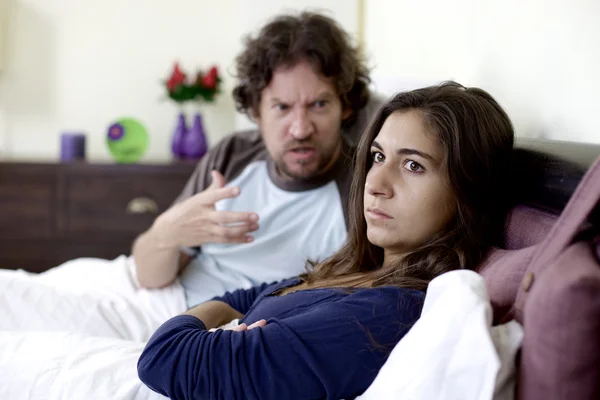
fedemarsicano/ depositphotos
Blaming a partner during an argument is one of the fastest ways to make a disagreement worse.
When someone says, “This is your fault,” the conversation often shifts away from solving the problem and toward defending personal worth. Instead of asking how the couple can fix an issue together, both people may start fighting over who deserves blame.
Relationship experts point out that blame can create resentment because it removes shared responsibility and encourages defensiveness.
Even when one person clearly made a mistake, blaming them often prevents accountability. A partner who feels attacked may focus on protecting themselves rather than understanding the harm they caused.
A healthier approach focuses on the problem rather than on making the partner the problem.
“You Always Do This” Makes Change Feel Impossible
Few phrases create more frustration than “you always” or “you never.” These words turn one moment into a permanent judgment about someone’s entire personality.
A husband who hears, “You never listen,” or a wife who hears, “You always complain,” may feel like their partner has already decided who they are. Instead of feeling motivated to improve, they may feel criticized and misunderstood.
The issue with these statements is that they leave little room for positive actions. Even if someone has improved, the phrase suggests they will never be seen differently.
Healthy communication focuses on specific behaviors. Instead of attacking a person’s identity, couples can explain what happened and why it caused hurt.
The difference may seem small, but it changes the entire direction of the conversation.
“I Want a Divorce” Used as a Threat Can Break Trust
Mentioning divorce during a heated argument may seem like a powerful way to express frustration, but it can create serious emotional damage.
For some couples, the phrase becomes a weapon. It is used to scare a partner, gain control, or show how angry someone feels in the moment.
The problem is that repeated threats can make the other person feel that the relationship is always at risk.
Marriage requires emotional security. When one partner constantly threatens to leave, the other may begin living in fear rather than connection.
Relationship counselors often explain that bringing up separation during arguments can make communication more difficult because it shifts the focus from solving the issue to protecting the relationship itself.
A marriage cannot feel stable when one person feels they must constantly prove they deserve to be chosen.
“You’re Crazy” Dismisses Real Feelings
Telling a spouse they are “crazy,” “too sensitive,” or “overreacting” can create lasting emotional damage.
Even if someone disagrees with their partner’s reaction, dismissing their feelings sends a message that their emotions do not matter.
A person does not have to agree with every feeling their partner expresses. But healthy relationships require both people to feel heard.
When someone repeatedly labels their partner’s emotions as irrational, the relationship can become emotionally unsafe.
The person receiving those words may eventually stop sharing concerns because they expect judgment instead of understanding. Over time, silence can become more damaging than conflict.
“I Don’t Care” Can Sound Like the End of Love
Few phrases hurt more than hearing that a partner does not care. During an argument, someone may say it because they feel overwhelmed, angry, or exhausted. But the person hearing it may interpret it very differently.
They may hear: “Your feelings do not matter.”
They may hear: “This relationship is not important to me.”
They may hear: “I have stopped trying.”
Relationship experts often describe indifference as especially damaging because emotional connection depends on feeling valued and seen.
Anger can sometimes be repaired because it shows emotion. Indifference can feel like emotional abandonment.
That is why careless words about not caring can leave deeper wounds than many couples expect.
“Shut Up” Creates Disrespect Instead of Resolution
Arguments often become destructive when one person tries to silence the other.
Telling a spouse to “shut up” does not solve a disagreement. It conveys disrespect and signals that their thoughts are not worth hearing.
Even during intense conflict, couples need to maintain a basic level of respect.
Disagreements are easier to repair when both people believe they are allowed to speak. Once communication becomes about control, the relationship begins moving away from partnership.
A spouse who feels silenced may eventually stop opening up, creating emotional distance.
“You’re Just Like Your Mother” or Personal Comparisons Create Resentment
Comparing a spouse to a family member, ex-partner, or someone they dislike can be extremely damaging.
These comparisons often feel like attacks on identity rather than comments about behavior.
Instead of discussing the actual problem, the argument turns into a discussion of feeling insulted.
Personal comparisons can also create insecurity because they suggest that a partner is fundamentally flawed rather than simply struggling with a specific issue.
Healthy conflict separates the person from the behavior.
A loving partner can say, “This action hurt me,” without saying, “Something is wrong with who you are.”
“What Is Wrong With You?” Creates Shame
Questions like “What is wrong with you?” may come out during moments of frustration, but they rarely lead to understanding.
They communicate judgment rather than curiosity.
A spouse who hears those words may feel embarrassed, attacked, or rejected. Instead of becoming open to change, they may become defensive or emotionally withdrawn.
Strong relationships are built when couples approach problems as teammates.
The goal should be to understand what happened, not to make the other person feel defective.
“I’m Leaving” Can Destroy Emotional Safety
Saying “I’m leaving” during a fight can create one of the deepest fears in a relationship: the fear that love is conditional.
Even when someone does not truly intend to leave, repeated statements like this can make a <