


President Donald Trump’s decision to nominate former Oklahoma state trooper Lance Schroyer as director of Immigration and Customs Enforcement is more than a routine leadership announcement.
It places a little-known but deeply experienced law enforcement figure at the center of one of the most heated immigration battles in America.
Schroyer’s nomination matters because ICE has gone years without a Senate-confirmed director, even as the agency has become one of the most powerful and controversial arms of federal immigration enforcement. His background in Oklahoma law enforcement, military service, emergency operations, and coordination with local agencies gives the nomination a clear message: Trump wants ICE led by someone shaped by field operations, not Washington politics.
The nomination gives Trump a candidate with nearly three decades of law enforcement experience, deep Oklahoma ties, military service, and hands-on work with state and federal partners. It also gives the administration a chance to argue that ICE needs an operational leader, not another political lightning rod.
But Schroyer’s low public profile may also make his confirmation hearing more important. Senators will not simply be asking who he is. They will be asking what kind of ICE he intends to lead.
A Low-Profile Pick for a High-Pressure Agency
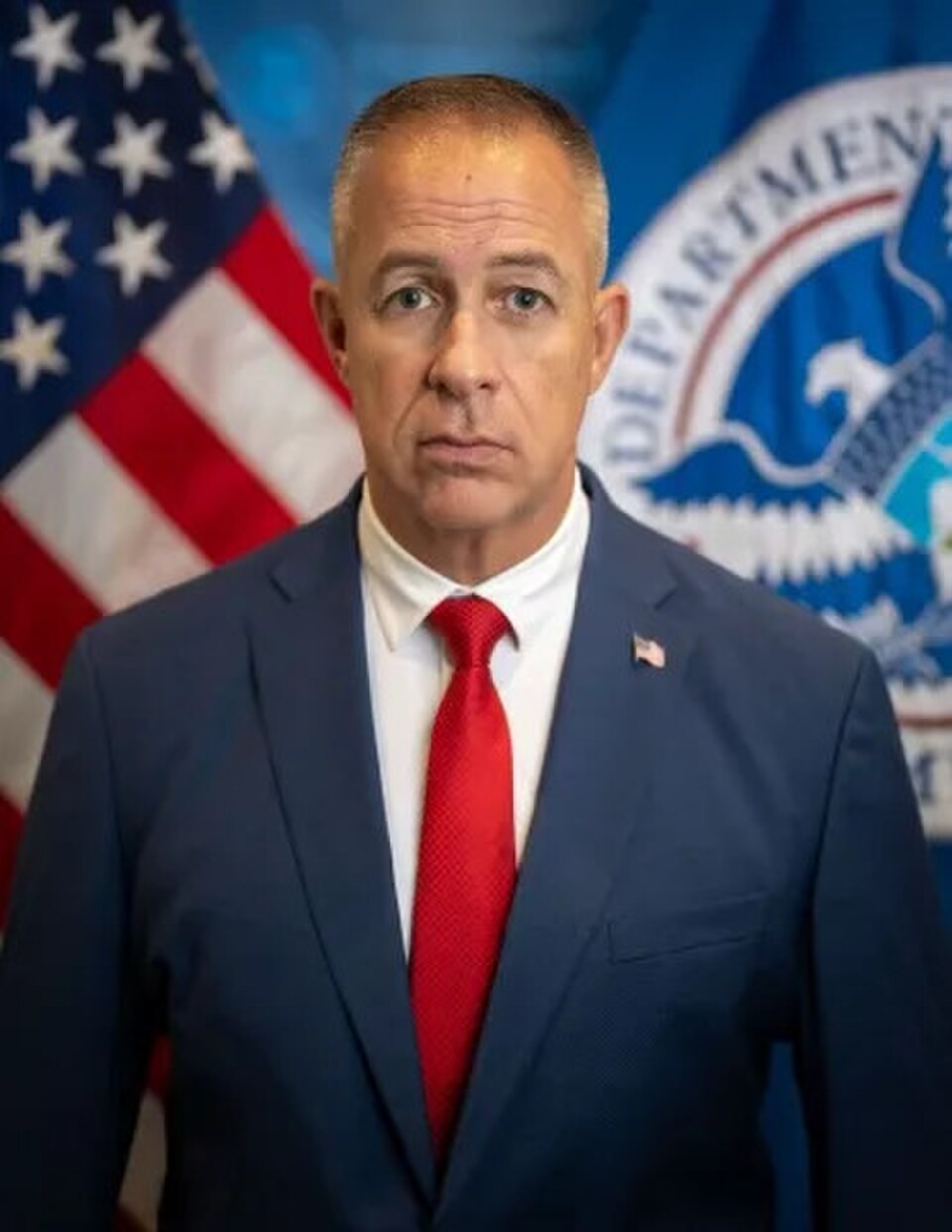
According to the Department of Homeland Security, Schroyer currently serves as a senior adviser to Homeland Security Secretary Markwayne Mullin. In that role, he has worked on immigration enforcement coordination and served as a bridge between local, regional, and federal law enforcement agencies.
That detail matters because it points to one of the administration’s biggest enforcement strategies: making immigration enforcement less dependent on federal agents alone and more connected to state and local police.
Schroyer previously served as a major in the Oklahoma Department of Public Safety’s Emergency Services Unit. DHS says his work included specialized operations involving disaster response, civil unrest, and immigration enforcement.
In other words, his background is not only traffic stops and patrol work. It includes large-scale coordination, public safety planning, and high-pressure operations where law enforcement agencies must work together quickly.
Trump praised Schroyer as a proven leader and urged the Senate to confirm him quickly. Mullin also called the nomination a strong choice, arguing that Schroyer’s experience in the field would help ICE carry out deportations, secure the homeland, and support the agency’s officers.
That message is simple: the administration wants to sell Schroyer as a field-tested lawman, not a bureaucrat. For Trump supporters, that may be the appeal. ICE has become a symbol of the administration’s promise to enforce immigration law aggressively.
A former Marine and state trooper from Oklahoma fits the image of discipline, toughness, and direct action that Trump often favors in law enforcement appointments.
For critics, the same background will raise different questions. They will want to know whether Schroyer can lead an agency accused of overreach, excessive force, poor detention conditions, and strained relationships with immigrant communities.
Why the 287(g) Program Is Central to This Story
One of the most important parts of Schroyer’s record is his connection to the 287(g) program. That program authorizes trained state and local law enforcement officers to perform certain immigration enforcement duties under federal supervision.
To supporters, 287(g) is a force multiplier. It allows local agencies to help identify and process people who may be removable from the United States, especially when those individuals are already in custody or connected to criminal cases.
To opponents, it is one of the m