

Albert Einstein is almost universally remembered as the towering genius of modern science, the man whose theory of relativity reshaped humanity’s understanding of time, space, and the universe itself. His name has become shorthand for intelligence, innovation, and scientific brilliance.
But new historical research and academic studies are painting a more complicated picture of the man behind the myth.
While his scientific achievements remain undisputed, scholars examining his personal letters, biographies, and archival documents say Einstein’s private life reveals contradictions, emotional complexities, and behaviors that challenge the simplified “perfect genius” image often presented in popular culture.
This reassessment does not diminish his contributions to science. Instead, it reframes him as a deeply human figure whose legacy includes both extraordinary intellectual breakthroughs and personal imperfections that are only now being more fully examined.
What the study and historical records show

Recent academic work drawing from Einstein’s extensive personal correspondence and biographical research highlights aspects of his life that were long overshadowed by his scientific reputation.
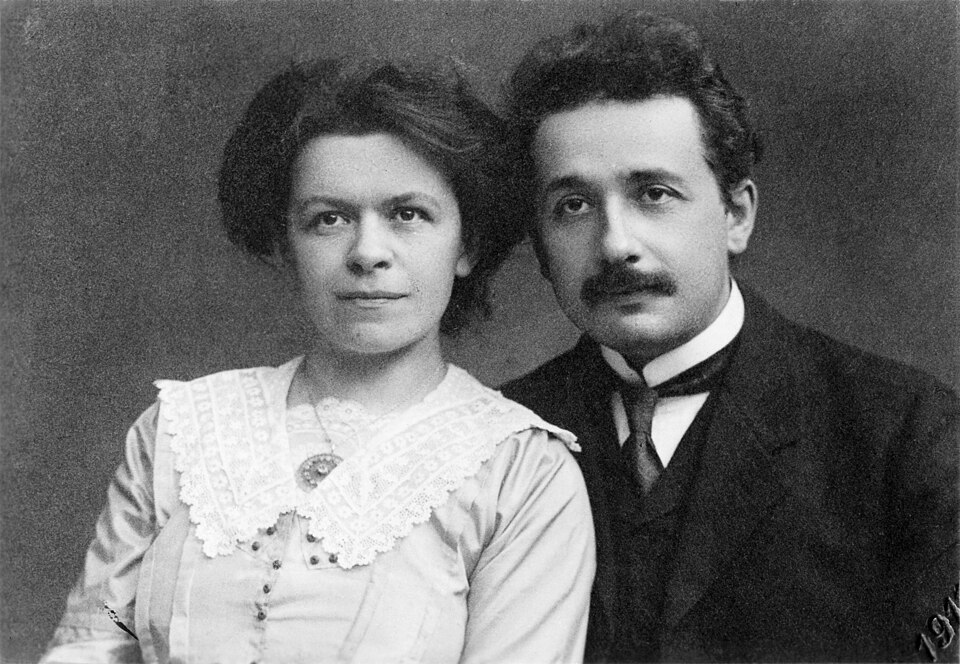
One of the most discussed findings relates to his personal relationships. Studies of letters exchanged between Einstein and his first wife, Mileva Marić, suggest that their marriage was marked by growing emotional distance and periods of prolonged separation.
Historians note that while the relationship began as an intellectual partnership, it gradually deteriorated under the pressures of Einstein’s rising career and personal choices.
Researchers analyzing these documents argue that Einstein’s correspondence reflects a complex dynamic in which emotional intimacy and intellectual collaboration coexisted with strain and detachment.
Eventually, the marriage ended in divorce, a turning point that scholars say shaped both his personal life and later relationships.
Academic studies also examine his relationships after his first marriage, noting that Einstein maintained close personal connections that, according to preserved letters and biographical accounts, were often unconventional by today’s standards.
Some researchers interpret these relationships as evidence of emotional inconsistency, while others caution that they must be understood within the cultural and social norms of the early 20th century.
Emotional complexity and personal contradictions
Beyond relationships, scholars also point to broader patterns in Einstein’s personality that appear in historical documents.
Letters written by Einstein show moments of warmth, humor, and deep intellectual curiosity, but also instances of emotional distance and rigid expectations placed on those close to him.
Some biographers describe a contrast between his public image as a compassionate humanitarian and a private personality that could be detached or absorbed in intellectual pursuits to the exclusion of personal relationships.
At the same time, other historians argue that these interpretations risk oversimplifying a very complex individual. They emphasize that Einstein’s intense focus on scientific work, especially during periods of global upheaval and displacement, likely shaped how he managed personal connections.
Rather than labeling these traits as purely “dark,” many researchers frame them as contradictions within a highly driven and unconventional mind operating under extraordinary historical circumstances.
Political views and evolving beliefs
Another area of renewed academic interest is Einstein’s political evolution. Widely known later in life for his advocacy of peace, civil rights, and social justice, Einstein became a prominent public intellectual who spoke out against nationalism and war.
However, historical studies show that his political views were not static. Early in his life, Einstein’s engagement with political issues was more cautious and less publicly defined.
As global tensions increased and he witnessed the rise of fascism in Europe, his political stance became more vocal and activist in nature.
Researchers studying his essays and public statements note that this shift reflects a broader transformation rather than a single consistent ideology. His later years in the United States were marked by strong opposition to authoritarianism and support for civil liberties, including advocacy for racial equality and academic freedom.
This evolution complicates any simplistic reading of Einstein as either purely apolitical or consistently activist throughout his life.
Why researchers are reexamining Einstein now
The renewed interest in Einstein’s personal life is driven in part by increased access to historical archives.
Over the past several decades, previously unpublished letters, digitized records, and expanded biographies have become available to researchers, allowing for more detailed analysis of his private correspondence and relationships.
This has enabled historians to move beyond earlier, more idealized portrayals and construct a fuller picture of Einstein as both a scientific pioneer and a flawed human being.
The shift also reflects a broader trend in historical scholarship, where iconic figures are increasingly examined through a more critical and contextual lens. Rather than focusing solely on achievements, modern research often explores contradictions, personal struggles, and the social environments that shaped influential individuals.
Separating myth from reality
Despite the focus on his personal life, scholars consistently emphasize that Einstein’s scientific legacy remains unchanged. His contributions to physics, including the theory of relativity and foundational work in quantum theory, continue to form the backbone of modern scientific understanding.
The concern among historians is not about diminishing Einstein’s achievements, but about correcting an overly simplified public image that reduces him to a flawless symbol of genius.
In reality, the emerging academic consensus suggests a more nuanced interpretation: Einstein was not a mythical figure of perfection, but a highly intelligent, deeply influential, and profoundly human individual whose life contained both brilliance and contradiction.
Public reaction and cultural impact
The reexamination of Einstein’s personal life has sparked mixed reactions among educators, historians, and the public. Some argue that presenting a more complete picture helps students and society better understand that even the most celebrated figures have flaws and complexities.
Others caution that too much focus on personal imperfections risks overshadowing the scientific contributions that fundamentally changed human understanding of the universe.
Still, many agree that this more detailed perspective does not reduce Einstein’s importance. Instead, it places his achievements within a realistic human context, showing that groundbreaking ideas can emerge from individuals who are far from perfect.
Why it matters
The study of Albert Einstein’s “dark side,” as some headlines describe it, is less about controversy and more about understanding complexity. It reflects a broader cultural shift away from simplified hero narratives and toward more balanced historical interpretation.
For Einstein, this means recognizing that his legacy is defined not only by equations and discoveries but also by the personal, emotional, and intellectual struggles that shaped his life.
Ultimately, the emerging research does not change who Einstein was in terms of scientific impact. Instead, it expands the understanding of who he was as a person, brilliant, influential, contradictory, and unmistakably human.


