
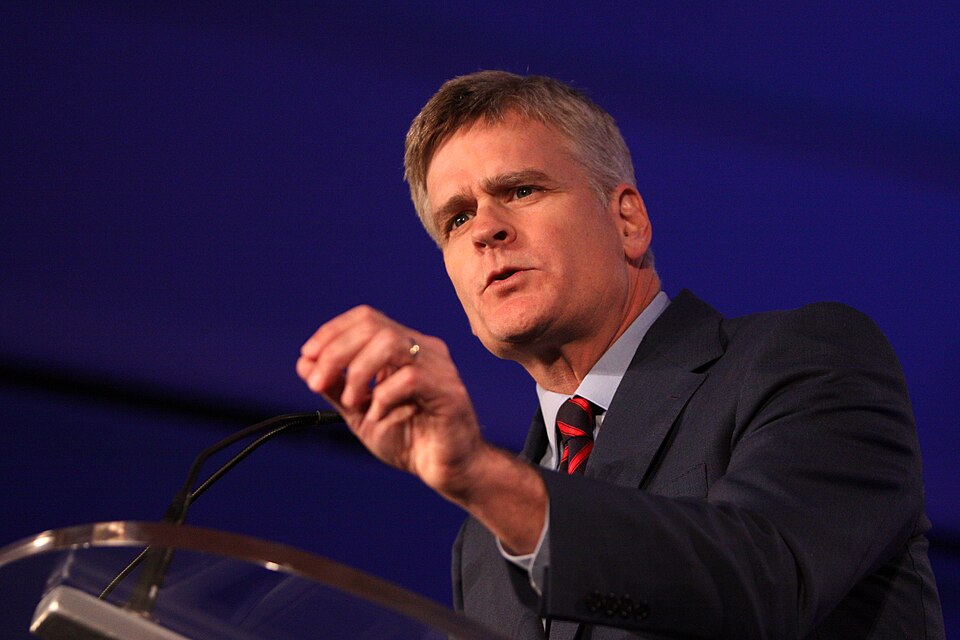

Sen. Bill Cassidy’s heated clash with President Donald Trump at a closed-door Republican lunch was supposed to look like a rare moment of defiance.
Instead, it quickly became another familiar Washington scene: a Republican lawmaker publicly standing up to Trump, then finding himself pulled back into the party’s loyalty machine before the day was over.
The confrontation happened on Wednesday, June 24, 2026, during a private Senate GOP meeting on Capitol Hill.
Trump had come to speak with Republican senators after a bruising vote over presidential war powers and the ongoing U.S. military conflict with Iran. Cassidy, a Louisiana Republican who had supported a resolution aimed at limiting further military action, defended his vote directly to the president.
According to reporting from The Associated Press, Cassidy told reporters afterward that he challenged Trump over what he described as a lack of clear information being shared with Congress and the American public.
Cassidy’s complaint was simple but serious: the war had gone on longer than expected, the original objectives had not been met, and lawmakers were being asked to trust the White House without enough explanation.
That should not be a radical position in a constitutional system where Congress has a role in matters of war. Yet inside today’s Republican Party, questioning Trump on a major issue can quickly become a test of personal loyalty.
A private lunch becomes a public warning.

The exchange reportedly grew tense fast. AP reported that Trump raised his voice, repeatedly told Cassidy to sit down, and at one point called him a “lunatic,” according to a person familiar with the meeting.
Cassidy later acknowledged that he also lost his temper, saying he matched Trump’s tone and volume before eventually sitting down.
That image alone tells much of the story.
A senator asking for a briefing on a war should not be treated as a party betrayal. A president facing questions about military strategy should be able to answer them without turning the room into a loyalty hearing.
Yet the confrontation shows how much Republican politics still revolves around one question: will lawmakers challenge Trump when they believe he is wrong, or will they fall back in line once pressure arrives?
Cassidy briefly looked like he had chosen the first path. He said the American people deserved to know more.
He said he would keep supporting war powers resolutions until Congress received more information.
He framed his position as a demand for transparency, not a personal attack.
Then came the reversal.
Cassidy got his briefing, then changed his vote.
Within hours of the argument, Cassidy was invited to the White House for a briefing with Vice President JD Vance and Trump envoy Steve Witkoff.
After that meeting, Cassidy returned to the Capitol and voted against a separate but similar war powers resolution.
ABC News reported that the Senate later