

A chilling warning from Warsaw
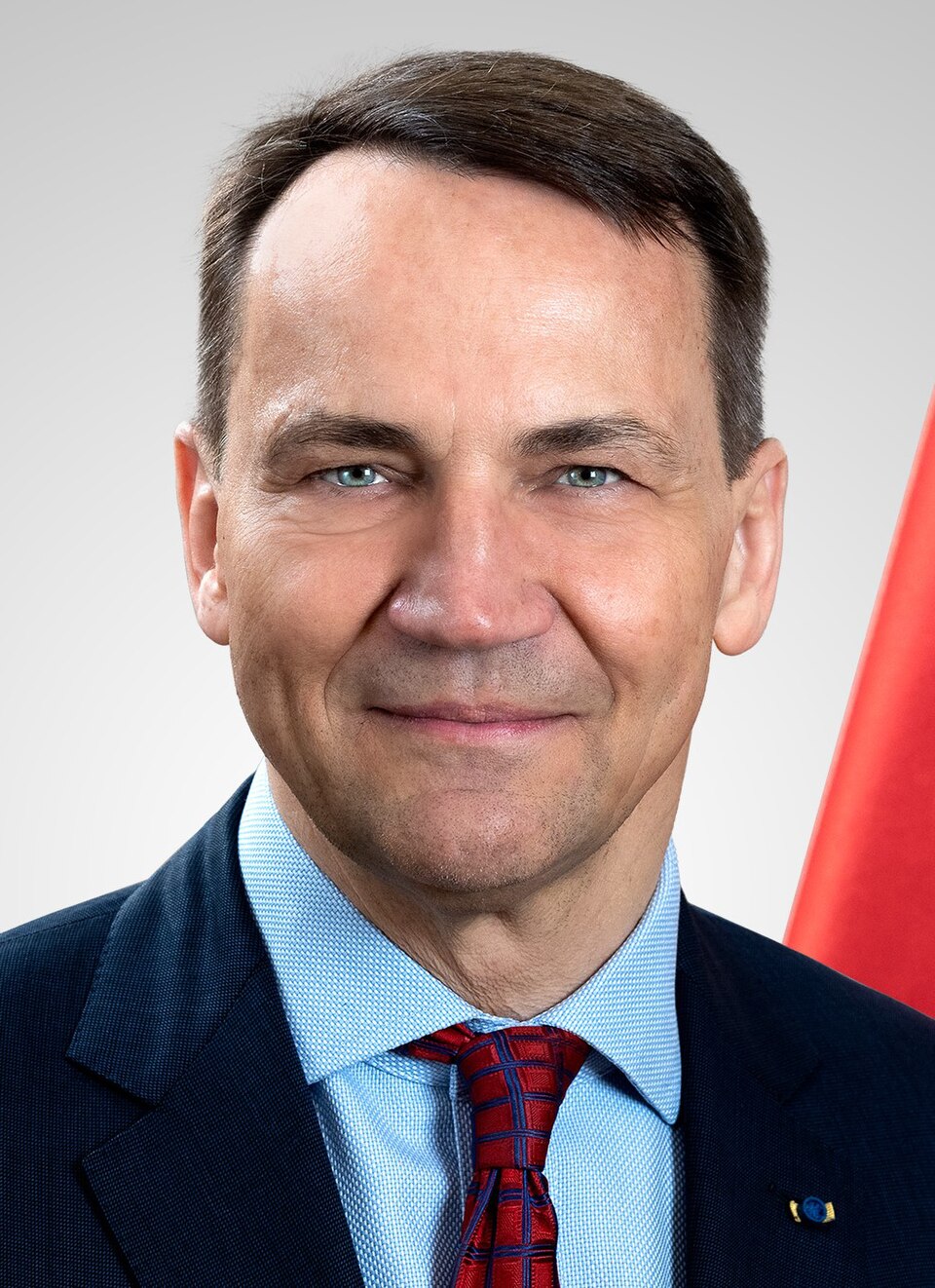
Poland has issued one of its sharpest warnings yet: Foreign Minister Radosław Sikorski suggested that Vladimir Putin may be preparing the ground for a false-flag attack to justify a new escalation in the Russia-Ukraine war.
The concern is not simply that Russia may strike again. The deeper fear is that Moscow could stage an incident on Russian territory, blame it on Ukraine or Western-backed actors, and use that claim as a public excuse for escalation.
Sikorski’s warning came after Putin suggested that European countries involved in drone attacks on Russian targets should understand that retaliation would follow.
To Poland, that language sounded less like a normal military warning and more like a possible escalation script.
That is why Sikorski reached for one of the darkest examples in European history: the 1939 Gleiwitz incident, when Nazi Germany staged a fake Polish attack on a German radio station to help justify the invasion of Poland.
Why Poland is taking the warning seriously
Poland is not watching this war from a distance. It sits on NATO’s eastern flank, shares deep historical trauma with Russia and Germany, and has become one of Ukraine’s most important logistical and political supporters since the full-scale invasion began in 2022.
For Warsaw, the danger is not only conventional war. It is also what officials often call hybrid warfare: sabotage, cyberattacks, disinformation, intimidation, border pressure, and mysterious incidents designed to confuse the public before governments can even agree on what happened.
That is why the false-flag warning carries so much weight. A staged attack need not fool everyone forever.
It only needs to create enough uncertainty in the first hours to shape headlines, divide allies, and give Moscow a ready-made explanation for escalation.
In a conflict already defined by drones, deep strikes, propaganda, and denials, the information battle can move almost as fast as the battlefield itself.
The historical shadow of Gleiwitz

The comparison to Gleiwitz is powerful because it is not abstract. On August 31, 1939, Nazi operatives staged an attack on a radio station near the German-Polish border. The goal was to make it appear that Poland had attacked Germany first.
The next day, Nazi Germany invaded Poland.
That history still matters because it shows how a manufactured incident can dress aggression in the language of self-defense.
A false flag turns the attacker into the supposed victim and gives leaders a story to tell their own public.
Poland’s warning does not mean a new world war is inevitable. It does not prove that Russia has already planned a specific operation.
But it shows how nervous European governments have become about Moscow’s ability to mix military threats with political theater.
Drone attacks are raising the stakes.
The immediate backdrop is the rising reach of Ukrainian drone attacks. Kyiv has increasingly targeted Russian energy infrastructure, refineries, depots, logistics routes, and facilities in occupied Crimea and deeper inside Russia.
Ukraine argues that these strikes are meant to weaken Russia’s war machine and bring the cost of the invasion closer to Russian territory.
Moscow frames them as attacks meant to destabilize Russian society and justify stronger retaliation.
That is where the danger grows.
As drones become cheaper, longer-range, and harder to trace in real time, the space for accusation widens.
A strike can happen before the public knows who launched it, and state media can push a narrative before investigators arrive.
In that kind of environment, a false-flag claim becomes harder to immediately disprove, especially when fear is already high.
What Russia may gain from a provocation
A staged incident, if it happened, could serve several purposes for Moscow.
First, it could help justify a new wave of strikes against Ukraine by presenting Russia as the country responding rather than escalating.
Second, it could be used to pressure European governments that support Kyiv. If Russia claims that drones came from or were assisted by a NATO country, the accusation alone could create panic in European capitals.
Third, it could deepen political divisions inside the West. Some voters may demand stronger action against Russia.